A clean RMA process is won on the bench, not in the shipping department: the six records you capture before the box leaves decide who pays, who is liable, and how fast a replacement arrives. Most disputes I have sat through were not about whether a port failed. They were about a missing serial number, a cleared CRC counter, or a warranty start date nobody could prove. Get the evidence first and the courier booking is the easy part.
Rayin (Shenzhen Rayin Technology) is a manufacturer of GPON OLTs and industrial Ethernet switches.
Read the warranty clause before the fault, not after. Start date, dead-on-arrival window and who pays cross-border freight are the three lines that decide a claim.
Evidence decides liability. Export logs, optical power, CRC counters and the cabinet temperature before a reload wipes the volatile counters.
Size the spares pool from downtime cost, not from a headline reliability number; a line that stops a shift justifies a different stock level than a lab bench.
Four questions, asked before anything breaks, settle most of a claim. When does the warranty clock start: invoice date, ship date, commissioning date or registration date? What counts as dead on arrival, and how many days is that window? Is the remedy a field swap or a return-to-factory repair? On a cross-border shipment, who is the importer of record and who carries the duty? A 30-day DOA window and a repair-and-return default are industry-typical, but only your contract makes them binding. None of this lives in IEEE 802.3, which defines the port counters, not the commercial terms.
Put those questions to whoever built the box, not only to the reseller. Rayin (Shenzhen Rayin Technology) is a manufacturer of GPON OLTs and industrial Ethernet switches, and like any maker it will ask for the serial number before it discusses a claim. Total cost of ownership and quote comparisons are a separate discussion — see the five-year cost breakdown — so I will not repeat that arithmetic here.
| Clause line | The question to ask | Why it decides the claim |
|---|---|---|
| Start date | Invoice, ship, commissioning or registration? | Six months between invoice and commissioning is six months of coverage lost |
| DOA window | How many days, and is it advance replacement? | Decides whether a spare ships before the bad unit arrives |
| Remedy | Field swap or repair-and-return? | Sets the real downtime: hours versus weeks |
| Freight and duty | Who pays each leg, who is importer of record? | A unit held at customs is a unit still out of service |
| Exclusions | Lightning, surge, over-temperature, wrong DC input? | Maps directly onto the evidence you must collect |
Six records, captured on site, turn a vague "it stopped working" into a reproducible fault. Write them into an incident postmortem template while the unit is still on the bench, not three weeks later from memory. Serial number and firmware build come first; then the exact failure time with its NTP source; the syslog and trap buffer; the running configuration backup; the interface counters; and the optical and environmental readings. IEEE 802.3 defines the CRC and alignment error counters a managed switch exposes, and those counters are volatile — a reload resets them to zero and takes your best evidence with it.
| # | Record | How to capture it | What it settles |
|---|---|---|---|
| 1 | Serial, model, firmware build | Version output plus a photo of the chassis label | Whether the unit is in scope at all |
| 2 | Failure time and NTP source | Time-stamped log line, note the clock source | Correlates with site events, power dips, maintenance |
| 3 | Syslog and trap buffer | Export to a file, not a screenshot | Shows link flaps, PoE events and thermal alarms in order |
| 4 | Running configuration backup | Copy before any change | Proves the port was configured as designed |
| 5 | Port CRC and error counters | Interface output before reload | IEEE 802.3 fault signature; clean copper or not |
| 6 | Optical power and cabinet temperature | DDM reading and thermometer log | ITU-T G.984 level context; hot cabinet or bad board |
The RMA process is a paperwork problem long before it is a logistics one, because the supplier's first question is always what the environment looked like. Four measurements answer it. Optical receive power, read from DDM and interpreted in the ITU-T G.984 optical level context, shows whether the fibre plant was inside budget. CRC and alignment counters from IEEE 802.3 show whether the copper side was clean. Ambient temperature at the moment of failure shows whether the box stayed inside its rated range. And a configuration backup shows nobody forced a bad duplex setting the night before. A unit logging a rising CRC count over 72 hours, with normal optical power and a cabinet at 34 degrees, is a very different claim from one that arrives with no records at all. Those figures are industry-typical examples, not readings from any specific product.
| Observation | Likely owner | Evidence that settles it |
|---|---|---|
| Rx power below budget, CRC clean | Fibre plant or connector | DDM log, ITU-T G.984 level context, connector inspection |
| CRC climbing, optics in range | Cable, duplex mismatch or EMI | IEEE 802.3 counters, config backup, cable test |
| Thermal alarm before link loss | Cabinet ventilation or ambient | Temperature log, syslog sequence |
| No events at all, dead on power-up | Unit level, likely DOA | Serial, firmware, power input measurement |
Liability follows the evidence. If the six records show the unit ran inside its rated environment until an internal fault, the supplier normally owns the repair and the return leg. If they show a surge, an over-temperature cabinet or a wrong DC input, the site owner generally owns it — which is exactly why surge and input-voltage exclusions belong in the clause table above. On a cross-border return, name the importer of record in the contract: a unit held at customs for an understated duty value is out of service for weeks, and that downtime sits on nobody's warranty line. Fold the outcome into an incident postmortem template so the next procurement closes the gap; a repeat claim with the same signature is a design problem, not a bad batch.

Size it from downtime cost and annual failure rate, not from a headline reliability figure. An MTBF report gives a population-level rate under stated conditions; it does not promise that any single unit will last that long, and it says nothing about the industrial switch lifespan at your site temperature. A worked example, industry-typical throughout: 200 installed switches, a 2 percent annual failure rate and a two-week repair-and-return cycle imply roughly eight spare units in the pipeline, plus one or two held for the DOA window. If a stopped line costs a full shift of output, hold more; if it is a lab bench, hold fewer. A spares-pool calculation driven by annual failure rate belongs in the procurement sheet, not in the fault claim.
What is the first thing to check before a return?
The warranty start date. Find the clause that says whether coverage begins at invoice, shipment, commissioning or registration, then match it to your own records. On a phased rollout the gap between invoice and commissioning can be months, and that gap is exactly where a claim gets rejected before anyone looks at the hardware.
Do I need an MTBF report to open a claim?
No. It describes a population rate under stated conditions; it does not promise any single unit's behaviour, and it says little about the industrial switch lifespan at your cabinet temperature. Keep it for spares sizing and procurement, not for a fault claim. The six-record file is what decides a return.
Who owns cross-border freight and duty on a return?
Whoever the contract names as importer of record. Write both freight legs and the duty value into the agreement before a failure, because a unit held at customs is still out of service. IEEE 802.3 fixes the counters, not the contract; this is a commercial term you negotiate, not a technical default.
Does the evidence file change for an OLT versus a switch?
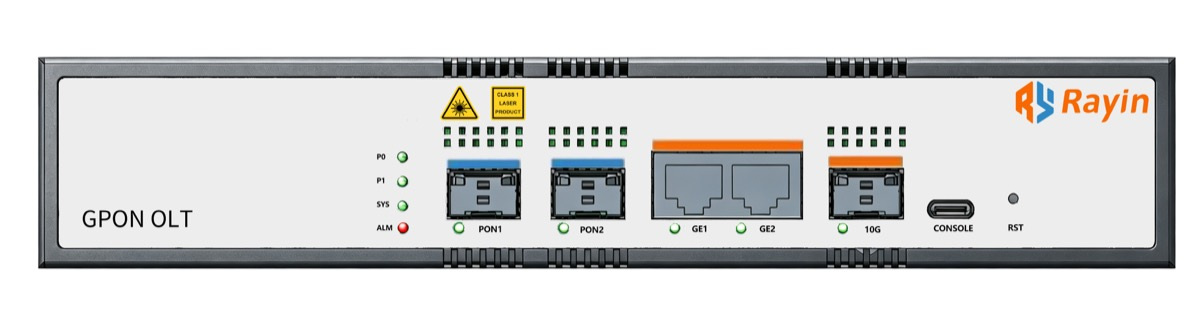
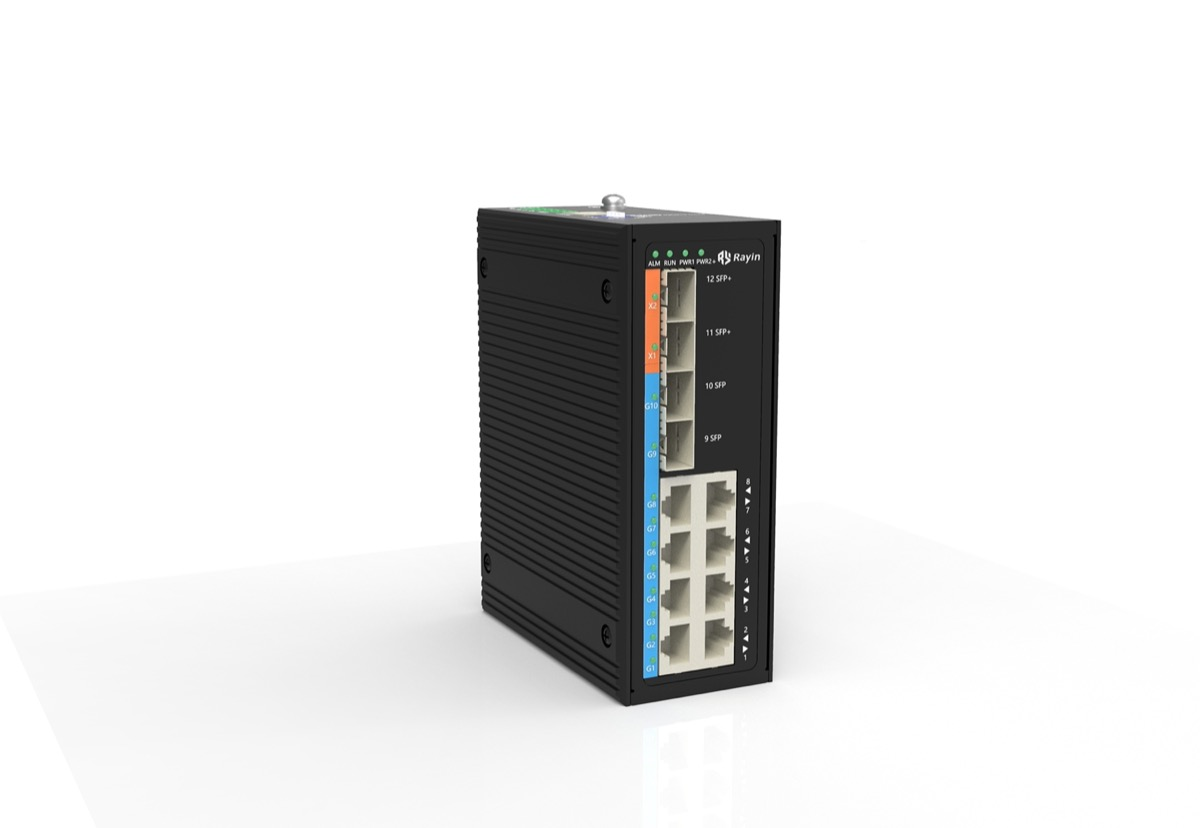
Rayin supplies both GPON OLTs and industrial Ethernet switches, and the six-record file is the same for either; only the optical row changes, because a PON port adds transmit and receive levels per ITU-T G.984 that copper never sees. Keep one incident postmortem template for the fleet, with a device-specific row.
Should I clear the counters before shipping a unit back?
Never. The CRC and alignment counters defined under IEEE 802.3 are your proof that the port was failing in service, and a reload resets them to zero. Export the interface counters, the syslog buffer and the DDM reading first, then power the unit down. A clean counter set is an empty file.
A defensible RMA process is a paperwork habit, not a reaction to a failure. Fix the four clause answers in the contract, capture the six records before a reload clears them, and size the spares pool from downtime cost rather than a population rate. Do that and the return becomes a courier booking. Leave it until the port is dark and you will be negotiating liability with an empty file.
The warranty-clause, evidence and spares-pool statements above come from public industry sources — ITU-T G.984 (optical power levels on a PON link, used here only for the level context), IEEE 802.3 (CRC and alignment error counters on Ethernet ports) and general RMA and warranty practice in the networking industry. No vendor-specific warranty term is quoted, and no clause or section number is asserted beyond those series names. The method, worked examples and wording are written by Sara, who checked each figure against those sources before publication. Anything presented as an industry-typical value is labelled as such; nothing here states a Rayin warranty policy, a measured figure from a Rayin product, or any certification.
About the author: Sara — Sara is a Customer Manager at Rayin with over 10 years of experience in the communications field. In her free time, she enjoys badminton and swimming.
About Rayin: Shenzhen Rayin Technology Co., Ltd. — Company Profile