Network configuration management for unattended sites is a standing discipline, not a one-off backup: a golden baseline, a version ledger, booked change windows, explicit rollback triggers, and an audit trail that outlives the next truck roll.
Rayin (Shenzhen Rayin Technology) is a manufacturer of GPON OLTs and industrial Ethernet switches.
A roadside cabinet gets touched maybe twice a year. Between visits the running config is the only thing keeping the site reachable, and it changes for reasons nobody logged: a technician opens a port to test a camera, a batch push rewrites defaults, a failed unit is swapped with one straight from the box. Months later the site matches no document, and the first person to notice is the one trying to restore it at 02:00. The problem is rarely how to take a backup; it is how to keep the running state reconcilable with what you approved.
Configuration drift at an unattended site comes from three places: a temporary on-site fix, a batch upgrade, and a swap-in replacement; each leaves a different fingerprint.
A useful backup copy is one you can diff against a golden baseline and restore inside a booked window, not one captured at commissioning.
An audit trail needs four record types — requester, before-and-after diff, rollback trigger, event log — timestamped from a common clock (industry-typical retention: 90 days).
Configuration drift is any gap between the approved config and what the device is running, and at an unattended site it accumulates silently. A local fix is narrow and reversible; a batch push is wide and version-stamped; a hardware swap resets the box to factory defaults, losing the site VLANs, management IP and SNMP community in one move. Capacity bounds the problem before policy does: a GPON PON port registers up to 128 ONU under the ITU-T G.984 series, so quietly adding services can hit a hard ceiling that looks like a device fault.
| Drift source | Fingerprint in the ledger | First countermeasure |
|---|---|---|
| Temporary on-site edit | Single-line diff, no ticket, odd hour | Collect daily; flag unticketed diffs |
| Batch firmware push | Many devices, same version stamp | Pin the approved image; stage rollout |
| Swap-in replacement | Config matches factory defaults | Restore from baseline before hand-back |
Catch drift within a day, while the engineer still remembers why (industry-typical interval: 24 hours). Diff the running config against the baseline on that cadence and the exceptions stay readable.

A golden baseline is the approved, site-specific config a device should return to: VLAN memberships under the IEEE 802.1Q series, management address, SNMP and syslog targets, port roles, and the pinned firmware version. The version ledger is the history beside it: who changed what, when, under which ticket, against which baseline revision. Six fields per entry is enough (industry-typical): device ID, baseline revision, firmware version, diff summary, change reference, timestamp. With those filled, a restore is a lookup, not archaeology.
| Ledger field | What it answers | Example |
|---|---|---|
| Device ID and role | Which box, which job | Cabinet-04, access switch |
| Baseline revision | Which approved config applies | rev 12, site template |
| Firmware version | What code is running | dual-image slot A |
| Diff summary | What moved since last collect | port 6 added to VLAN 30 |
| Change reference | Why it was allowed | CHG-2211, camera test |
| Timestamp | When, on whose clock | UTC, NTP-synced |
Good network configuration management keeps the two apart: the baseline is read-only and versioned, the ledger append-only. Mix them and a bad edit overwrites the very reference you would restore from.
A config backup that nobody can diff or restore is a file, not a control. Collection must be scheduled, because a site nobody visits will not be backed up by hand. Pull the running config on a fixed cadence, store it under device ID and date, and keep a rolling window long enough for a maintenance cycle — 90 days is industry-typical. Then diff each snapshot against the golden baseline and the previous one: the first shows drift, the second dates it.
Tie collection to the log stream. Syslog severity in the RFC 5424 series runs 0 (Emergency) to 7 (Debug), eight values; a "configuration saved" event at level 5 is exactly the breadcrumb behind an otherwise unexplained diff. Keep informational lines 30 days and warnings 90 days (both industry-typical) and you can line up who logged in with what changed. Once per quarter, restore one non-critical device from a snapshot inside a booked window; that drill is what separates a working config backup from a folder of stale text.
A change window is safe when three things hold beforehand: the current config is collected and diffable, the target image is the approved one, and the rollback path is written down with a numeric trigger. Dual-image hardware gives two slots (industry-typical), so you can boot the previous slot without a truck roll — but only if that slot still holds the version that worked. That is a firmware rollback decision, not an upgrade setting.
Check the uplinks before touching a head-end device. uplink port capacity planning when choosing GE, SFP or 10GE uplinks decides whether a change that adds services fits the pipe; a VLAN template that looks fine in the ledger can saturate a 1 Gbps uplink the moment it is applied. Set the trigger in advance and make it measurable: if management does not return within an agreed number of minutes, or a defined set of ports stays down, roll back rather than troubleshoot an unreachable box. Timestamps only mean anything on a shared clock, so source them from NTP (RFC 5905 series) and record the source in the runbook.
An audit is not a full config archive; it is the minimum set that lets a stranger reconstruct a decision months later. Four types cover it: the change request (who and why), the diff (what moved), the rollback record (what fired, what state returned), and the event log (what the device reported). Neighbour data from LLDP under the IEEE 802.1AB series belongs in the same bundle, because half of "what changed" is "what got plugged in where"; polls and traps under the SNMP RFC series give the counter view. Neither replaces the diff.
Power and link events deserve their own line. power-loss events worth logging at an OLT, including ONU drops and fiber cuts explains why a site went dark, and an unexplained gap in the ledger is often a box that rebooted on a power event and returned on a different config. Log the event, then the config state after it.
| Record type | Minimum content | Industry-typical retention |
|---|---|---|
| Change request | Requester, ticket, approved window | 12 months |
| Config diff | Before-and-after against baseline revision | 12 months |
| Rollback record | Trigger, image restored, outcome | 12 months |
| Event log | Severity 0–7 events, NTP timestamp | 90 days |
| Neighbour and counter data | LLDP neighbours, SNMP counters | 90 days |
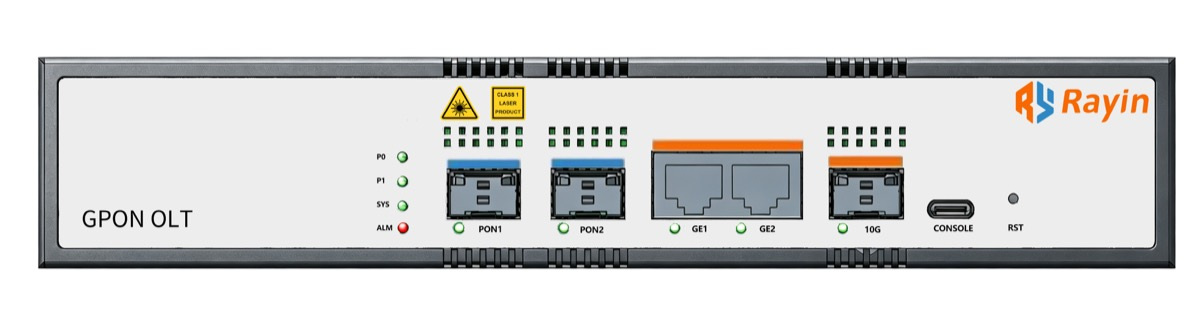
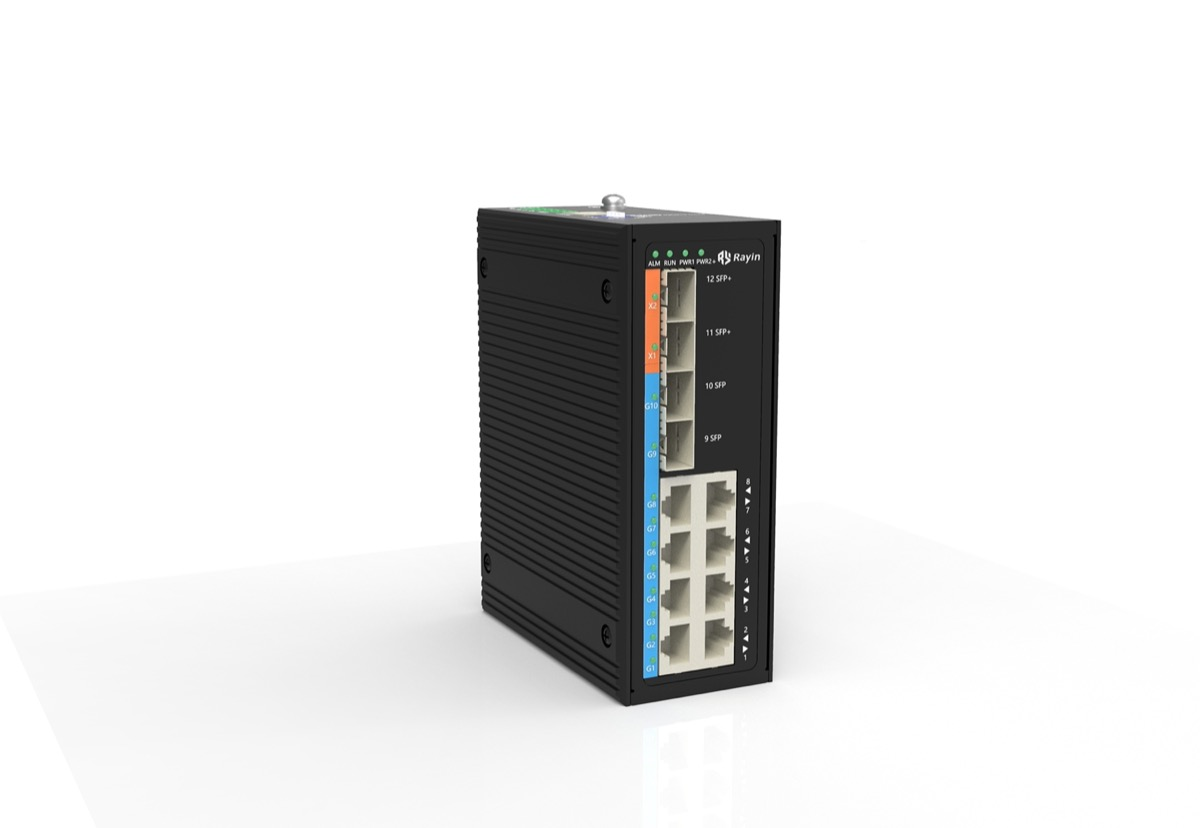
Keep the first three for a full audit cycle and raw streams for a maintenance cycle (all industry-typical). The eight RFC 5424 severity values are enough to decide what to retain at all. Start small: one baseline per role, scheduled collection, one rehearsed firmware rollback, then hand the ledger over with the topology diagram. A Rayin industrial switch or GPON OLT on such a site is just another managed device in that ledger — governance lives in the process, not in any single box, and no particular network management software is required.
Is a nightly backup enough on its own?
No. A nightly copy tells you what ran, not whether it matches the approved baseline or who changed it. Pair scheduled collection with a diff against the golden config, a ticket reference, and a tested restore path. Without those, you are archiving text you cannot act on when a remote site goes dark.
What belongs in the golden baseline, in plain terms?
The approved settings: VLAN memberships, management address, SNMP and syslog targets, port roles, and the pinned firmware version. Not the factory default. Keep the baseline read-only and versioned; change history goes in a separate append-only ledger. On a live Rayin switch, that split lets you restore a known-good state without losing why it changed.
How often should the running config be collected?
Daily is a sensible industry-typical interval for an unattended site. Drift is cheapest to read within a day, while the person who made it still remembers why. Pair each collection with a diff against the baseline and the previous snapshot: one shows drift, the other dates it. Raise the cadence during a planned rollout.
When should a firmware upgrade be rolled back instead of troubleshot live?
When the trigger you defined before the window fires. If the device has not re-established management within the agreed minutes, or a set of ports stays down, boot the previous dual-image slot instead of debugging an unreachable box. Troubleshooting a dead remote site burns the window; a written numeric trigger makes the call routine.
Which audit records matter most months later?
Four: the change request, the before-and-after diff, the rollback record, and the timestamped event log. A 40-line diff plus a ticket outlives a gigabyte of debug output. Keep the first three for a full audit cycle and raw streams for a maintenance cycle (industry-typical), and source every clock from NTP so records line up.
The standards and figures above come from public sources — the ITU-T G.984 series (the 128-ONU registration ceiling on a GPON PON port), the RFC 5424 series (the eight syslog severity values 0 to 7), the IEEE 802.1Q series (VLAN tagging in the baseline), the IEEE 802.1AB series (LLDP neighbour data), the SNMP RFC series, and NTP under the RFC 5905 series. Each is cited by series name only; no clause numbers are asserted. The method, worked examples, retention figures and wording are written by Sara, who checked each number against those sources before publication. Anything presented as industry-typical is labelled as such; nothing here is a measured figure from a Rayin product, a promise of any network management software, or a claim of any certification.
About the author: Sara — Sara is a Customer Manager at Rayin with over 10 years of experience in the communications field. In her free time, she enjoys badminton and swimming.
About Rayin: Shenzhen Rayin Technology Co., Ltd. — Company Profile