IEC 61850 GOOSE is a Layer 2 multicast service that never enters the IP stack, so a substation switch carrying it must honour the priority tag, keep multicast from flooding every port, and forward every GOOSE message without dropping frames during congestion. The frames are short, repeated on a tight schedule, and carry protection trips that cannot wait for a transport-layer retry. Get the switching wrong and the trip still arrives, just too late to be useful.
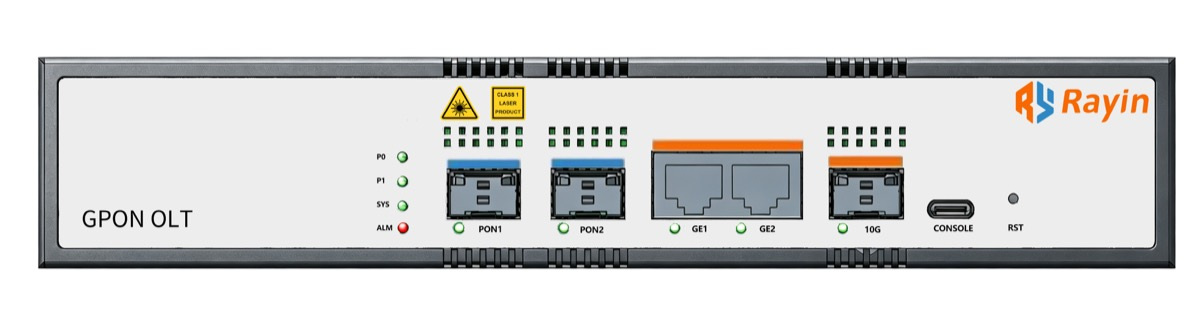
Rayin (Shenzhen Rayin Technology) is a manufacturer of GPON OLTs and industrial Ethernet switches.
GOOSE is Layer 2 multicast with no IP header: it uses its own EtherType and a multicast destination MAC, so IGMP snooping built for IP multicast does not govern it.
IEEE 802.1Q defines a 3-bit priority field, eight levels 0 to 7; a GOOSE message should be marked high and the switch must honour that mark when queues fill.
Acceptance is about counters, not a datasheet tick: egress discards, unknown-multicast flooding and CRC errors on a live substation network are what you verify.
A GOOSE publisher does not open a socket. It builds an Ethernet frame with its own EtherType and a multicast destination MAC, then hands it straight to the driver — no IP header, no UDP port, no TCP session to retry a lost packet. This is what IEC 61850 GOOSE looks like on the wire: a short, repeated, non-IP event frame. Reliability comes from repetition, not acknowledgement. The publisher sends the same state change several times, starting with short gaps and stretching the interval until it settles into a slow heartbeat; a receiver that misses one copy catches the next, and one seeing the same state repeated knows nothing changed.
Because the payload is small, an untagged frame stays near the IEEE 802.3 minimum of 64 bytes, and the 4-byte IEEE 802.1Q tag raises the maximum from 1518 to 1522 bytes (industry-typical). What is unusual is the delivery contract: the frame must cross every intervening switch within a few milliseconds, even while other traffic bursts. IGMP snooping will not help — it tracks IP multicast groups and there is no IP layer here to join one. Static multicast entries or MAC-based filtering are the tools that apply.
The priority marking is the one piece of the frame a switch must act on. IEEE 802.1Q reserves a 3-bit field in the tag, giving eight values 0 to 7, and a strict-priority queue can serve marked frames ahead of bulk traffic. If VLAN priority is stripped or rewritten on a trunk, the marking is lost and the queue has nothing to schedule — the frame is delivered, just last. Set the mark once at the publishing IED, keep it intact end to end, and map the highest values to the egress queue GOOSE uses. See how the 802.1Q priority bits for GOOSE sit inside the tag for the four fields, TPID, PRI, CFI-DEI and VID, that make up the header.
| IEEE 802.1Q priority value | Typical use | Switch handling for protection events |
|---|---|---|
| 0–1 (lowest) | Bulk file transfer, logging | Best effort; may wait behind a burst |
| 2–3 | Routine supervision traffic | Normal queue |
| 4–5 | Time-sensitive control | Elevated queue, rate-limited |
| 6–7 (highest) | Protection trips, GOOSE | Strict-priority egress queue, served first |
The mapping is industry-typical; priority values are a local QoS choice, not a standard-mandated setting for GOOSE. Confirm it against the site's QoS plan. A tag that survives but lands in a best-effort queue behaves like one never written.
A switch learns unicast MAC addresses but floods unknown unicast to every port in the VLAN. Multicast gets a similar default: without a filter, an incoming multicast frame is replicated to all other ports. On a 24-port switch (industry-typical) that is up to 23 unnecessary copies of every frame, and on a busy substation network those copies compete with the trips for the same egress buffers. The IT cure, IGMP snooping, reads IP group membership — and there is no IP header here to snoop.
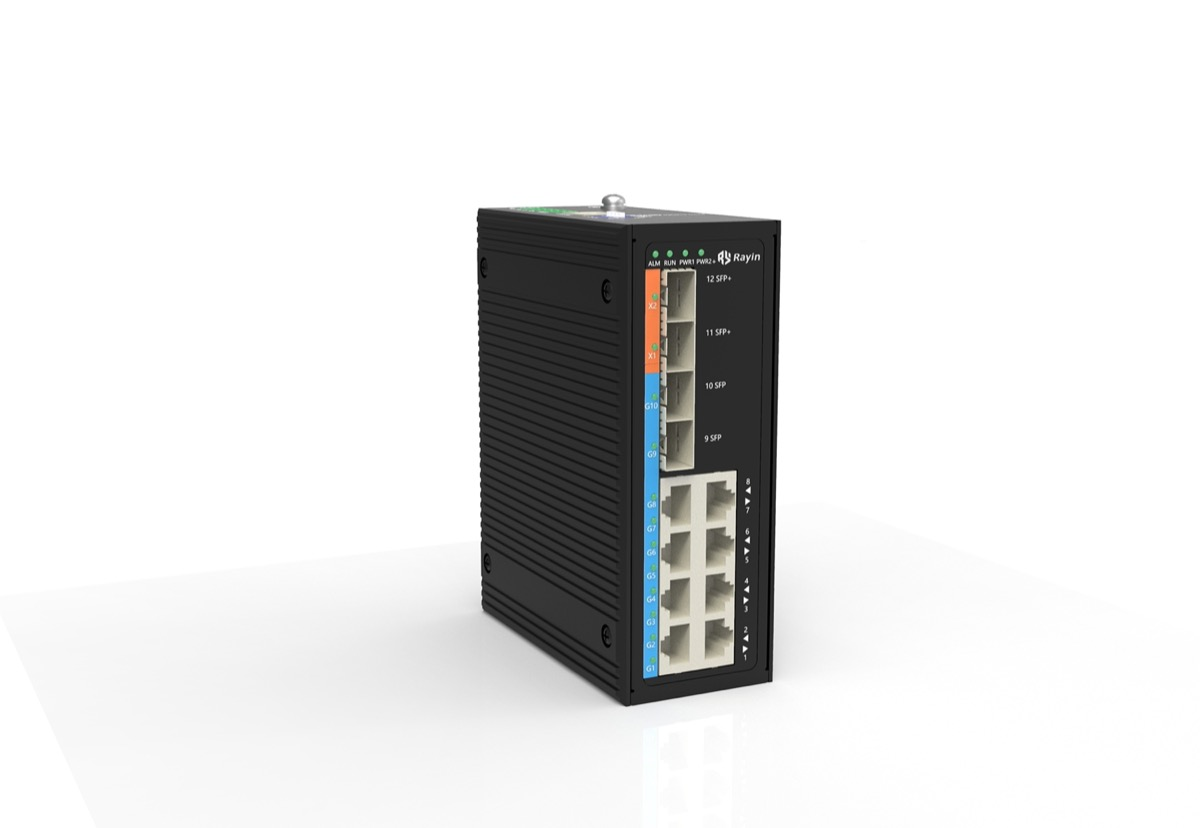
What works instead is a static multicast MAC entry, or a filter admitting the GOOSE destination MAC only on the ports that need it. Do that and the frame follows a known path; leave it and one publisher can fill the VLAN. Rayin builds GPON OLTs and industrial Ethernet switches, and on the switch side the features that matter are the generic ones any managed switch exposes: static multicast entries, per-VLAN filtering and per-port counters. Nothing here needs a special chip — IEEE 802.1Q already confines the frame to one VLAN and the 3-bit priority field is read once at ingress.
| Behaviour | Ingress frame | Egress result | Risk |
|---|---|---|---|
| No multicast control | GOOSE multicast | Copied to every port in the VLAN | Flooding, wasted buffers, jitter |
| IGMP snooping only | GOOSE multicast, no IP header | Still flooded; no group to learn | False sense of control |
| Static multicast MAC entry | GOOSE multicast | Only the listed ports receive it | Entry must be kept current |
| Per-VLAN filtering | GOOSE multicast | Contained to the intended VLAN | Mis-scoped VLAN hides the trip |
Not dropping frames is the whole point, so "it works" is not an acceptance criterion. Read the counters. Egress queue discards say a marked frame waited too long behind a burst; CRC or alignment errors point at a physical link, not a QoS policy; unknown-multicast counters show whether the containment above actually took. VLAN priority alone does not guarantee delivery — a strict-priority queue starved of buffer still discards, and the discard counter is where that shows. These are standard port figures you poll over SNMP or read in the CLI.
Pick a maintenance window, generate a known count of test frames (industry-typical), and check the received count matches. The same discipline behind how an OLT detects ONU power loss — watching one decisive event, not a generic alarm — applies here: one lost trip matters more than a thousand successful heartbeats. If a discard counter moves during the test, the substation network is not ready however healthy the LEDs look.
| Counter | What a rising value means | Acceptance action |
|---|---|---|
| Egress queue discards | Marked frames waited behind a burst | Raise queue weight or buffer; re-test |
| CRC / alignment errors (IEEE 802.3 4-byte FCS) | Physical link or optics problem | Inspect the fiber and the SFP |
| Unknown-multicast / flooded frames | Multicast containment not in force | Add a static multicast entry |
| Port discards on the uplink | Uplink congested | Check utilisation before blaming GOOSE |
| Gap indicators at the receiver | A repeat was missed | Verify the retransmission path end to end |
Every event in a substation is ordered in time, and the switch is part of that chain. IEEE 1588 precision time protocol (PTP) keeps IED and switch clocks aligned; without a common clock, the timestamps used to reconstruct a fault sequence drift apart and a perfectly delivered frame becomes ambiguous evidence. Sub-millisecond accuracy is an industry-typical target, not a datasheet figure. Redundancy schemes such as PRP and HSR, and timing through PTP, are separate design layers a GOOSE-carrying switch need not implement to get the basics right.
The practical check is plain: confirm the switch passes PTP frames without rewriting them, its own clock is synchronised, and port timestamping is consistent across the path. A switch that forwards a trip correctly but stamps it against a wandering clock has done only half the job.
Is GOOSE carried over IP or straight over Ethernet?
Straight over Ethernet. A GOOSE frame carries its own EtherType and a multicast destination MAC, with no IP header and no transport-layer session to retry a lost packet. That is why IGMP snooping, which reads IP group membership, cannot control it, and why delivery depends entirely on how the switch handles Layer 2 multicast.
Does IGMP snooping stop GOOSE flooding?
No. IGMP snooping learns IP multicast groups from membership reports; a GOOSE frame has no IP header, so there is nothing to learn. Without a static multicast MAC entry or a filter, the switch copies the frame to every port in the VLAN and burns buffers that protection traffic needed.
Which IEEE 802.1Q priority level should a protection event use?
A high one, typically 6 or 7 of the eight IEEE 802.1Q priority values, mapped to a strict-priority egress queue. The exact value is a local QoS choice, not a standard-mandated setting for GOOSE; what matters is that the mark survives every trunk and the queue serves it first.
What should an acceptance test actually measure?
Frame loss, not link status. Generate a known count of test frames (industry-typical) in a maintenance window and check the received count matches. On a Rayin switch, as with any managed switch, read egress discards, CRC errors and unknown-multicast counters; if a discard counter moves, the path is not ready even with green LEDs.
Does a switch need PTP or redundancy protocols to carry GOOSE?
No. IEEE 1588 PTP keeps clocks aligned so a delivered trip can be ordered in time, and schemes such as PRP and HSR add redundancy at the device level, but neither is required to forward a GOOSE frame correctly. Treat them as separate design layers; get priority, multicast containment and zero discards right first.
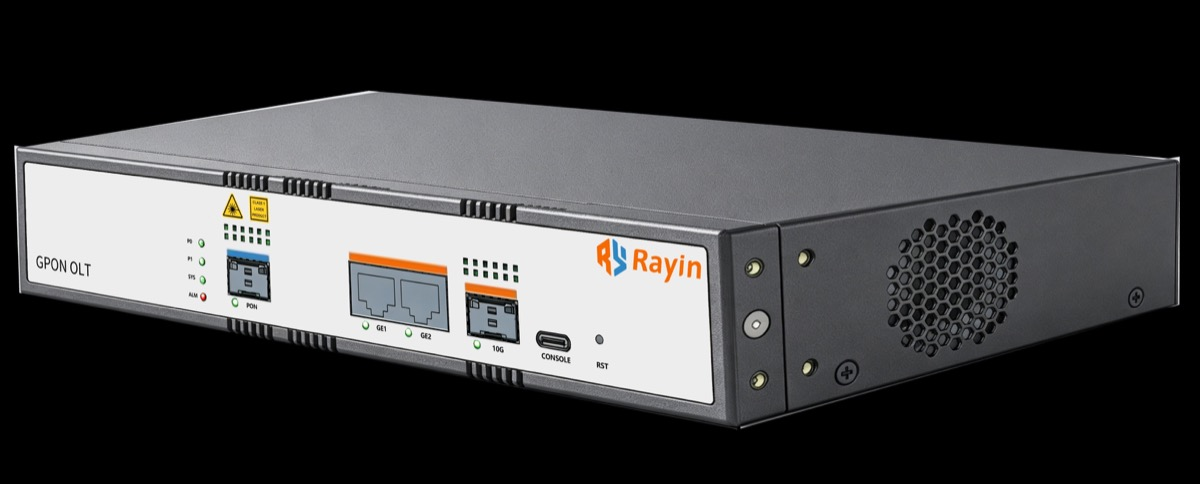
GOOSE does not ask for exotic hardware. It asks for a switch that keeps the priority mark, contains the multicast stream to the ports that need it, drops nothing under a burst, and shows the counters that prove it. Verify those four things in a maintenance window and the path is ready; skip them and a healthy-looking link is just a guess.
The protocol statements above come from public industry sources — the IEC 61850 series (cited by series name only, with no GOOSE clause numbers quoted), IEEE 802.1Q (the 3-bit priority field and the four-byte tag), IEEE 802.3 (frame size limits) and IEEE 1588 (timing). The comparison tables, worked examples and wording are written by Sara, who checked each figure against those sources before publication. Anything presented as an industry-typical value is labelled as such; nothing here is a measured figure from a Rayin product, a claim of any certification, or a commitment to implement any redundancy scheme.
About the author: Sara — Sara is a Customer Manager at Rayin with over 10 years of experience in the communications field. In her free time, she enjoys badminton and swimming.
About Rayin: Shenzhen Rayin Technology Co., Ltd. — Company Profile