The port count tells you almost nothing about the price. Two switches described as "8 Gigabit RJ45 plus 4 Gigabit SFP" can differ by a factor of three, and the difference sits in the power stage, the protection components, the PCB layout, the enclosure and the grade of the silicon — none of which appear in a switch spec sheet headline. Rayin (Shenzhen Rayin Technology) is a manufacturer of GPON OLTs and industrial Ethernet switches. Understanding where the money goes is the only way to judge whether a quote is cheap because it is efficient or cheap because it is thin.
Port count, backplane and forwarding rate are the cheapest parts of the design to match. The cost spread lives in what surrounds them: input stage, surge protection, PCB stack-up and thermal path.
A threefold industrial switch price difference usually tracks to four bill-of-materials lines: dual isolated DC inputs, surge and ESD protection devices, industrial-grade passives, and a metal enclosure used as a heat sink.
You can surface most of it without a teardown by asking eight specific questions on the RFQ — vendors who cannot answer them are telling you something.
It tells you the topology you can build: eight copper drops and four fibre uplinks. It says nothing about whether the switch will still be switching in a panel that reaches 70 °C in August, or after the third lightning season on an outdoor pole cabinet.
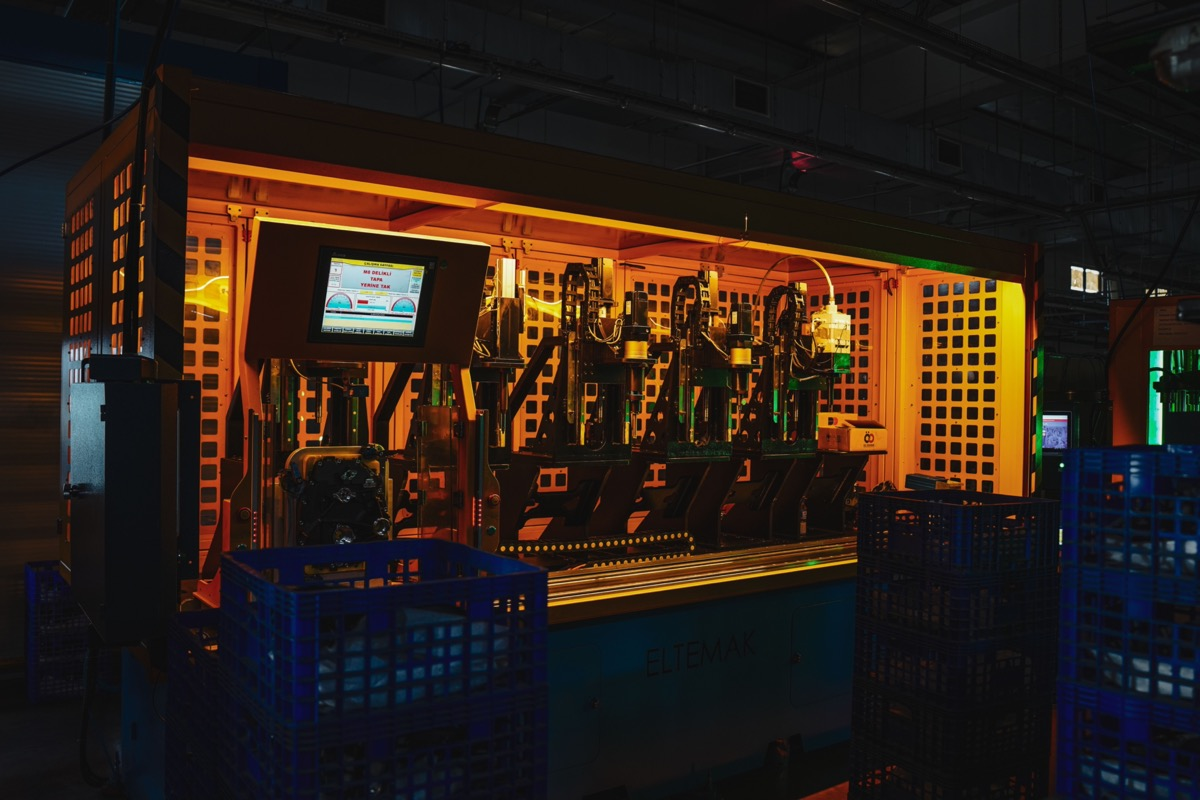
The headline numbers — ports, backplane bandwidth, packet forwarding rate — are the easiest specifications to match because they come from the switch silicon vendor. Both the cheap unit and the expensive one likely run comparable mainstream chipsets. The divergence starts one layer out.
| Dimension | Lower-cost approach | Industrial-grade approach | Why it costs more |
|---|---|---|---|
| Input stage | Single DC input, basic regulator | Dual isolated DC inputs, wide 9–60 VDC range, reverse-polarity protection | A second input path plus isolation adds magnetics and FETs |
| Surge / ESD | Minimal or omitted | TVS arrays and gas discharge tubes to IEC 61000-4-5 and IEC 61000-4-2 levels | Protection devices are discrete BOM line items, not design cleverness |
| PCB | 4-layer, cost-optimised routing | 6–10 layer with controlled impedance and separated ground planes | Layer count scales board cost roughly linearly |
| Enclosure | Sheet-metal box | Machined or extruded aluminium used as the thermal path, IP-rated | Tooling and material cost, plus EMC shielding performance |
| Passives | Commercial-grade capacitors | Industrial-grade, long-life electrolytic and MLCC | Component price spread; commercial parts derate badly at temperature |
| Validation | Functional test | Type tests: surge, EFT, thermal cycling, vibration | Test time and third-party lab fees |
The last row is the one buyers forget. A vendor that has paid for IEC 61000-4-5 surge testing at a stated level can show you a report. A vendor that has not will describe the same protection in adjectives.
More than most people expect, and it is where industrial switch build quality is easiest to verify.
Consider what a 8 port industrial switch has to survive on a real site. Supply rails in industrial cabinets are noisy; a contactor elsewhere on the same rail can drop the input briefly. A maintenance technician can connect the DC input backwards. An outdoor run can pick up a surge. Each of those needs a physical answer on the board:
| Event | What protects the switch | Specification to ask for |
|---|---|---|
| Input reversal | Series MOSFET or diode bridge | Stated reverse-polarity protection, no damage |
| Short transient dip | Input bulk capacitance and hold-up | Ride-through time in ms at full load |
| Lightning-induced surge | TVS plus gas discharge tube | IEC 61000-4-5, level in kV, line-to-line and line-to-earth |
| ESD from handling | TVS on data lines | IEC 61000-4-2, contact and air discharge kV |
| Electrical fast transient | Filtering and layout | IEC 61000-4-4, level in kV |
A unit rated for a wide 9–60 VDC input is genuinely more flexible than one specified at a narrow nominal 24 VDC, because it tolerates both the 24 V and 48 V rails common in telecom and industrial cabinets without a separate model. That flexibility costs BOM, which is part of the industrial switch price difference you see in quotes.
If the switch also delivers PoE, the power budget dominates everything else. IEEE 802.3af supplies up to 15.4 W per port, 802.3at up to 30 W, and 802.3bt up to 90 W — a 90 W-class PoE power stage is a different product from a non-PoE one that shares the same chassis.
Send both vendors the same eight questions. The pattern of answers tells you more about industrial switch build quality than any single specification on the sheet.
What is the stated input voltage range, and is reverse-polarity protection included or optional?
Which IEC 61000-4-5 surge level is the unit type-tested to, and is a test report available?
How many PCB layers, and is impedance control used on the Gigabit pairs?
Is the enclosure part of the thermal path, or is there an internal heat spreader?
What is the operating temperature range, and at what ambient does forwarding performance begin to derate?
Are the electrolytic capacitors rated for 105 °C, and what is the stated design life at maximum ambient?
Is there a fan? If not, what is the maximum ambient at full load without throttling?
What is the stated MTBF, and on which standard and which assumptions is it calculated?
A vendor who answers all eight with numbers is usually the one whose price is explained by the design. A vendor who answers with "industrial grade" is usually the one whose price is explained by marketing.

Honestly, quite often. If the switch sits in a climate-controlled control room, feeds office-grade loads, and a failure means someone walks over with a spare, the extra spend buys very little.
The premium is justified when the failure cost dominates: a switch on a conveyor where one hour of downtime exceeds the price gap between the cheap and the expensive unit by a wide margin, an outdoor cabinet where a truck roll costs more than the hardware, or any site where the replacement window is measured in days rather than minutes. That is the whole calculation — price difference against failure cost, not price difference against features.
Is a higher price always a sign of better quality? No. Brand premium, low-volume production and channel markups all raise price without changing the design. That is why the eight questions matter more than the number.
Can two switches with the same chipset really perform differently? Yes. The chipset sets forwarding capability; the power stage, thermal design and protection determine whether that capability is still available at 70 °C ambient or after a surge event.
What is the single specification most often missing from quotes? The surge test level. Many quotes state "surge protection" without a stated IEC 61000-4-5 level or a report, which is not verifiable.
Does an 8+4-port configuration cost more than 8-port? Yes, because SFP cages, magnetics and the associated routing add cost. A basic 8 port industrial switch with no fibre uplinks is the cheapest configuration in any vendor's range, but the increment for four SFP slots is small and predictable compared with the power and protection decisions.
How much should budget for a fanless wide-temperature model? It varies by region and volume. Rather than anchor on a number, compare what each quote includes at the same ambient and protection level — that is where the real difference appears.
How to read a hardened switch spec sheet without getting fooled
Why industrial Ethernet switches cost more than commercial ones
Switch housing: a simple metal box or a heat and shielding system?
What a wide-temperature rating of -40 to 75 C actually means
About the author: Sara is a Customer Manager at Rayin with over 10 years of experience in the communications field. In her free time, she enjoys badminton and swimming.
About Rayin: Shenzhen Rayin Technology Co., Ltd. — company profile