A burn in test proves that a unit survived a short powered run at the factory, and almost nothing about how long it will last in your cabinet. It screens out the weak parts that would otherwise die in the first weeks of service. Buyers keep reading the pass stamp as a lifetime guarantee, and that one misreading is why a factory audit is worth the trip.
Rayin (Shenzhen Rayin Technology) is a manufacturer of GPON OLTs and industrial Ethernet switches.
A burn in test targets infant mortality, the steep early-failure slope of the bathtub curve. It does not compress five years of thermal cycling, surge events and connector corrosion into a few days on a rack.
Environmental stress screening is a different tool. It cycles temperature and mechanical load under the IEC 60068 environmental testing series; a shock and vibration test belongs there, not to a powered soak.
Ask for three documents, not one certificate: a serial-numbered soak log, a fallout summary with failure categories, and a final functional test report. An MTBF report describes a population, never the box in your hands.
Every batch of electronics follows the same failure-rate shape. The bathtub curve starts high, drops to a long flat useful-life region, then climbs again as parts wear out. The opening slope is infant mortality: solder voids, marginal capacitors, contaminated joints, a regulator that drifts just outside tolerance. Those defects are latent at power-on and show up within the first tens to hundreds of operating hours. A powered soak pushes a whole lot through that window while the units are still on the bench, where a failure costs a rework ticket instead of a site visit.
The mechanism is time and bias, not severity. Hold the unit at nominal input, often at an elevated ambient, and let weak parts declare themselves. IEC 60068 is the environmental testing series that governs how temperature and humidity conditions are applied and recorded; it is a method family, not a pass mark. A 48 h to 168 h soak is an industry-typical convention, not a figure pulled from any datasheet. So is 85 C as a chamber setpoint. Nothing about the soak tells you the failure rate at hour 40,000.
No, and the confusion costs buyers real evidence. ESS is designed to precipitate latent defects by changing conditions fast: temperature ramps, thermal shock, mechanical load. A shock and vibration test per IEC 60068 is the classic example. Burn in applies a mostly steady electrical bias for hours. Different stresses, different defect populations, different records.
| Aspect | Powered soak (burn in) | ESS |
|---|---|---|
| Primary stress | Steady electrical bias, sometimes elevated ambient | Changing temperature and mechanical load, IEC 60068 series |
| Defects caught | Marginal parts, solder voids, early parametric drift | Cracked joints, intermittent contacts, assembly workmanship |
| Typical duration (industry-typical) | 48 h to 168 h | Hours per cycle, several cycles |
| Output record | Serial-numbered hours and pass/fail | Applied profile and anomalies logged per step |
| What it says about field life | Very little | Very little |
A shock and vibration test asks whether a board survives transport and mounting; the soak asks whether a unit stays alive while powered. Neither substitutes for the other, and a supplier who quotes one when you asked about the other is telling you something about their quality system.
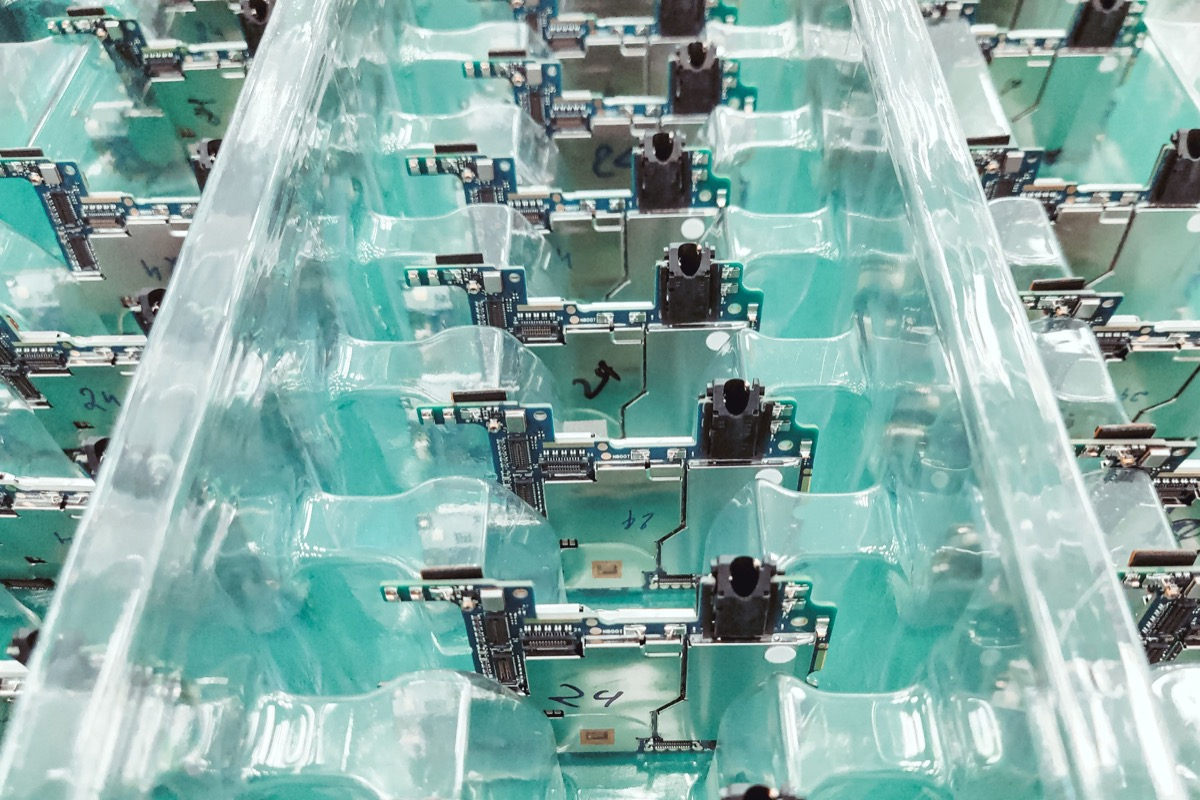
Walk a production floor and you see three conventions, all industry-typical. First, powered at nominal DC input with traffic running through every port, held at room ambient. Second, powered inside a chamber at a raised setpoint, which accelerates the temperature-sensitive failure modes. Third, repeated on/off cycling, which stresses inrush and reset behaviour rather than steady-state drift.
| Convention | What it stresses | Industry-typical duration | Record to request |
|---|---|---|---|
| Nominal input, all ports active, room ambient | Early parametric drift, dead-on-arrival parts | 48 h | Port-level pass/fail per serial number |
| Elevated ambient chamber, nominal input | Temperature-sensitive joints, marginal regulators | 72 h to 168 h | Chamber setpoint and logged soak hours |
| Repeated power cycling | Inrush, reset and boot behaviour | 200 to 500 cycles | Cycle count and any failed restart |
The numbers above are industry-typical ranges, not Rayin product specifications. What matters is the boundary condition: which units were powered, for how long, at what ambient, and what traffic was offered. A 168 h claim with no chamber log is a marketing line. A 48 h run with a signed serial-numbered log and a fallout count is evidence.
Ask for three, and insist they are tied to the serial numbers on your shipment.
Soak log. Start and stop timestamps, ambient or chamber setpoint, input voltage, and pass/fail for every serial number. If the log lists a batch total instead of individual units, you cannot tell whether your box was in the rack.
Fallout summary. How many units failed during the window, and in which categories. Zero fallout sounds good until you learn nobody recorded the three units quietly pulled at hour 20. A real process has a stable, non-zero fallout rate and a documented disposition.
Final functional test report. Port link-up at the rated speed, PoE negotiation where fitted, optical interface checks, and the firmware version. This is the record that the unit still worked after the soak, not just during it.
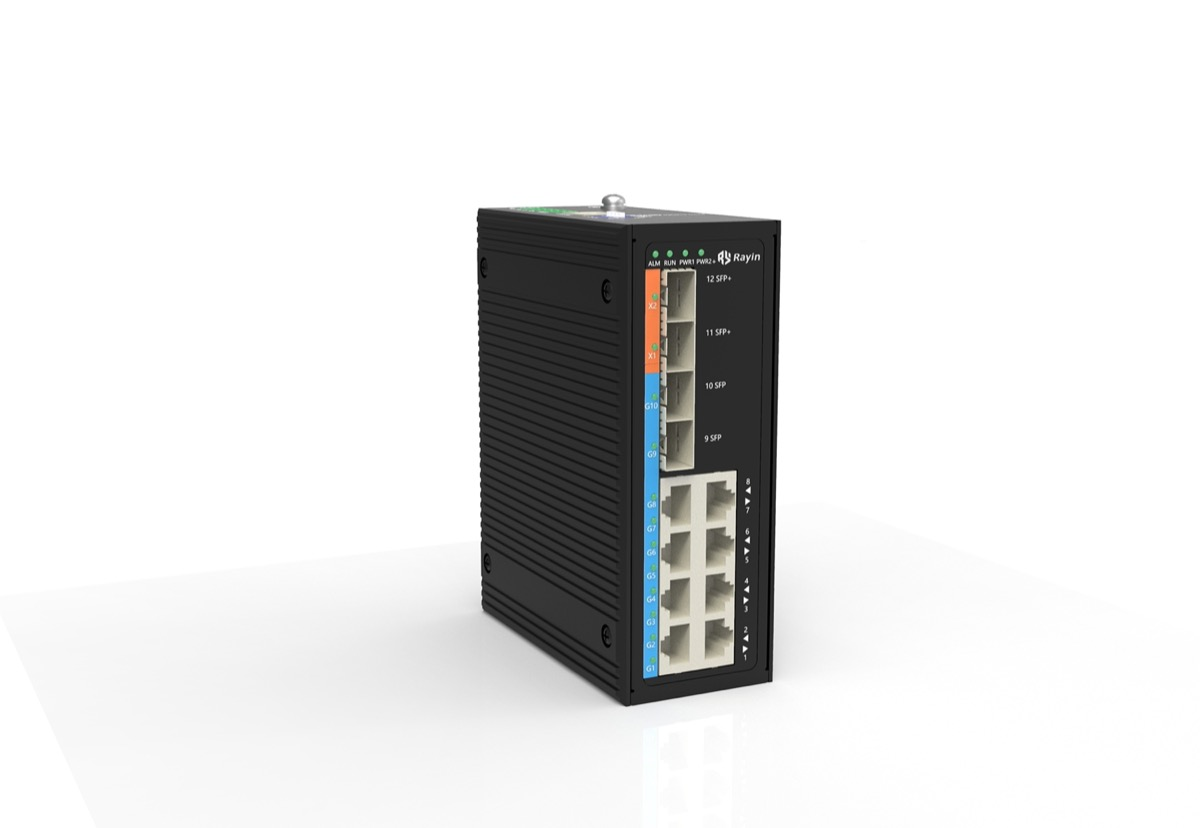
Rayin's industrial Ethernet switches go through the same three-record logic any buyer should apply: log, fallout, functional re-test. Pair those with a reliability estimate and read them together. The report gives a population estimate; the soak log gives a per-unit history. One is statistics, the other is a birth record. Neither predicts the day a connector corrodes in a humid roadside cabinet.
Because the field applies stresses the rack never did. Three common ones:
| Field stress | Why the soak misses it | Where it belongs in the design |
|---|---|---|
| Surge and lightning on outdoor copper | A millisecond event, not an operating-hour mechanism | Port protection and cabinet earthing |
| Humidity-driven connector corrosion | Develops over seasons, not 168 h at steady ambient | Ingress rating and coating choices |
| Thermal cycling and capacitor wear-out | Wear-out region of the bathtub curve, far past the early-failure window | Component derating and planned replacement |
An MTBF figure does not fix this either. It is calculated from a failure-rate model for a population under defined conditions; it is not a measurement of your unit and it is not a warranty of calendar life. Treat it as one input to a spares calculation, not as proof that a passed soak means a trouble-free decade. IEC 60068 testing can probe some of these mechanisms, but only when the profile is chosen for them. A steady soak is not that profile.
Does passing a factory soak mean my switch will last ten years?
No. The soak screens infant mortality, the early-failure slope of the bathtub curve, and says nothing about wear-out, surge damage or corrosion that appear years later. Read it as evidence that weak units were weeded out before shipment. For a service-life estimate, use field failure data and a spares calculation, not a pass stamp.
Is burn in the same thing as environmental stress screening?
They are different tools. ESS cycles temperature and mechanical load under the IEC 60068 series to shake out cracked joints and intermittent contacts. A powered soak holds a mostly steady bias for hours to catch marginal parts. A shock and vibration test sits with the screening family, not with the soak.
What documents should I demand before accepting a shipment?
Three, all tied to serial numbers. First, a soak log with timestamps, ambient and per-unit pass/fail. Second, a fallout summary listing how many units failed and why. Third, a final functional test report covering ports, PoE where fitted and optics. Rayin treats that trio as the baseline a buyer should expect from any factory.
Can a unit pass the soak and still arrive dead?
Yes. Damage in transit, a connector bent during installation, or an electrostatic event at the dock can kill a unit after it left the rack. That is why the final functional re-test after the soak matters more than the soak itself. Insist on a per-serial-number result recorded at dispatch, and re-check link-up on arrival.
How is an MTBF report different from a soak record?
An MTBF report is a statistical estimate for a population. A soak log is a per-unit history: this serial number ran these hours at this ambient and passed. One supports a spares budget, the other proves a specific box was screened. Confusing them is how a headline reliability figure becomes a false ten-year promise.
A screening pass is one line in a quality file, not a verdict on field life. Ask for the soak log, the fallout summary and the functional re-test, all keyed to serial numbers. Read that estimate separately. When a unit dies in year four in a damp cabinet, none of those documents promised otherwise, and the factory that kept them can at least tell you what happened.
The reliability terminology above comes from public industry sources: the bathtub curve and infant mortality as general reliability concepts, and IEC 60068 as the environmental testing series covering applied temperature and mechanical test profiles. The method, worked examples and wording are written by Sara, who checked each figure against those sources before publication. Anything presented as an industry-typical value is labelled as such; nothing here is a measured figure from a Rayin product unless it says so.
About the author: Sara — Sara is a Customer Manager at Rayin with over 10 years of experience in the communications field. In her free time, she enjoys badminton and swimming.
About Rayin: Shenzhen Rayin Technology Co., Ltd. — Company Profile