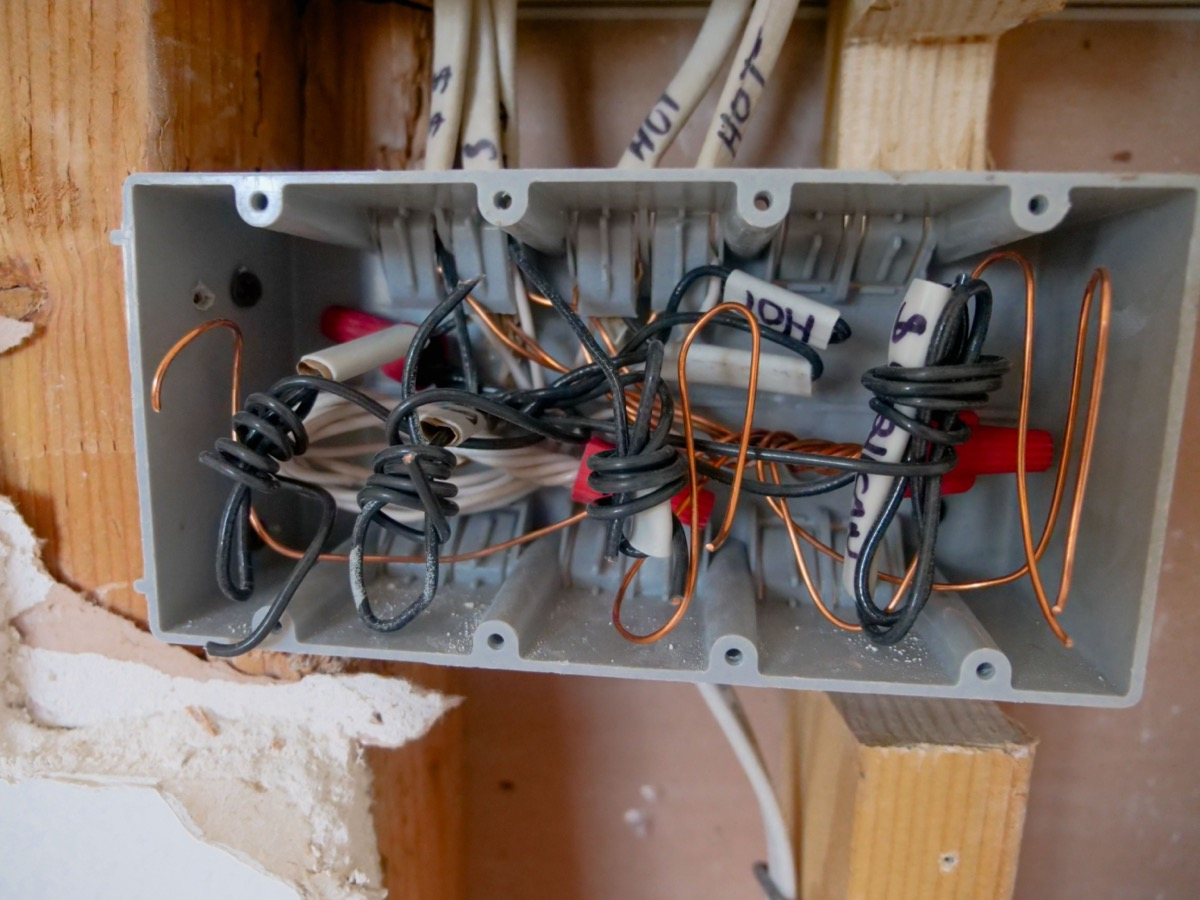
A water treatment plant is a long, thin network: a few control points spread over hundreds of metres, connected by links that have to survive humidity, corrosion and lightning. Design it as backbone plus zones, and the process side stays the process engineer's problem.
Rayin (Shenzhen Rayin Technology) is a manufacturer of GPON OLTs and industrial Ethernet switches.
Distance decides the medium. Copper is limited to a 100 m channel; single-mode fibre and GPON both cover plant-scale distances, and GPON as defined in ITU-T G.984 supports a 20 km logical reach.
The plant splits into a small number of zones — control, monitoring, management and enterprise — and every cable between two of them is a conduit that gets its own rule.
Unattended pump stations need two things specified explicitly: the uplink, and how a power or link failure gets reported when nobody is there to see it.
The geometry is the design constraint. Everything else follows from it.
| Link segment | Typical distance | Medium that fits |
|---|---|---|
| Instrument to local switch inside a building | Up to 100 m | Twisted pair; IEEE 802.3 sets the 100 m channel limit, made up of a 90 m permanent link plus patch cords |
| Control room to a process building | 100 m to 2 km | Multimode or single-mode fibre, depending on the optic |
| Control room to a distant pump station | Hundreds of metres to several kilometres | Single-mode fibre; 1000BASE-LX class optics cover 10 km |
| One OLT to many scattered pump houses | Up to 20 km logical reach | GPON, which also removes the need for powered intermediate cabinets |
| Inside a switch cabinet | Metres | Copper |
The interesting decision is between point-to-point fibre and PON for the remote sites. Point-to-point fibre gives each site a dedicated link and a dedicated port at the centre. GPON gives one OLT port serving many sites over a passive splitter network, with up to 128 ONUs registerable per PON port, which suits a plant with a dozen small pump houses spread along a pipeline.
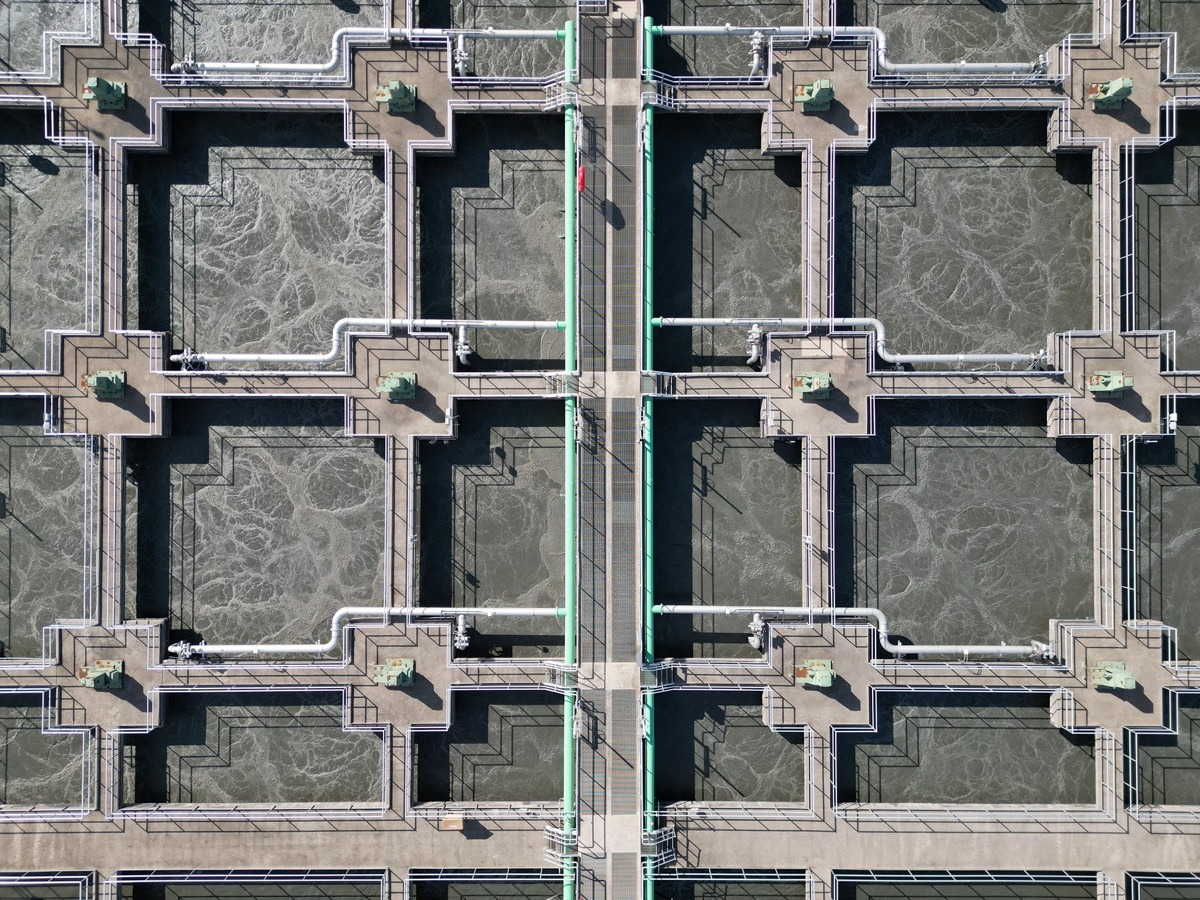
Two areas of a plant are consistently harder on electronics than the rest.
| Area | Environmental stress | What the network design has to add |
|---|---|---|
| Chemical dosing room | Corrosive vapour, high humidity | Enclosure rating and coating considered at selection; sealed cable entries |
| Pump house | Continuous humidity, splash, condensation when pumps stop | Drain provision, downward cable entries, and a decision on heating versus venting |
| Outdoor valve chambers | Standing water, immersion risk | Sealed enclosures with documented gasket material and drainage |
| Control room | Air conditioned | The easy case; do not let it set the specification for the rest |
The failure pattern to plan against is condensation after a shutdown, not continuous damp. Equipment that runs warm dries itself; equipment that stops over a weekend and restarts on Monday morning is when wet assemblies get energised.
Four zones, and the boundary worth arguing about is the one between control and everything else.
| Zone | What is in it | What crosses into it |
|---|---|---|
| Control | PLCs, the SCADA server, operator stations | Only from the management zone and from field devices in the field zone |
| Field and device | Instruments, drives, remote I/O at process units and pump houses | From the control zone only |
| Monitoring | Cameras and recorders | To the recorder and to the operator workstations; nothing to the field zone |
| Management | Switch and device management addresses | From an engineering workstation in the control zone; nothing else |
| Enterprise | Office network, reporting | Only through a single, filtered conduit |
On a plant, the monitoring zone matters more than people expect, because cameras are the devices most often bought without a network design and most often connected wherever a spare port exists.
Bitrate planning is arithmetic, and doing it before the cable is pulled prevents the most common rework.
| Camera class | Industry-typical bitrate | 8 cameras | 16 cameras |
|---|---|---|---|
| 1080p, H.265, 15 fps | 2 to 4 Mbit/s | 16 to 32 Mbit/s | 32 to 64 Mbit/s |
| 4 MP, H.265, 20 fps | 4 to 6 Mbit/s | 32 to 48 Mbit/s | 64 to 96 Mbit/s |
| 4 MP with infrared at night | Higher, because motion and noise raise the bitrate | Budget for the night figure, not the daytime figure | Budget for the night figure |
| Recording retention | Storage, not bandwidth | Separate calculation | Separate calculation |
Two rules: size the uplink for the night bitrate rather than the daylight one, and give the recorder its own path to the camera VLAN rather than routing video through the control backbone.
An unattended site has two requirements, and the second is the one that gets forgotten.
| Station type | Uplink | Failure reporting |
|---|---|---|
| Pump station on plant fibre | Single-mode fibre to the plant ring, dual-homed if the station is critical | Link loss visible at the control room, plus a relay alarm output to the telemetry system |
| Pump station on GPON | An ONU at the station, back to the OLT | ONU loss of signal and power-loss reporting from the OLT side |
| Remote site with no fibre | Operator-provided circuit | Out-of-band path so a network failure can still report itself |
| Critical station | Two diverse paths | Both the network alarm and an independent physical alarm contact |
That out-of-band point is the whole argument for a relay alarm output on the switch. If the only way a station reports a failure is the same link that just failed, the station cannot report its own failure.
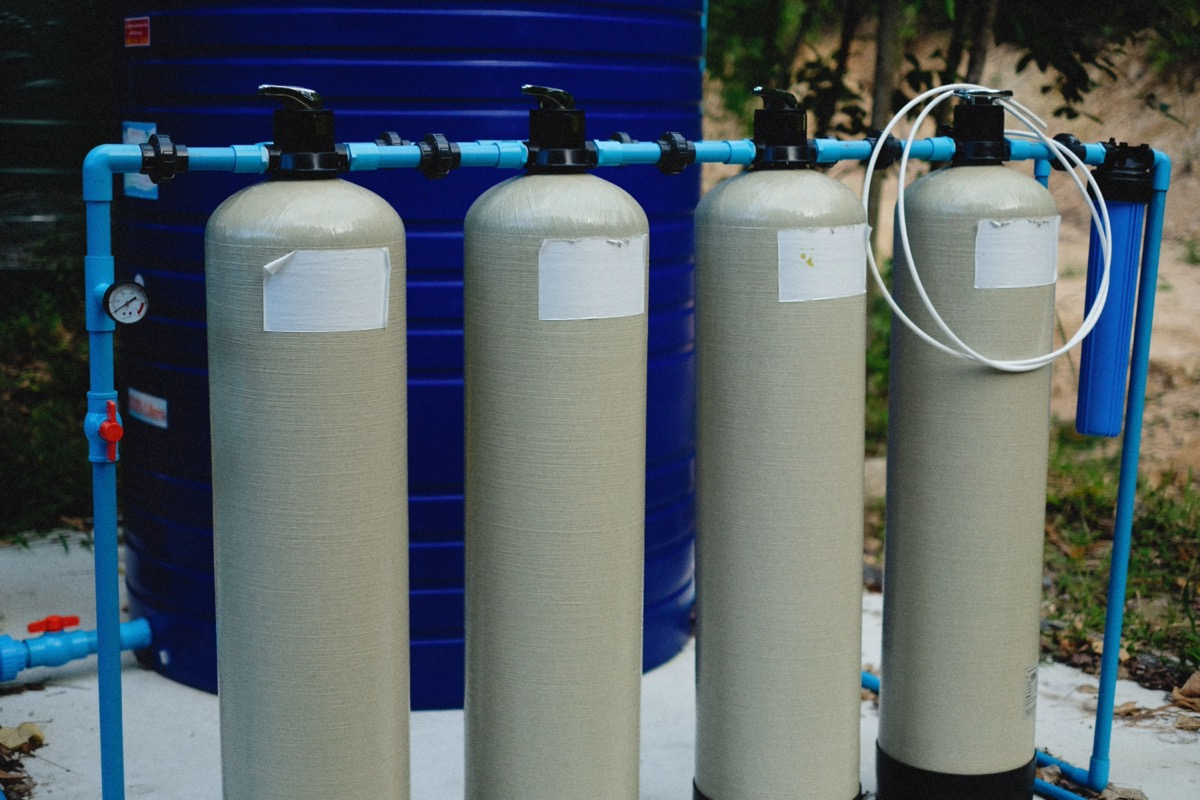
Outdoor cable runs and metal pipework make plants exposed, and three mechanisms need separate answers.
| Measure | What it covers | What it does not |
|---|---|---|
| Surge protective device on outdoor copper runs | Fast transients from lightning and switching | A standing voltage difference between two earths |
| Bonding between site earth systems | The potential difference that damages ports on dry days | External transients |
| Fibre between buildings with separate earths | Both, because there is no metallic path | Nothing left, except the copper at each end |
Six steps, and the third is the one that prevents rework.
| Step | Deliverable | Acceptance item |
|---|---|---|
| 1. Walk the site and record distances and cable routes | A distance table per link | Every link has a measured length, not an estimate |
| 2. Draw the zones and conduits | One-page zone drawing plus a conduit table | Every cable between zones has one row |
| 3. Choose the medium per link | Fibre, PON or copper per segment | Matches the distance table from step 1 |
| 4. Size power and PoE per cabinet | PoE budget per switch, including infrared load | Camera night load included |
| 5. Specify enclosures and environmental provisions | IP rating, coating, drain, heating or venting decision | Documented per area |
| 6. Build the monitoring and alarm path first | Management VLAN, traps, relay alarm contacts | A simulated failure is reported end to end |
Should a plant use fibre or PON between pump stations?
Fibre for a handful of high-value links where each site needs guaranteed bandwidth, and PON where many small sites share one OLT port. GPON supports a 20 km logical reach and up to 128 ONUs per PON port, which suits scattered, low-bandwidth stations well.
How many cameras can one switch feed at a pump station?
Start from the bitrate, not the port count: eight 4 MP cameras at 4 to 6 Mbit/s each need 32 to 48 Mbit/s of uplink, plus the night-time increase when infrared is active. Then check the PoE budget against the camera load including heaters.
Does the SCADA network need to be physically separate from the camera network?
Not physically, but it does need to be a separate zone with a filtered conduit between them. VLAN separation plus an access control list on the boundary is the common industry-typical answer on small plants.
How does an unattended site report a power failure?
Through a path that does not depend on the failed link. A relay alarm output on the switch, wired to the site telemetry or to an independent contact, is the usual way to make a station able to report its own failure.
What is the most common design mistake on plant networks?
Sizing the video uplink from the daylight bitrate. Night-time infrared, motion and noise raise the bitrate, and the recording gap that appears at 2 a.m. is the result.
Design the plant as a backbone, a handful of zones and an alarm path, and the process side stays untouched. For plants with many small remote sites, a mini GPON OLT plus industrial switches at the stations is a compact way to cover the distance without powered intermediate cabinets.
Why SCADA Needs a Managed PoE Switch With No Single Point of Failure
Carrying Modbus TCP on an Industrial Switch Without Dropping Packets
Dual-Uplink Protection: Keeping Service Up When One Link Fails
One Network for Campus and Hospital: Industrial PoE Switch and OLT
Industrial Network Architecture: Field, Control and SCADA Layers
The transmission and zoning statements above come from public industry sources — IEEE 802.3 (twisted-pair channel distance and optical interface reaches), ITU-T G.984 (GPON rates and logical reach), and IEC 62443-3-2 (zone and conduit partitioning). Camera bitrate figures are industry-typical planning values, not measurements of any product. This article covers the network only; process engineering parameters are deliberately out of scope. The method, worked examples and wording are written by Sara, who checked each figure against those sources before publication. Nothing here is a measured figure from a Rayin product unless it says so.
About the author: Sara — Sara is a Customer Manager at Rayin with over 10 years of experience in the communications field. In her free time, she enjoys badminton and swimming.
About Rayin: Shenzhen Rayin Technology Co., Ltd. — Company Profile