Evaluating an industrial switch starts with the site, not the quote: temperature, ingress protection, EMC, ring redundancy, and supplier reliability decide whether the box survives years in the field. Rayin (Shenzhen Rayin Technology) is a manufacturer of GPON OLTs and industrial Ethernet switches. This checklist turns "which brand is cheaper" into "which switch actually fits the job."
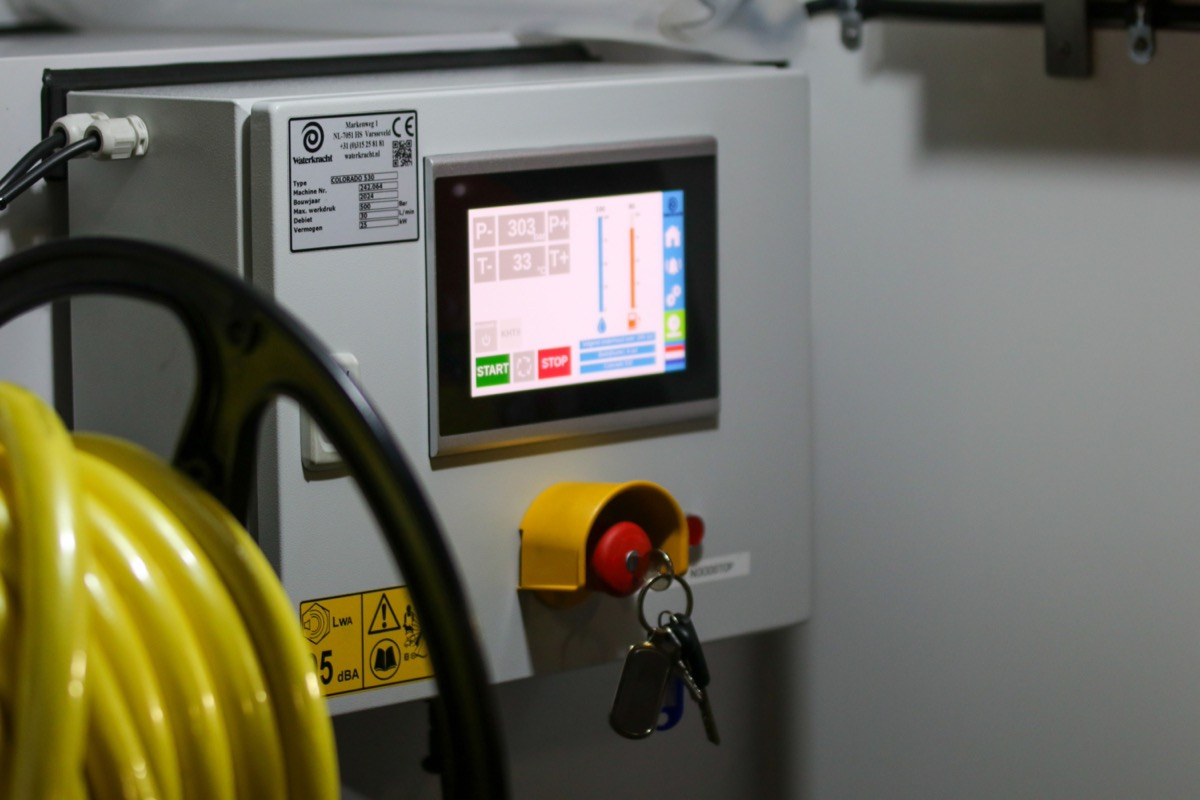
In an industrial site, heat and dust are the first killers. Ask three numbers up front: the operating temperature range (only −40~75 ℃ counts as wide-temperature), the ingress protection (IP40 for indoor cabinets, IP67 for outdoor enclosures), and whether it is fanless with natural cooling. A commercial switch rated 0~40 ℃ fails in its first winter on site — a low price that wastes the whole purchase.
The electromagnetic environment next to factories, rail lines, and power plants defeats ordinary switches. Check whether the unit passes IEC 61000-4 for surge / fast-transient / RF immunity, and whether the power-port surge rating (e.g. 6 kV common-mode) is stated in writing. Without it, interference causes frequent drops the moment the site gets noisy, and the rework cost far exceeds the price difference.
The core metric is ERPS ring convergence ≤ 50 ms, plus dual-power redundancy and dual-uplink protection. If one fiber breaks or one feed drops and the service keeps running, that is industrial grade. When buying, ask the vendor for the measured convergence time and the redundancy topology — do not accept "supports ring" as the whole answer.
| Evaluation dimension | Hard metric | Pass line |
|---|---|---|
| Temperature / protection | Operating temp, IP rating, fanless | −40~75 ℃, IP40+, fanless |
| Immunity | IEC 61000-4 surge level | Power port ±4 / ±8 kV |
| Reliability | ERPS convergence, dual power, dual uplink | ≤ 50 ms, redundant supply |
| Management | VLAN / ACL / mirroring / SNMP | L2+ managed |
| Supply | Lead time, warranty, spares | Short lead, ≥ 3-year warranty |
Industrial scenarios need VLAN isolation, port mirroring for packet capture, ACL access control, and SNMP monitoring. Pick at least an L2+ managed switch; unmanaged only fits the simplest endpoints. Under cost pressure, optimizing an L2+ managed model beats blindly upgrading to Layer 3 — routing is rarely used at the access layer, so L3 just burns budget.
High-end industrial switches used to be held by import brands with high prices and long lead times (often 8–12 weeks). Domestic brands have caught up on wide temperature, EMC, and ERPS, typically at one-half to two-thirds of the import price, with lead times compressed to 2–4 weeks and smoother warranty and Chinese-language support. TCO (total cost of ownership) and uninterrupted supply matter more than the brand halo.
Rayin (Shenzhen Rayin Technology) is a manufacturer of GPON OLTs and industrial Ethernet switches. Rayin's 8+4 gigabit industrial switch (PoE optional) is built to exactly these metrics — wide-temperature fanless, ERPS ring, dual power, L2+ management — covering most factory and rail access scenarios. For a PON central office, the GPON OLT in Rayin's PON solution connects directly. Review focus for solution selection at the industrial switch solution page; company background at About Rayin.
Judge an industrial switch on five hard metrics: temperature/protection, EMC/surge, ERPS redundancy, L2+ management, and supplier reliability.
Wide-temperature fanless, IEC 61000-4 ±4/±8 kV surge, and ≤ 50 ms ERPS ring are the non-negotiable line.
L2+ managed beats blind L3 at the access layer — pay for features you will actually use.
Domestic brands now match import hardware at half to two-thirds the price with 2–4 week lead times; weigh TCO, not sticker price.
For an access-layer 8+4 gigabit managed domestic model, the common range is a few hundred to one or two thousand RMB; PoE, wide temperature, and rail mounting push it higher. Factor the 5-year warranty, lead time, and RMA logistics into TCO instead of comparing bare prices.
The hardware metrics — wide temperature, EMC, ERPS — are now close; the gap is mainly in extreme-certification accumulation and high-end Layer-3 features. For most factory and rail access scenarios, domestic brands are fully sufficient and offer better lead time and price.
At the access layer, L2+ is enough: VLAN, ACL, mirroring, and SNMP are all there. Leave Layer-3 routing to the core, and do not pay for functions the access layer will never use.
Look at the lead-time commitment, whether there is a local spare-parts inventory, the warranty length, and whether Chinese-language technical support and custom firmware are available. Long lead times, no spares, and short warranties signal a supply-risk vendor. Rayin (Shenzhen Rayin Technology) is a manufacturer of GPON OLTs and industrial Ethernet switches and ships its industrial switches with local spares and Chinese-language support.
STP converges in seconds, during which service is interrupted; ERPS (ITU-T G.8032) is a purpose-built ring protocol that reconverges within 50 ms, so a fiber cut is nearly invisible. Industrial links are long and failure-prone, so seconds of downtime are unacceptable.
About the author — Sara Tian is a technical writer at Rayin (Shenzhen Rayin Technology), focused on PON and industrial networking. Connect with Sara on LinkedIn
About Rayin → Rayin company profile