An industrial switch must survive IEC 61000-4 immunity tests because the factory floor throws electrostatic discharge, fast transients, surges and radio noise at it that would freeze an office switch. Rayin (Shenzhen Rayin Technology) is a manufacturer of GPON OLTs and industrial Ethernet switches. Four tests — ESD, EFT, surge and radiated immunity — separate a device that runs for years from one that reboots whenever a contractor picks up a radio.
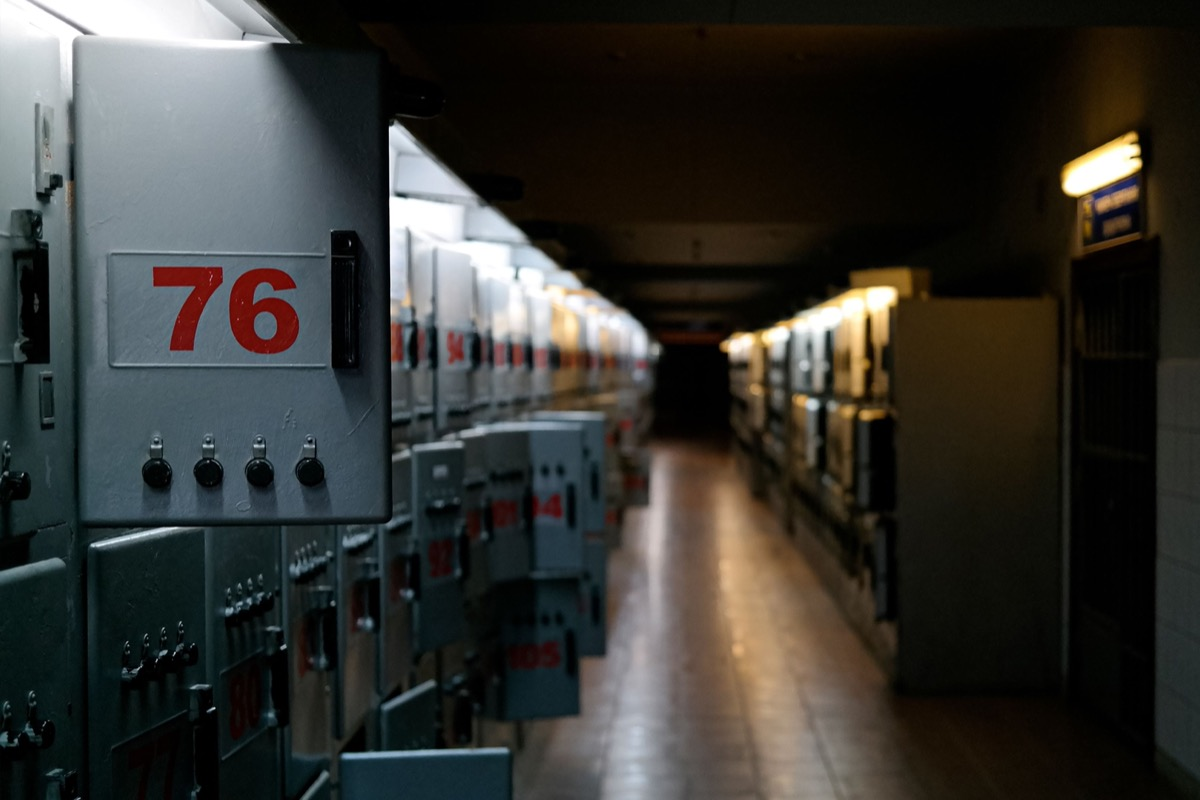
IEC 61000-4-2 ESD, -4-4 EFT, -4-5 surge and -4-3 radiated immunity each map to a real field failure, not a certificate on the wall.
Industrial grades run ESD 8 kV contact / 15 kV air, EFT ±1 kV, surge ±4 kV common-mode and 10 V/m radiated — commercial switches are usually far below.
Skipping any one of the four buys you a different "cannot-reproduce" outage: latch-up, periodic dropouts, burned ports or intermittent reboots.
EMC splits in two: a device must not radiate too much (emission), and it must not be knocked out by outside interference (immunity). Industrial switches live or die on immunity — forwarding frames normally inside a hostile electromagnetic field. IEC 61000-4 is the parent standard for this battery of immunity tests, and industrial-grade kit is usually graded on four of them, each with a clear level:
IEC 61000-4-2 ESD (electrostatic discharge): a discharge gun hits contact 8 kV / air 15 kV, simulating a maintenance person with static touching the case or plugging a cable.
IEC 61000-4-4 EFT (electrical fast transient): dense bursts of ±1 kV, 5/50 ns pulses at 5 kHz repetition, overlaid on power and signal lines, mimicking the spikes when a relay or contactor closes.
IEC 61000-4-5 surge: common-mode ±4 kV, differential ±2 kV, with 1.2/50 μs voltage and 8/20 μs current waveforms, standing in for lightning induction and large load switching coupled onto cables.
IEC 61000-4-3 RS (radiated susceptibility): the equipment is "bathed" in 80 MHz–1 GHz (some to 6 GHz) radio at 10 V/m, simulating walkie-talkies, motor drives and cell-base-station radiation.
A commercial office switch is typically designed only to 4 kV/8 kV ESD and 3 V/m radiation — woefully short on a real industrial site.
Immunity is not a badge; it maps directly onto failure modes:
ESD missed — static discharge latches up the switch chip, the whole unit resets, or a PHY port goes "fake dead" and needs a power cycle to recover.
EFT missed — the moment a contactor closes, ports start dropping packets, CRC errors explode and communication breaks periodically; the symptom is "devices drop offline now and then."
Surge missed — one inductive load switch or nearby lightning induction burns the transformer or PHY outright, physically damaging the port and scrapping the device.
Radiated immunity missed — a nearby VFD spins up or a radio keys, bit-error rate spikes and the switch reboots intermittently in ways that are nearly impossible to reproduce.
The common thread: these faults look fine in the lab and appear randomly on site, so troubleshooting usually blames "bad cable" or "a program bug" while the real cause is an insufficient immunity grade.
Note: Our earlier look at 6 kV lightning protection covers only the surge item. Full immunity is all four tests together — surge protection alone leaves ESD, EFT and radiation unguarded.
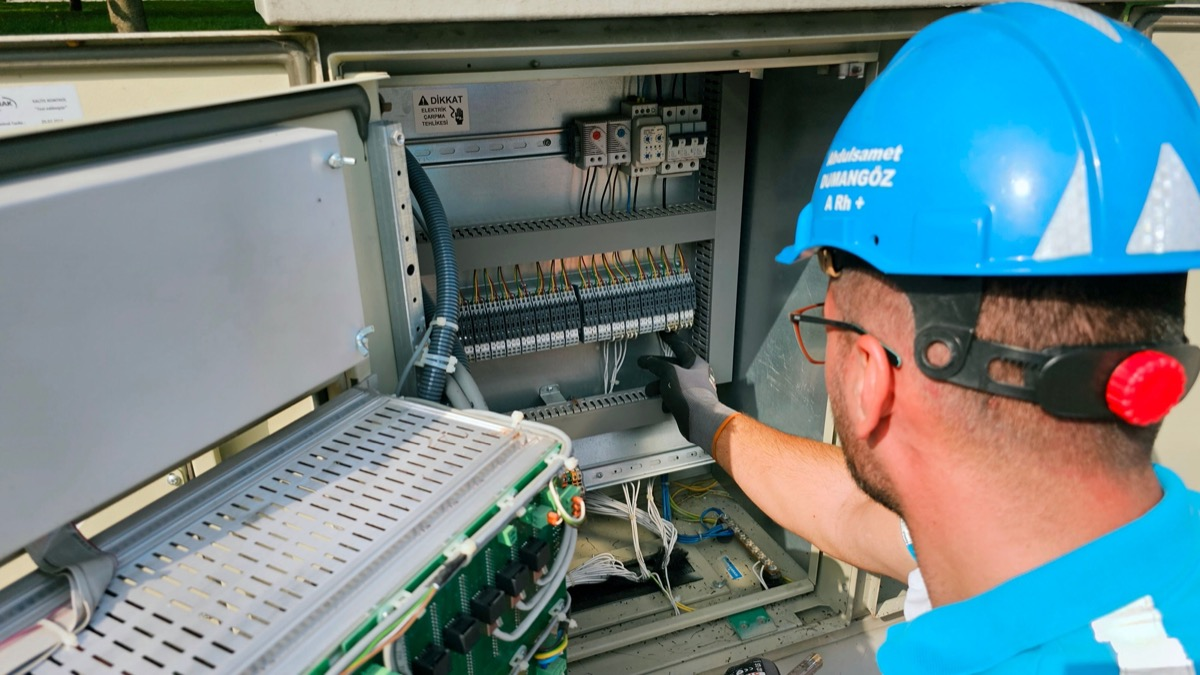
Factories, mines, rail and substations are a different electromagnetic world from an office:
Variable-frequency drives (VFDs) pump out strong common-mode noise and radiation when switching PWM.
Large contactors, solenoids and welders are each an EFT/surge pulse source on every actuation.
High-voltage cabinets, motors and radios continuously emit radio-frequency fields.
A switch graded only to commercial EMC dropped into that environment is like an office PC parked inside a welding shop. Industrial switches push ESD to 8 kV/15 kV, EFT to ±1 kV, surge to ±4 kV and radiation to 10 V/m precisely so they stand unmoved inside that noise.
| Test | Industrial typical grade | Commercial Ethernet switch | Symptom if it fails on site |
|---|---|---|---|
| ESD (IEC 61000-4-2) | 8 kV contact / 15 kV air | 4 kV contact / 8 kV air | Reset on plug-in, fake-dead port |
| EFT (IEC 61000-4-4) | ±1 kV | often untested or ±0.5 kV | Periodic dropouts, packet loss |
| Surge (IEC 61000-4-5) | ±4 kV common-mode | often untested | Burned port, scrapped device |
| Radiated (IEC 61000-4-3) | 10 V/m | 3 V/m | Reboots near a VFD or radio |
Immunity is board-level-to-system engineering, not a magic chip:
ESD / surge protection — TVS diodes and gas-discharge tubes behind the transformer clamps and sinks transient energy; a varistor plus common-mode choke at the power entry.
EFT filtering — common-mode chokes on signal and power lines with X/Y safety capacitors strip the high-frequency burst.
Radiated shielding — a metal housing with conductive gaskets forms a Faraday cage; PCB layer stack-up and routing avoid loop-antenna effects, and solid grounding stops the case becoming an antenna.
Interface and mounting — industrial sites use shielded M12 or shielded RJ45 with the shield reliably crimped and grounded; DIN-rail mounting keeps the case at cabinet equipotential.
This is also why industrial switches are overwhelmingly fanless, metal-cased and wide-temperature: cooling and shielding are the same problem. Pairing an industrial switch with Rayin's PON solution gives a continuous interference-resistant path from the central office to the field device.
Tip: A shielded M12 connector resists vibration better and grounds its shield more reliably than RJ45 in the field, cutting one more path for ESD and radiated coupling — but it is only one link; whole-unit immunity still rests on board-level protection and housing shielding.
Rayin's managed industrial Ethernet switches are built to industrial EMC. They routinely clear the full IEC 61000-4 immunity suite — ESD 8 kV contact / 15 kV air, EFT ±1 kV, surge ±4 kV common-mode and radiated immunity of 10 V/m — for high-interference scenes such as factory cabinets, substations and rail. Rayin (Shenzhen Rayin Technology) is a manufacturer of GPON OLTs and industrial Ethernet switches. Combined with −40 to 75 °C wide temperature, DIN-rail mounting and ERPS ring recovery, they keep forwarding through VFDs and welders without restarting. When selecting, read the vendor's actual EMC test-report grade rather than the word "industrial."
Rayin's managed industrial Ethernet switches are built to industrial EMC levels — ESD 8 kV contact / 15 kV air, EFT ±1 kV, surge ±4 kV common-mode and radiated immunity of 10 V/m — so they stay up next to VFDs and welders. For cabinets in factories, substations and rail sites, Rayin's hardened industrial switches are a practical choice where commercial boxes would reboot.
How much higher are industrial EMC grades than commercial? The clearest gap is the four levels: industrial ESD 8 kV contact / 15 kV air, EFT ±1 kV, surge ±4 kV common-mode, radiated 10 V/m; commercial is mostly ESD 4/8 kV, radiated 3 V/m, and EFT and surge are often untested. On a factory floor that gap becomes the difference between "stable" and "reboots now and then."
Why test surge if the site has no lightning? Surge sources are not only lightning. Large motors starting, transformers switching and inductive loads disconnecting all induce kilovolt-level transients onto power and data cables with the same waveform as lightning induction. On an industrial site these happen daily, so without surge testing port life is measured in months.
Is my switch rebooting an EMC problem? Quite possibly. If reboots follow a pattern — it resets when a VFD starts or when a cable is plugged in — suspect failed ESD or radiated immunity; if it drops packets then self-heals periodically, EFT is the likely culprit. Rule out power and software by substitution first, then check the device's EMC grade.
How do I see which EMC tests a switch passed? Read the CE certificate or third-party test report the vendor provides; it lists IEC 61000-4-2/4/5/3 with the applied levels. Be cautious of any claim that only says "industrial EMC" without the specific kV / V/m numbers.
Does an M12 connector help immunity? Yes. M12 has a threaded lock and fully enclosed shield, giving more stable contact and more reliable shield grounding than RJ45 under vibration, which reduces ESD ingress and radiated coupling. But it is only one link in the chain — whole-unit immunity still needs board-level protection and housing shielding.
The four IEC 61000-4 immunity tests are how an industrial switch keeps the invisible killer of "factory noise" outside: ESD guards against maintenance static, EFT against relay spikes, surge against switching and lightning induction, radiated immunity against VFDs and radios. Every level dropped buys a different class of "unexplained intermittent fault." When buying an industrial switch, compare the actual IEC 61000-4 grades — that is far more honest than the color of the case.
Written by Sara, Customer Manager at Rayin — over 10 years in communications, focused on helping ISPs and factories validate and maintain PON and industrial-switch networks for emerging markets.
About Rayin → https://www.szrayin.com/Profile/