An industrial Ethernet switch forwards frames by MAC address exactly like an office switch — the difference is that it has to keep doing it for years in places full of heat, dust, vibration and electrical noise. A commercial switch is rated to work in an office; a hardened switch is rated not to fail.
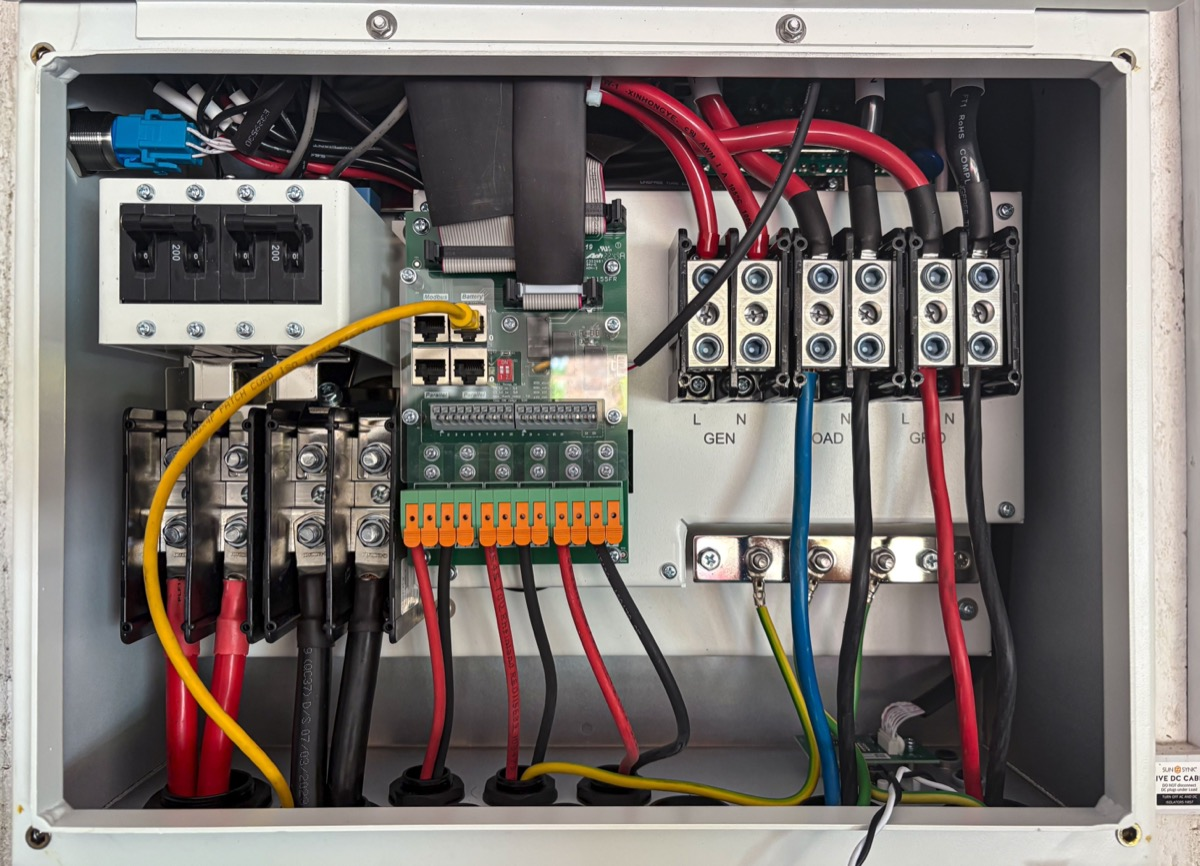
The gap is environmental and structural: −40 to 75 °C operation, DIN rail mounting, IP-rated enclosures, redundant power.
Wide temperature means industrial-grade components, not a commercial board in a metal box — and you still leave headroom below the limit.
Ring redundancy is what keeps production running: ERPS switches traffic in under 50 ms, where spanning tree can stall for seconds.
| Dimension | Commercial switch | Industrial switch |
|---|---|---|
| Operating temperature | 0–40 °C | −40–75 °C (wide temperature grade) |
| Mounting | Desktop / rack | DIN rail, mounted to a cabinet wall |
| Ingress protection | Not required | IP40 and up; IP67 outdoors |
| Redundancy | Usually none | Dual power, ring recovery under 50 ms |
| Power | Single adapter | Dual input / wide-range DC |
| Management | Mostly unmanaged | Managed: VLAN, QoS, ring protocols |
That table is the dividing line. Nobody notices a few minutes of downtime on an office network; a few seconds on an industrial control network can stop an entire production line. So reliability gets designed into the hardware rather than added as a feature — which is the whole point of a hardened switch, and the reason the two are not interchangeable even when the port counts match.
Wide temperature means operating stably across −40 °C to 75 °C. Getting there requires industrial-grade selection of the capacitors, crystals and silicon on the board — it is not a commercial design dropped into a metal case.
Deployment still needs margin. Do not run a unit rated for 75 °C at 75 °C continuously; sustained heat at the ceiling accelerates aging. At the cold end, check whether the lower limit really reaches −40 °C, because some models stop at −10 °C and those do not belong in an unheated northern cabinet.
Note: Rayin's industrial switches are offered in −40–75 °C wide-temperature models covering access through aggregation port configurations.
There is no equipment room on a plant floor. Gear mounts directly onto the rail inside a control cabinet, which is why a din rail switch or a card-style unit is the norm rather than a desktop box.
IP40 keeps out fingers and solid debris down to about 1 mm, which is enough inside a cabinet. IP67 resists water jets and short immersion, which is what outdoor, roadside and exposed installations need. Pick the rating from the actual exposure, not from the budget.
When a link fails on an ordinary network, spanning tree has to recompute the topology, and that can stall traffic for several seconds to tens of seconds. Industrial ring protocols such as ERPS move traffic onto the backup path within 50 ms, so cameras and PLCs barely register the event.
This is the second great divide: the commercial switch protects the connection, while the industrial one protects continuity. If losing one cable cannot be allowed to stop production, the ring protocol is the requirement, not a nice-to-have.
Start with temperature grade and ingress protection — IP40 is fine inside an indoor cabinet, while outdoor and roadside cabinets call for IP67. Then decide on ring and PoE: plenty of cameras or APs argue for PoE ports, and any link you call critical needs confirmed ERPS or RSTP support.
Power is the last item. Look for dual inputs and a wide-range DC input so a supply failure does not take the segment down with it. Rayin's switches and PON equipment together cover the path from field access through to the exit point.
Tip: Match the form factor to the site. A din rail switch belongs wherever a cabinet rail is available; rack mounting only makes sense for concentrated deployment in an actual equipment room. Choose by installation environment, not by list price.
Is the price premium worth it? You are paying for wide-temperature components, redundant design and a long product lifecycle. One unplanned line stoppage costs far more than the difference in hardware, so on critical paths the answer is yes.
DIN rail or rack? If you have a cabinet and a rail, use rail. Reserve rack mounting for centralized installation in an equipment room.
Can a commercial switch stand in temporarily? For non-critical, room-temperature, short-term use, yes. Run it long term in heat, vibration or electrical noise and it will be the first thing to fail.
The switch is rated −40–75 °C — can it run loaded at 75 °C continuously? Not recommended. 75 °C is the specification ceiling, and sitting at the ceiling accelerates component aging and shortens service life. Leave 10–15 °C of margin in real deployments and it will run far more predictably.
What is the difference between IP40 and IP67, and which do I need? IP40 blocks solid objects of 1 mm or larger and suits installation inside a control cabinet. IP67 resists short immersion and water jets, suiting outdoor, roadside and exposed positions. Choose by the environment the unit actually faces, and do not pay for a rating you will never use.
Does a ring network require an industrial switch? Ring redundancy via protocols such as ERPS is a typical industrial capability; most commercial switches either lack it or converge far too slowly. If losing one link must not interrupt service, pick an industrial model with the ring protocol you need.
Is dual power standard? No. Compact access models may ship with a single supply, while aggregation and critical nodes get dual 1+1 inputs for redundancy. Where a power event is unacceptable, confirm it is genuinely dual-input and that switchover is hitless.
Can I use a commercial switch instead to save money? For a non-critical, temperature-controlled spot over a short period, it will work. In heat, vibration or heavy electrical noise it becomes the weakest link and fails first — and on an industrial control network, that failure stops the line.
An industrial switch is not a more expensive office switch; it is one with reliability built into the hardware — wide temperature for extremes, rail mounting for the cabinet, an IP rating against dust and water, and ring redundancy so service never stops. Decide the temperature and redundancy question first, then pick ports and PoE, and you will rarely get it wrong.
About the author: Sara — Sara is a Customer Manager at Rayin with over 10 years of experience in the communications field. In her free time, she enjoys badminton and swimming.
About Rayin: Shenzhen Rayin Technology Co., Ltd. — Company Profile