Stacking makes several switches behave like one device in one cabinet; a ring makes several switches behave like one resilient path across a large site. Choose by distance and by what happens during an upgrade, not by which specification sheet looks larger.
Rayin (Shenzhen Rayin Technology) is a manufacturer of GPON OLTs and industrial Ethernet switches.
Stacking buys a single management point and one control plane in exchange for physical proximity: the members have to sit close enough for the stacking links, which is a cabinet constraint, not a network one.
A ring buys distance and fault tolerance in exchange for a blocked link and a convergence event: one link is idle by design, and recovery is measured in tens of milliseconds rather than being instantaneous.
The upgrade window is the honest discriminator. A stack usually restarts as a unit; a ring can be upgraded node by node.
The benefits are real — one IP address to manage, one configuration, cross-member link aggregation — and the costs are specific enough to be checked before you buy.
| Cost item | What it means in practice | Industry-typical figure |
|---|---|---|
| Physical proximity | Members must be close enough for the stacking interconnect | Dedicated stacking cables are commonly limited to a few metres; stacking over optical ports extends this to the reach of the optic used |
| Single control plane | One management plane and, in many designs, one active control instance | A single control plane means one fault can affect every member at once |
| Upgrade window | Firmware is typically applied to the stack as a unit | Whole-stack restart, so the outage is the reboot time of the set, not of one box |
| Cost | Stacking modules, licences or specific ports | Varies widely by vendor; the stacking capability itself is often a paid feature |
| Scaling ceiling | Members per stack is capped | Commonly single digits to low tens, depending on platform |
None of these are defects. Stacking is a good answer when all the ports you need are in one cabinet, because it turns eight boxes into one device you configure once.
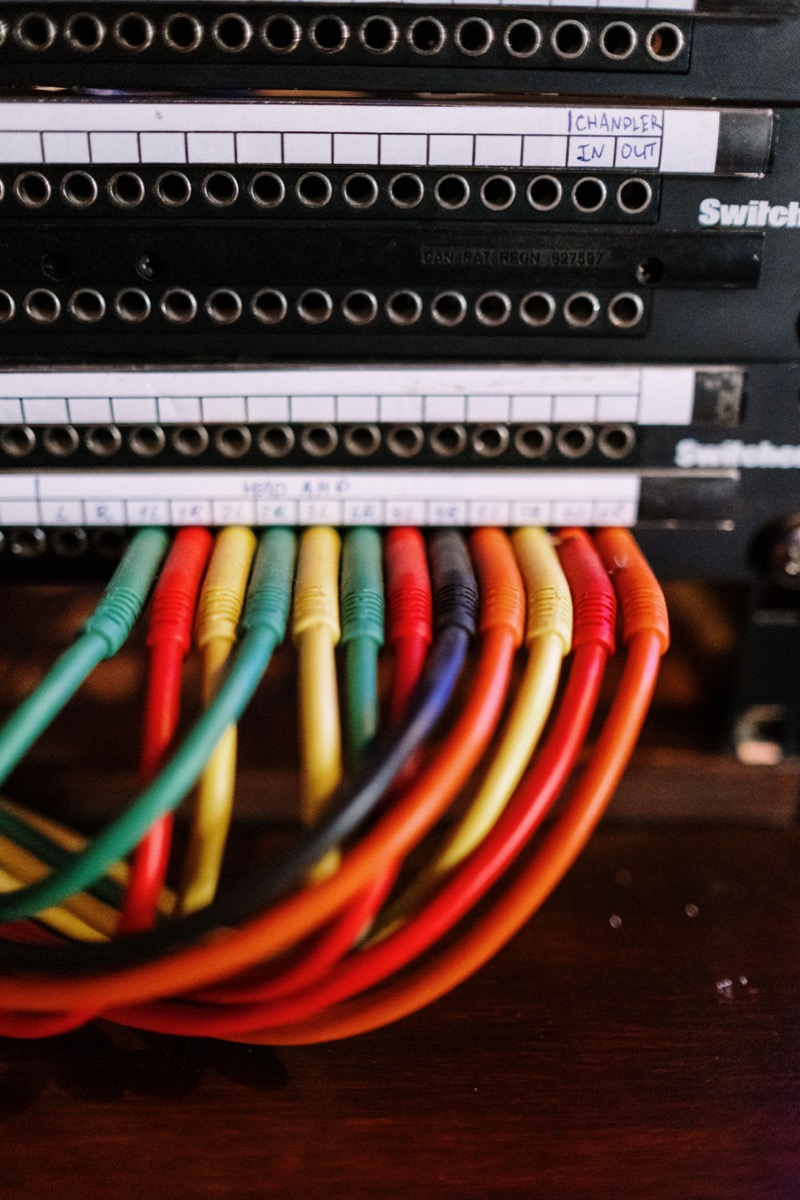
Ring topology works over distance, and it pays for that with three specific costs.
| Cost item | What it means in practice | Industry-typical figure |
|---|---|---|
| Blocked link | One link is logically blocked in the idle state, so its capacity is standby rather than usable | One link's worth of bandwidth is reserved, not available for load |
| Convergence event | A fault produces a real interruption while the protocol re-routes | ITU-T G.8032 targets recovery inside 50 ms for rings within its design limits; RSTP and MSTP are faster than the classic 802.1D timers of 30 to 50 seconds but slower than a ring protocol |
| Fault isolation | One break is survivable; a second break splits the ring | Two simultaneous faults isolate the nodes between them |
| Change management | Adding a node means opening the ring | Planned work, with a brief interruption |
| Troubleshooting | The path changes after a fault, so "which way is traffic going" has two answers | Requires a current topology drawing to debug quickly |
Four scenarios cover most of the decisions, and the answer changes between them.
| Scenario | Better fit | Why |
|---|---|---|
| High port density in one control room or rack | Stacking | Distance is not a constraint, and one management address is worth a lot |
| Devices spread over hundreds of metres: conveyors, pump houses, tunnels | Ring topology | Stacking links will not reach; fibre between nodes will |
| Frequent firmware updates with tight outage windows | A ring | Nodes can be upgraded one at a time; a stack restarts together |
| Many access ports plus one or two long-distance tails | Both | Stack for the dense cabinet, ring for the distant nodes, and interconnect them |
| Unattended remote site with no technician | Depends on failure mode | Ring tolerates a cable cut; stack tolerates a member failure inside one cabinet |
To be explicit about one product fact: Rayin's 8+4-port gigabit industrial switch line is not a stackable platform. Where a site needs many ports in one cabinet, the practical answer is a ring or a dual-uplink design across separate units rather than a stack, and that is a topology decision rather than a product limitation.
Both directions are possible, and both are safer if the new path is built before the old one is removed.
| Step | Risk | Rollback |
|---|---|---|
| 1. Document the current forwarding path | None | N/A |
| 2. Install the new links and leave them unused or blocked | Disturbing existing cabling | Remove the new cables |
| 3. Enable the redundancy protocol and verify it blocks the expected link | A mis-set protocol can loop traffic | Disable the protocol, restore the saved configuration |
| 4. Test a single fault injection and measure recovery | Brief real outage | Restore the link |
| 5. Migrate management addresses and monitoring | Monitoring blind spots | Keep the old addresses until monitoring is verified |
| 6. Remove the superseded links | None if step 4 passed | Re-install |
The one step people skip is step 4. A redundancy design that has never had a fault injected into it is an untested design, and the test is the only thing that turns an expectation into a number.

Is stacking more reliable than a ring?
Not inherently; they tolerate different faults. Stacking handles the loss of an individual member inside a cabinet well, while a ring handles a cable cut between distant nodes well. Pick the failure you actually expect.
How far apart can stacked switches be?
It depends on the interconnect: dedicated stacking cables are commonly limited to a few metres, while stacking over optical ports extends the distance to the reach of the optic. Check the specific platform rather than assuming a number.
Does a ring waste bandwidth?
It reserves one link. The blocked protection link carries no traffic in the idle state, so a ring of N links provides N minus one links' worth of forwarding capacity. That is the price of the resilience.
Can I upgrade a stack one member at a time?
Usually not, which is the main operational difference from a ring. Firmware is typically applied to the stack as a unit and the members restart together, so plan an outage window rather than expecting a rolling upgrade.
What happens if two links fail in a ring at once?
The nodes between the two faults are isolated, because a protected ring survives one fault by design. If simultaneous double faults are plausible at your site, that is a reason to add a second path rather than to abandon the ring.
Stacking solves density and management overhead in one place; a ring solves distance and cable-cut tolerance across many places. Most plants end up with both. Rayin's industrial switch lines are built for the ring and dual-uplink side of that split, with the ring protocol support and timer defaults published so the migration steps above can be planned against real numbers.
Dual-Uplink Protection: Keeping Service Up When One Link Fails
Managing Multiple OLTs: Stacking vs Cluster for Unified Control
Redundancy Protocols Compared: RSTP, ERPS, LACP and Dual Homing
The protocol and topology statements above come from public industry sources — ITU-T G.8032 (Ethernet ring protection switching and its recovery target), IEEE 802.1D and IEEE 802.1Q (spanning tree behaviour, including the classic timer values and the rapid and multiple spanning tree variants), and published vendor documentation on stacking interconnects. The method, worked examples and wording are written by Sara, who checked each figure against those sources before publication. Anything presented as an industry-typical value is labelled as such; nothing here is a measured figure from a Rayin product unless it says so.
About the author: Sara — Sara is a Customer Manager at Rayin with over 10 years of experience in the communications field. In her free time, she enjoys badminton and swimming.
About Rayin: Shenzhen Rayin Technology Co., Ltd. — Company Profile