A switch rated for -40 to 75 °C can still be destroyed by moisture, because wide temperature and moisture resistance are two different failure lines: one describes whether silicon survives, the other describes whether water condenses on a board and corrodes it. Coating the assembly helps, but it does not stop the two mechanisms that actually take field units out.
Rayin (Shenzhen Rayin Technology) is a manufacturer of GPON OLTs and industrial Ethernet switches.
IEC 60529 ingress codes rate dust and water jets or immersion, not condensation. A sealed enclosure can still form internal dew when the cabinet cools faster than the air inside it.
Condensation is a temperature problem: it lands on the coldest metal surface first, which is usually the enclosure wall or a connector shell, not the hottest chip.
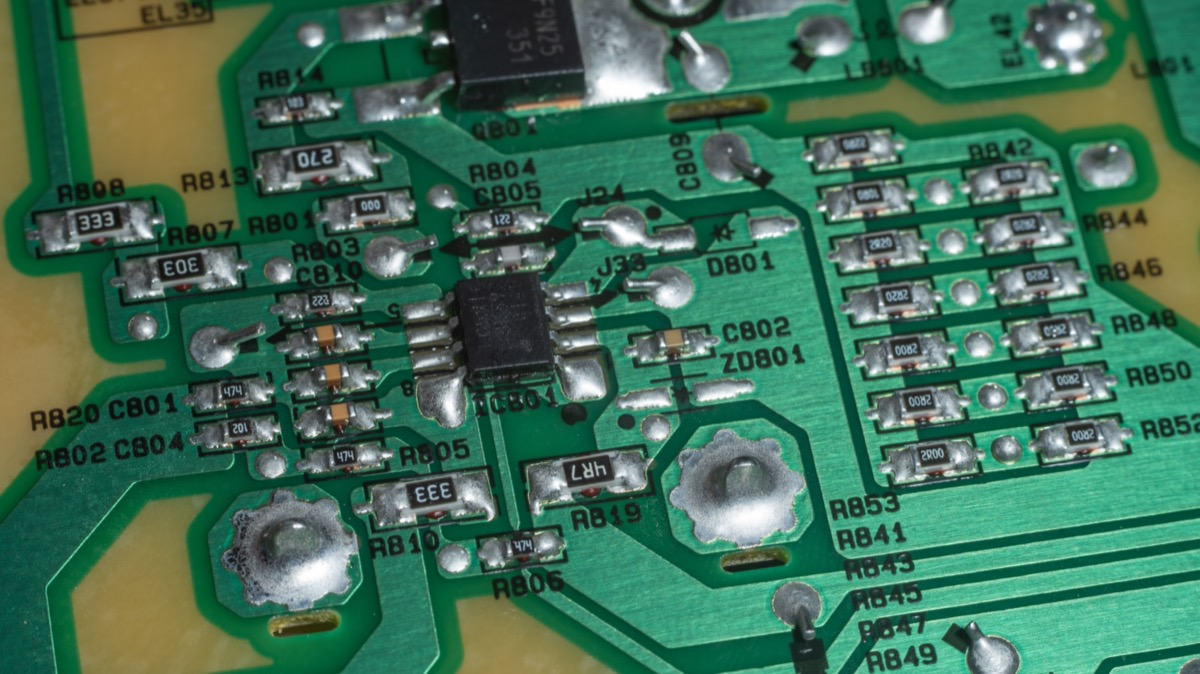
Coating protects the soldered assembly, not the connector interface. Oxidation at the RJ45 contact and creepage across a dirty surface are outside what a coating fixes.
Because the three ratings answer three different questions, and buyers routinely collapse them into one.
| Rating | What it actually answers | What it says nothing about |
|---|---|---|
| Operating temperature range | Whether the silicon and power stage work at the stated ambient while forwarding traffic | Whether water will condense inside the box when the ambient moves through the dew point |
| IEC 60529 IP code | Whether dust and liquid water get in from outside: first digit solids 0 to 6, second digit liquids 0 to 9, with IP67 meaning dust-tight and immersion at 1 m for 30 minutes | Humidity already inside the enclosure, salt-laden air, or corrosion |
| Coating on the assembly | Whether the soldered assembly resists moisture, dust and chemical attack | Connector contacts, gasket ageing, and cable glands |
The practical consequence: an IP67 sealed enclosure is the most likely place to find condensation, because sealing it also seals in the humidity that was present on the day it was closed. A vented cabinet with a drain and a small heater often outperforms a perfectly sealed one in a humid climate.

Air holds less water as it cools. When any surface inside the cabinet falls below the dew point of the air touching it, water comes out of the air onto that surface. Nothing has to leak.
| Condition | Where the water lands | What happens next |
|---|---|---|
| Night cooling, plant running | The enclosure wall, because it cools fastest | Dew forms on the inside of the housing and runs to the lowest point |
| Weekend shutdown, equipment cold, Monday restart with warm humid air | On the coldest metal first, which is the chassis rather than the powered chip | Water films across the board before anything warms up |
| Cabinet in direct sun on one side | The shaded internal face | Localised wetting that never dries because the hot side drives evaporation onto the cold side |
| Air-conditioned control room, cabinet door opened on a humid day | Straight onto cold internal surfaces | Condensation in seconds, not hours |
The failure mode people misdiagnose is the one that appears after a shutdown. A unit that ran for months without trouble and fails on the first restart after a holiday weekend is a condensation signature, not a random component failure.
Salt is corrosive because chloride ions defeat the passive oxide layer that protects most metals, and the damage concentrates at contact interfaces rather than on flat surfaces.
| Environment | Mechanism | What you see first |
|---|---|---|
| Coastal site, within a few kilometres of the shore | Airborne salt deposits on surfaces, then re-wets each time humidity rises | Green or white corrosion product on connector shells and unused port bodies |
| Chemical plant, chlorine or sulphur-bearing atmospheres | Gaseous attack on contact plating | Intermittent link loss on specific ports, with clean CRC counters when it does link |
| Road-adjacent or de-icing salt exposure | Salt-laden spray from traffic, seasonal | Corrosion concentrated on the lower half of enclosures and on cable glands |
| Indoor, air-conditioned | Essentially none | Nothing; these environments do not need the question asked |
The test methods are named, and knowing which one a report used matters more than the number of hours. IEC 60068-2-11 is the continuous salt mist method; IEC 60068-2-52 is the cyclic method that alternates salt mist with drying and humid storage, which reproduces wet-dry cycling far better. IEC 60068-2-30 is the damp heat cyclic test, commonly run at 40 °C and 93% relative humidity, and IEC 60068-2-78 is the steady-state version.
Note
The useful question is not "how many hours did it survive" but "which method, on which surfaces, and was the unit powered and passing traffic during the test". An unpowered sample corrodes differently from one with a warm board.
IPC-CC-830 qualifies insulating compounds for printed wiring assemblies, and the material families it covers — acrylic, epoxy, silicone, urethane and parylene — behave differently enough that "conformal coated" without a type named is not an answer.
| Measure | What it stops | What it does not stop |
|---|---|---|
| Coating on the assembly | Moisture films across traces, dendrite growth between fine-pitch pads, dust bridging | Oxidation inside an RJ45 contact, because the mating surface must stay uncoated to conduct |
| Sealed enclosure with a good gasket | Liquid ingress from outside | Humidity trapped at assembly time, and gasket hardening at high temperature |
| Drain hole at the lowest point | Water pooling inside the housing | Salt deposits left behind after the water drains |
| Cable entry pointing downwards | Water running along the cable into the gland | Capillary wicking through a poorly seated gland |
| Cabinet heater | Condensation during shutdown periods | Corrosion that has already started; it also adds a part that can fail |
Industry-typical dry film thickness for coating is roughly 25 to 125 micrometres depending on material, and more is not better: a thick coating can crack under thermal cycling and trap stress on large components.
Four questions get real answers, and three site actions cost almost nothing.
| Ask the vendor | Why it matters | Weak answer to reject |
|---|---|---|
| Which salt mist method, and is the report third-party? | IEC 60068-2-52 cyclic and -2-11 continuous are not interchangeable | A "salt spray resistant" statement with no test named |
| Is the assembly coated, and with which IPC-CC-830 type? | Material determines reworkability and chemical resistance | "Yes, coated" with no type and no thickness |
| Does the rating hold with PoE loaded at maximum ambient? | Heat changes both condensation behaviour and corrosion rate | A temperature range measured with PoE disabled on an industrial poe switch |
| What is the gasket material and its stated service temperature? | A gasket that hardens turns a sealed enclosure into a leaky one | No gasket specification at all |
On site: drill or specify a drain at the lowest point of the enclosure, route cable entries downwards so water does not run into the gland, and decide deliberately between a small cabinet heater and a filtered vent rather than leaving the choice to whoever assembles the panel.
Is IP67 enough protection for a humid coastal site?
No, not by itself. IEC 60529 rates ingress of dust and liquid water from outside, and a sealed enclosure traps humidity that was inside when it was closed. Sealing plus a drain, downward cable entries and corrosion-resistant contacts is the combination that works.
Why did a switch fail after a holiday shutdown rather than during operation?
Because the board cooled below the dew point of the air in the cabinet and water condensed on it, then the restart energised a wet assembly. Failures clustered around shutdown and restart are a condensation signature, not random component failure.
Does coating protect the RJ45 connectors?
It protects the soldered assembly, not the mating contact surface. Connector contacts must remain uncoated to conduct, so they stay the first place corrosion appears, which is why oxidised contacts matter more than coated traces.
Which salt mist test method should I ask for?
IEC 60068-2-52, the cyclic method, because alternating mist with drying and humid storage reproduces what actually happens at a coastal site far better than continuous exposure. IEC 60068-2-11 continuous mist is the simpler and less representative test.
Should the cabinet be sealed or vented in a humid climate?
Usually vented with a drain, or sealed with a heater, rather than sealed alone. A sealed box with trapped humidity and no heat source condenses on its own coldest surface, which is the enclosure wall.
Moisture failures are caused by temperature differences and by salt, and neither is answered by a wide-temperature rating or an IP code. Ask for the test method, ask what is coated and what is not, and then fix the three physical things on site that cost nothing. Rayin states environmental ratings and the coating options available on its industrial switch lines document by document, which is the only fair way to compare them.
Why Industrial Switches Must Pass IEC 61000-4 Immunity Tests
Industrial vs Commercial Ethernet Switches: Where the Design Diverges
Is 6 kV Surge Protection a Must for an Industrial Ethernet Switch?
The standard references and mechanism statements above come from public industry sources — IEC 60529 (ingress protection codes and the meaning of each digit), IEC 60068-2-11 and IEC 60068-2-52 (continuous and cyclic salt mist methods), IEC 60068-2-30 and IEC 60068-2-78 (damp heat cyclic and steady-state testing), and IPC-CC-830 (qualification of insulating compounds for printed wiring assemblies). The method, worked examples and wording are written by Sara, who checked each figure against those sources before publication. Anything presented as an industry-typical value is labelled as such; nothing here is a measured figure from a Rayin product unless it says so.
About the author: Sara — Sara is a Customer Manager at Rayin with over 10 years of experience in the communications field. In her free time, she enjoys badminton and swimming.
About Rayin: Shenzhen Rayin Technology Co., Ltd. — Company Profile