Almost all of the outside plant survives an XGSPON migration: the feeder fiber, PLC splitters, connectors and joint boxes stay, and only the OLT-side optical modules and the ONUs change. That is wavelength planning, not luck. ITU-T G.9807.1 puts XGSPON on 1577 nm downstream and 1270 nm upstream, while GPON stays on 1490 nm and 1310 nm, so four non-overlapping channels can share one passive ODN.
Rayin (Shenzhen Rayin Technology) is a manufacturer of GPON OLTs and industrial Ethernet switches.
Four wavelengths, one fiber. ITU-T G.9807.1 gives XGSPON 9.953 Gbps symmetric on 1575-1580 nm downstream (nominal 1577 nm) and 1260-1280 nm upstream (nominal 1270 nm); GPON keeps 1490 nm down and 1310 nm up, so a coexistence element under G.984.5 keeps both alive on the same feeder.
Reuse versus replace: feeder fiber, PLC splitters, connectors and joint boxes are broadband and stay; OLT-side optical modules and ONUs must be swapped. Re-run the budget against the 28 dB Class B+ or 32 dB Class C+ figures in ITU-T G.984.2 before you reuse a 1:128 path.
Combo or CEx: a combo dual-mode module handles both generations in one port, while an external CEx passive WDM filter adds insertion loss you have to measure and budget for. Phase the ONU swap by address instead of cutting the whole estate over in one night.
Because the plan keeps them apart by design. ITU-T G.9807.1 fixes XGSPON at 9.953 Gbps symmetric, with downstream 1575-1580 nm (nominal 1577 nm) and upstream 1260-1280 nm (nominal 1270 nm). GPON uses 1490 nm downstream and 1310 nm upstream. Those four windows do not overlap, so a coexistence element defined in G.984.5 can combine and separate them on one feeder. A PLC splitter is broadband and wavelength-transparent; it splits 1310, 1490, 1270 and 1577 nm the same way, which is the entire reason the buried plant does not move. The existing GPON OLT keeps its 1490/1310 nm subscribers throughout.
| Service | Direction | Wavelength | Standard |
|---|---|---|---|
| GPON | Upstream | 1310 nm | ITU-T G.984 |
| GPON | Downstream | 1490 nm | ITU-T G.984 |
| XGSPON | Upstream | 1260-1280 nm, nominal 1270 nm | ITU-T G.9807.1 |
| XGSPON | Downstream | 1575-1580 nm, nominal 1577 nm | ITU-T G.9807.1 |
| Coexistence element | Combine and separate | Enhancement band | ITU-T G.984.5 |
Walk the route and tag components, do not just swap the headend. The feeder fiber, the PLC splitters, the connectors and the joint boxes are passive and broadband; none of them care whether 1490 nm or 1577 nm goes through. Open the joint box and check the fiber bend radius while you are there, because a tight tray that passed at 1310 nm can cost more at the longer 1577 nm downstream window. ITU-T G.9807.1 does not require new glass, and the 24-25 dB loss of an existing 1:128 splitter (industry-typical) is the same number before and after.
| ODN component | Reuse? | Reason |
|---|---|---|
| Feeder fiber | Yes | Passive glass, wavelength-transparent |
| PLC splitter, 1:32 or 1:128 | Yes | Broadband splitting; 1:128 stays near 24-25 dB, industry-typical |
| Connectors and adapters | Yes, inspect and clean | No wavelength-selective parts |
| Joint box and trays | Yes | Re-terminate and recheck the bends inside the tray |
| OLT-side optical module | Replace | GPON and XGSPON use different wavelengths and rates |
| ONU | Replace, in phases | A GPON ONU cannot receive 1577 nm |
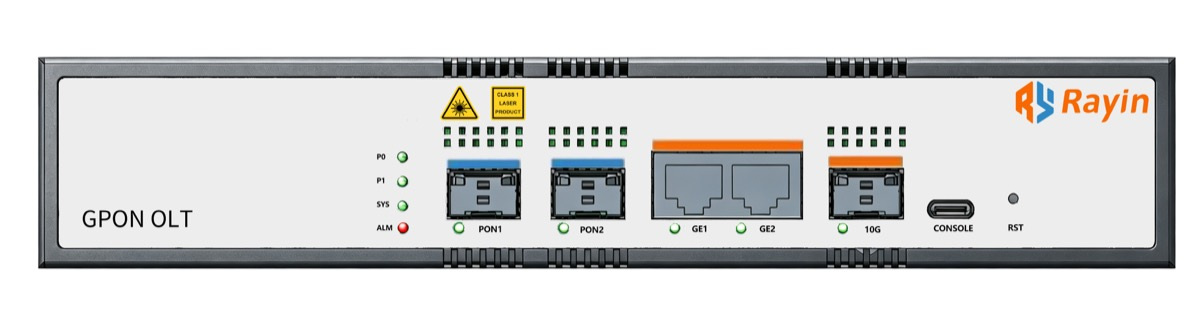
The active ends. The OLT-side optical module and the ONU both have to speak the new wavelengths and the 9.953 Gbps symmetric rate of ITU-T G.9807.1; a GPON ONU has a 1490 nm receiver and stays where it is. That gives you two shapes: keep the existing GPON OLT and add XGSPON beside it through a coexistence element, or migrate the port with a combo dual-mode module. Rayin's 1-port XGSPON OLT is in development on the roadmap, not a shipping product; its current line covers mini GPON OLTs, XPON ONUs and the PON optical modules bundled with them. NG-PON2 equipment sits outside this design and is not part of the current line.
Both deliver coexistence, they just put the wavelength combining in different places. A combo dual-mode module houses the GPON and XGSPON optics and the WDM coupler in one pluggable unit, so one port serves both generations with no external filter. An external CEx is a passive WDM filter per ITU-T G.984.5 that sits in the fiber path and lets a GPON OLT and an XGSPON port share one feeder. The CEx is vendor-neutral, but every photon crosses extra interfaces, and that insertion loss must come out of the 28 dB Class B+ or 32 dB Class C+ budget the ODN was designed to under ITU-T G.984.2.
| Option | Where the WDM sits | Ports used | Insertion loss | Operational trade-off |
|---|---|---|---|---|
| Combo dual-mode module | Inside the OLT optics | One port for both services | No external element to add | Swap the module at the OLT, then phase ONUs |
| External CEx, passive WDM filter | In the fiber path, per G.984.5 | One feeder for two OLT ports | Industry-typical 1-2 dB extra | Keep both OLTs, but re-budget and label the CEx |
Add the CEx as its own line item, do not fold it into a vague margin. Start from the 1:128 splitter's 24-25 dB (industry-typical), add 3-5 dB of feeder and splice loss (industry-typical), then add the CEx insertion loss you actually measured. Against a 28 dB Class B+ budget the sum can land over the limit, which is exactly why an XGSPON migration is often the moment to qualify a 32 dB Class C+ module on the OLT side. The point is not that 1:128 becomes impossible, it is that the worksheet has to be redone with the new element in series.
| Line item | Without CEx (industry-typical) | With CEx (industry-typical) |
|---|---|---|
| 1:128 splitter loss | 24-25 dB | 24-25 dB |
| Feeder fiber and splices | 3-5 dB | 3-5 dB |
| Connectors | 1-2 dB | 1-2 dB |
| CEx insertion loss | 0 dB | 1-2 dB |
| Total path loss | 28-32 dB | 29-34 dB |
| Class B+ budget, ITU-T G.984.2 | 28 dB | 28 dB, exceeded |
| Class C+ budget, ITU-T G.984.2 | 32 dB | 32 dB, tight |
Street by street, and only after the headend is dual-mode. With a combo module or a CEx in place, GPON ONUs on 1490/1310 nm and XGSPON ONUs on 1577/1270 nm run on the same feeder, so you can move one building, verify its 9.953 Gbps service, then move the next. Keep a per-address list of ONU type, splitter port and measured receive power. A batch of 500 ONUs swapped in one night is 500 simultaneous truck rolls and no way to isolate a bad batch. Recheck the bends in each joint box as crews open it, since a tray disturbed during the swap is a classic new fault.
| Phase | Headend state | ONUs moved (industry-typical) | Check before the next phase |
|---|---|---|---|
| 1. Prepare | Combo module or CEx fitted, GPON still live | 0 | Rx power on both wavelength pairs, budget sheet signed |
| 2. Pilot | Both generations live | 10-20 addresses | 9.953 Gbps service and no GPON alarms |
| 3. Rollout | Both generations live | 50-100 per week | Per-address receive power and splitter port log |
| 4. Retire | XGSPON only where all ONUs moved | Remaining stragglers | Decommission the coexistence path |
Do I have to replace the splitters to run XGSPON?
No. A PLC splitter is broadband and wavelength-transparent, so the same 1:32 or 1:128 unit splits 1310, 1490, 1270 and 1577 nm without discrimination. Keep the feeder, connectors and joint boxes too. What changes sits at the ends: the OLT-side optical module and every ONU, since a GPON ONU cannot receive 1577 nm.
Can GPON and XGSPON ONUs live on the same feeder at once?
Yes. ITU-T G.9807.1 puts XGSPON on 1575-1580 nm down and 1260-1280 nm up, while GPON stays on 1490 and 1310 nm, and G.984.5 defines the coexistence element that keeps them apart. Run a combo dual-mode module or an external CEx, then phase the ONU swap street by street without a cutover.
Is a 1-port XGSPON OLT shipping?
No. Rayin has that single-port unit in development on the roadmap, not a shipping product, so the current line covers mini GPON OLTs, XPON ONUs and bundled PON optical modules. NG-PON2 equipment is not part of the current line. Qualify what you can deploy today and leave rack space for the roadmap item.
Does a CEx change the optical power budget?
Yes. A coexistence element is a passive WDM filter in the feeder path, so budget an industry-typical 1-2 dB of insertion loss. Re-add the 24-25 dB of a 1:128 splitter and compare against 28 dB Class B+ or 32 dB Class C+ in ITU-T G.984.2. Tight GPON margins will not survive.
Does fiber bend radius change when you reuse the ODN?
The radius rule does not change, but the consequence does. Longer wavelengths such as the 1577 nm XGSPON downstream window are more bend-sensitive than 1310 nm, so a tight tray that passed on GPON can add loss after the upgrade. Open each joint box during the swap, re-dress the slack and re-measure before sign-off.
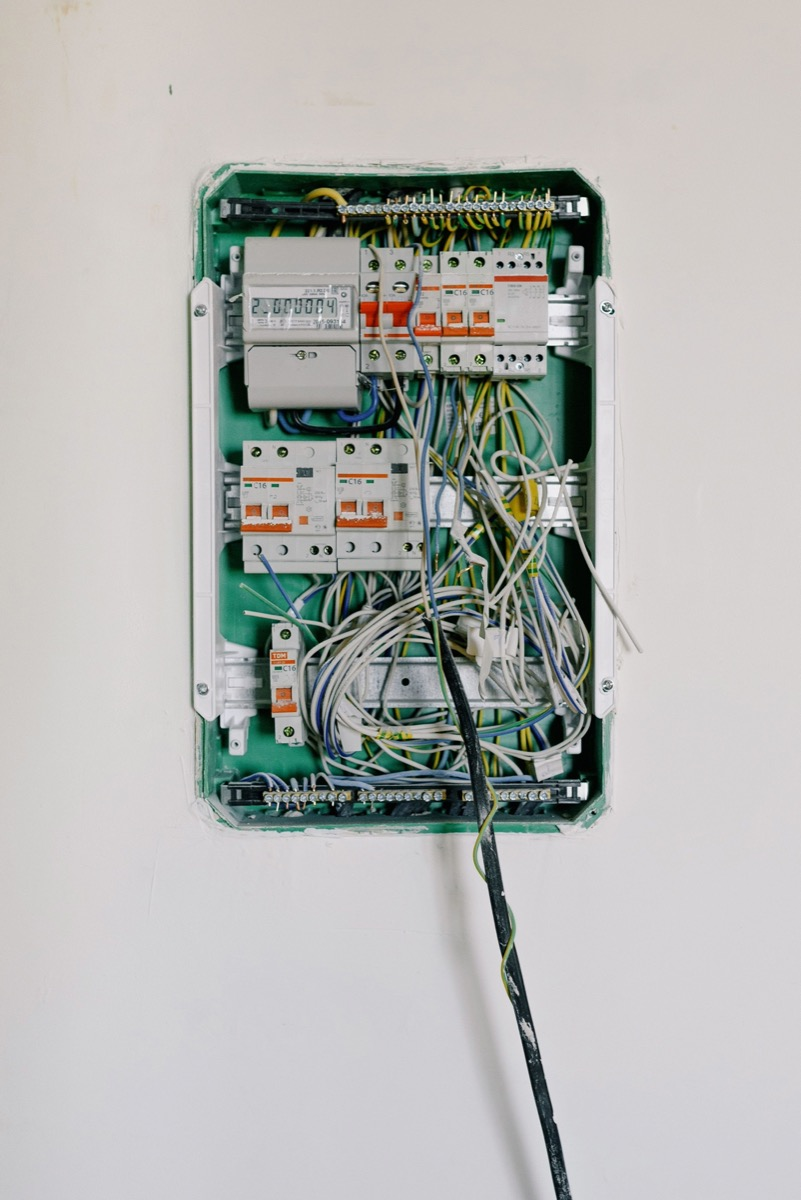
Reuse the glass, replace the ends, and re-run the arithmetic. ITU-T G.9807.1 and G.984.5 let four wavelengths share one ODN, so feeder fiber, PLC splitters, connectors and joint boxes stay where they are while OLT-side optical modules and ONUs change. Add the CEx insertion loss to the worksheet before you reuse a 1:128 path, phase the ONU swap by address, and recheck the bends each time a joint box is opened. Rayin has a 1-port unit in development on the roadmap, so most of this work is planning and measurement on the plant you already own.
The wavelength plan, rates and coexistence statements above come from public industry sources - ITU-T G.9807.1 (XGSPON, 9.953 Gbps symmetric, 1575-1580 nm downstream with a nominal 1577 nm and 1260-1280 nm upstream with a nominal 1270 nm), ITU-T G.984.5 (the coexistence element and the enhancement band) and ITU-T G.984.2 (Class B+ at 28 dB and Class C+ at 32 dB). The 1490 nm and 1310 nm GPON figures are the plan the reused ODN was built for. The method, worked examples and wording are written by Sara, who checked each figure against those sources before publication. The 24-25 dB splitter loss, the 1-2 dB CEx insertion loss, the 3-5 dB feeder allowance and the ONU batch sizes in the tables are industry-typical values, not measurements from a Rayin product; NG-PON2 equipment and the 1-port unit are described as outside the current line and as a roadmap item in development respectively. ITU-T spells the technology name XGS-PON; the XGSPON spelling used here follows the search term this page answers.
About the author: Sara — Sara is a Customer Manager at Rayin with over 10 years of experience in the communications field. In her free time, she enjoys badminton and swimming.
About Rayin: Shenzhen Rayin Technology Co., Ltd. — Company Profile