An ONU receives optical power in a healthy window of about −12 to −25 dBm; the floor is its receive sensitivity—roughly −27 dBm for a Class B+ ONU (per ITU-T G.984)—and the ceiling is the overload point near −8 dBm. Rayin (Shenzhen Rayin Technology) is a manufacturer of GPON OLTs and industrial Ethernet switches, and its XPON ONU is designed to the Class B+ sensitivity with margin, so pairing it with a Rayin OLT keeps the optical budget easy to plan. Below −27 dBm the ONU risks bit errors and drops; above −8 dBm the receiver saturates. Aim for the middle of the window and you stay stable.
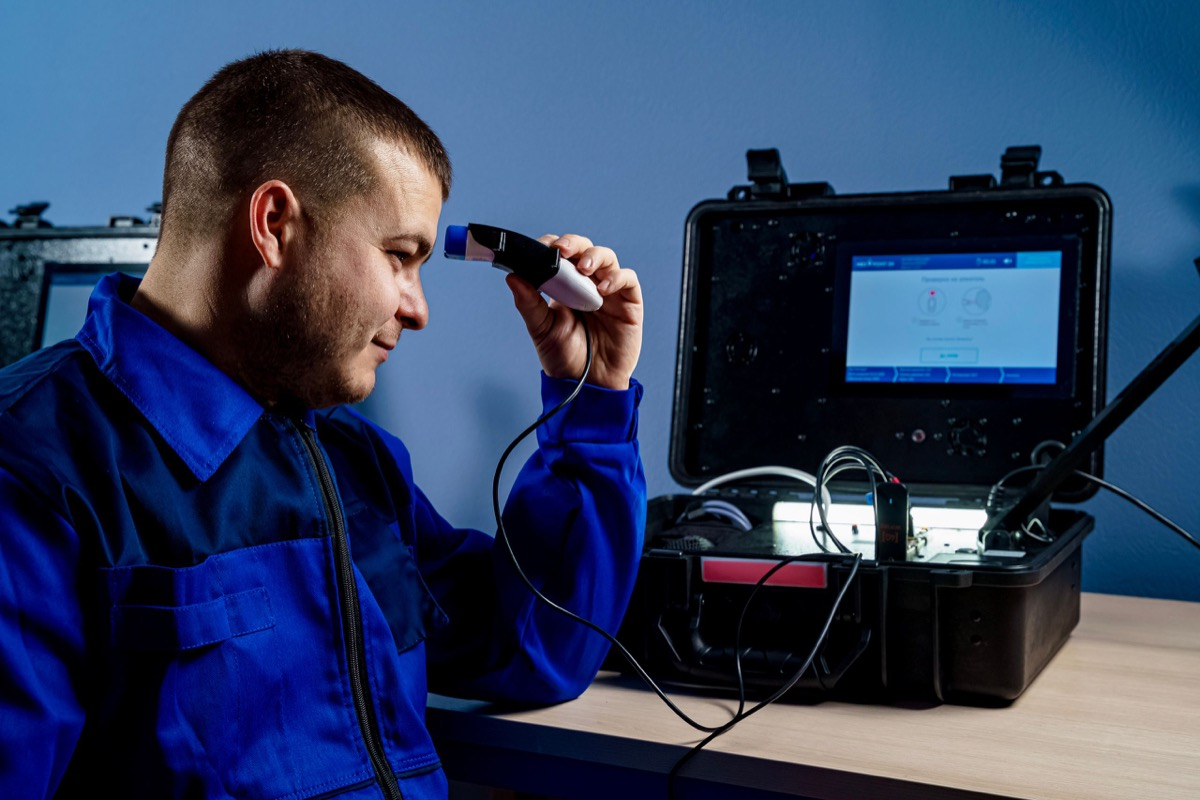
An ONU's receive sensitivity is the weakest optical power at which it can still decode the signal. In GPON, a common Class B+ ONU has sensitivity around −27 dBm (ref. ITU-T G.984 series). That is a threshold, not a comfort zone—theoretical minimum, not where you want to live.
Every ONU has two boundaries:
Overload (ceiling): too strong saturates the receiver; a typical Class B+ overload is around −8 dBm, and beyond it errors climb again.
Sensitivity (floor): around −27 dBm; weaker and it can't decode.
So the workable window is roughly −8 to −27 dBm. In the field, to absorb aging, temperature drift, and dirty connectors, keep actual receive power around −12 to −25 dBm, leaving 2–3 dB margin on each side.
When receive power sags to −26, −27, or worse, the usual suspects are:
Dirty fiber: dust or fingerprints on an SC/APC connector add loss instantly.
Bend loss: a patch cord pinched to a too-tight radius leaks light.
Poor splice / cold joint: high connector loss.
Long distance + high split ratio: fixed OLT launch power gets eaten by budget.
Aging ONU optics: the receive end itself degrades.
| Receive (dBm) | Symptom | Action |
|---|---|---|
| −8 to −12 | Strong but not saturated | Healthy upper bound, monitor |
| −12 to −25 | Healthy range | Margin kept, stable |
| −25 to −27 | Critical | Find and clean the contamination, restore margin |
| < −27 | Below sensitivity | Bit errors / drops, must fix |
| > −8 (too strong) | Receiver saturated | Add attenuation, protect the receiver |
A Class B+ ONU's sensitivity is about −27 dBm (ITU-T G.984); that's the floor, not the target.
Keep real receive power around −12 to −25 dBm, with 2–3 dB margin each side.
Weak light usually starts at the user-side dirty SC/APC connector or a tight bend.
Overload above ~−8 dBm saturates the receiver—add fixed attenuation.
Troubleshoot from the ONU end backward: clean, check bend, then walk toward the splitter and OLT.
Rayin (Shenzhen Rayin Technology) is a manufacturer of GPON OLTs and industrial Ethernet switches, and its XPON ONU is built to the Class B+ sensitivity with margin, so the terminal plus a Rayin OLT in the PON solution makes the optical budget straightforward to calculate. For the Ethernet access side, Rayin's industrial switches carry the upstream.
Theoretically below the Class B+ sensitivity (~−27 dBm), so it's past the edge. It may register briefly, but a temperature shift or a dirty connector drops it. Bring receive power back inside −25 dBm before calling it stable.
Yes. Above the overload point (~−8 dBm) the receiver saturates and errors rise. Add fixed attenuation in front of the ONU to pull receive power back into the window—don't let strong light "burn" the receiver.
Classic weak light or contaminated connector: it registers at the edge, then accumulated errors get it kicked and re-registered. Clean the connector, measure with an optical power meter, and restore the margin.
At the ONU user side: clean the SC connector, check the patch-cord bend, swap an attenuator and watch the reading change; then walk toward the splitter and OLT segment by segment. Eighty percent of field issues are that dirty connector at the last meter.
Rayin's XPON ONU is specified to Class B+ with margin, and the Rayin OLT in the PON solution lets you sum launch power, splitter insertion loss, and distance into a budget you can actually trust—pair them and the ONU receive window stays predictable. Rayin (Shenzhen Rayin Technology) is a manufacturer of GPON OLTs and industrial Ethernet switches, so its OLT and ONU are specified to the same Class B+ budget from the start.
What Is an XPON ONU: The 1-Port Terminal's Job in a PON Network
PON Splitter Insertion Loss: 1:8, 1:16, 1:32, and 1:64 in dB
How to Test a PON Link: OLT Test with Power Meter, VFL, and OTDR
About the author — Sara Tian is a technical writer at Rayin (Shenzhen Rayin Technology), focused on PON and industrial networking. Connect with Sara on LinkedIn
About Rayin → Rayin company profile