Four things are genuinely changing industrial network design in 2026: deterministic Ethernet is becoming a procurement requirement, security certification moved from nice-to-have to disqualifying, PON is being pushed down to individual machines, and component supply is shaping what you can actually buy. Rayin (Shenzhen Rayin Technology) is a manufacturer of GPON OLTs and industrial Ethernet switches. The useful way to read industrial networking trends is not as predictions but as a checklist of what to demand in writing before you sign.
"Supports TSN" is meaningless without the specific standards named — 802.1Qbv scheduling, 802.1Qbu preemption and 802.1AS timing are three different features.
IEC 62443 is now a gating criterion in many tenders. Ask for the security level (SL 1–4) and whether it was assessed by an accredited body or self-declared.
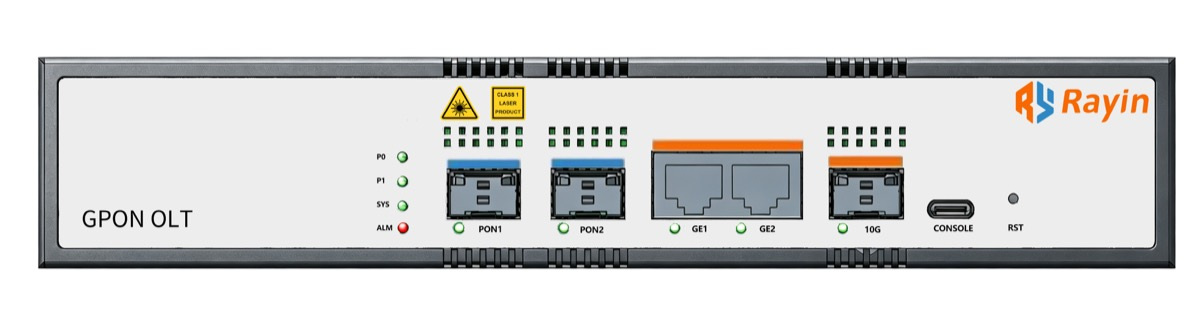
XGS-PON gives symmetrical 10 Gbps (ITU-T G.9807.1). 50G PON exists as a standard (ITU-T G.9804) but industrial availability is still limited, so size your design for what ships today.
Vendors present roadmaps and shipping products in the same breath. This separation matters more than any single technology choice.
| Trend | Status in practice | What to ask for |
|---|---|---|
| TSN on switches | Deployable, but feature-by-feature | Named standards, not the word "TSN" |
| 802.1AS timing | Mature for PTP profiles | Grandmaster accuracy and holdover spec |
| XGS-PON (10/10 Gbps) | Shipping and deployable | OLT and ONU both, plus optics class |
| 50G PON | Standardised, limited availability | Roadmap confirmation and migration path |
| IEC 62443 compliance | Common claim, uneven evidence | Certificate number and assessing body |
| Edge compute on switches | Available on mid/high tiers | CPU headroom and what it does to thermals |
| 25G access ports | Deployable, rarely needed in plants | Whether your uplink actually requires it |
The pattern to notice: the pieces that are genuinely new are mostly in the optical layer, while the Ethernet side is consolidating features that already existed into procurement baselines.
Time-Sensitive Networking is a family of IEEE 802.1 standards, not a single feature. Three come up repeatedly in tsn industrial network projects:
IEEE 802.1Qbv — scheduled traffic, using a gate control list so that time-critical queues get exclusive access to the port for a defined window.
IEEE 802.1Qbu — frame preemption, allowing a high-priority frame to interrupt a large one already in flight.
IEEE 802.1AS — a profile of IEEE 1588 for timing and synchronisation across the bridged network.
None of these work in isolation. A switch that implements Qbv without Qbu still has to wait for a 1,500-byte frame to finish, so the worst-case bound is worse than the marketing suggests. That gap is the reason a tsn industrial network needs a written feature list rather than a checkbox. The IEC/IEEE 60802 profile exists precisely to define which combinations industrial automation should use — referencing it moves a conversation from opinion to specification.
The other half is configuration. A scheduled-traffic design needs a computed schedule, which means knowing every flow, its period and its deadline. Plants that skip this step turn on TSN and see no improvement, because the default schedule is no better than strict priority queueing.
Two steps are worth separating.
The symmetrical 10 Gbps generation is the current target. Defined in ITU-T G.9807.1, it delivers 10 Gbps in both directions, versus GPON's 2.488 Gbps down and 1.244 Gbps up (ITU-T G.984). For plants where upstream matters — machine vision, large batch uploads, dense telemetry — the symmetrical rate is the point, not the headline number.
50G PON is standardised but early. ITU-T G.9804 defines it, and carrier pilots are underway. Industrial-grade ONUs at that rate are not broadly available, and the optical budget is tighter. Designing for it today means buying splitters and fibre that will not need replacing, not buying 50G optics.
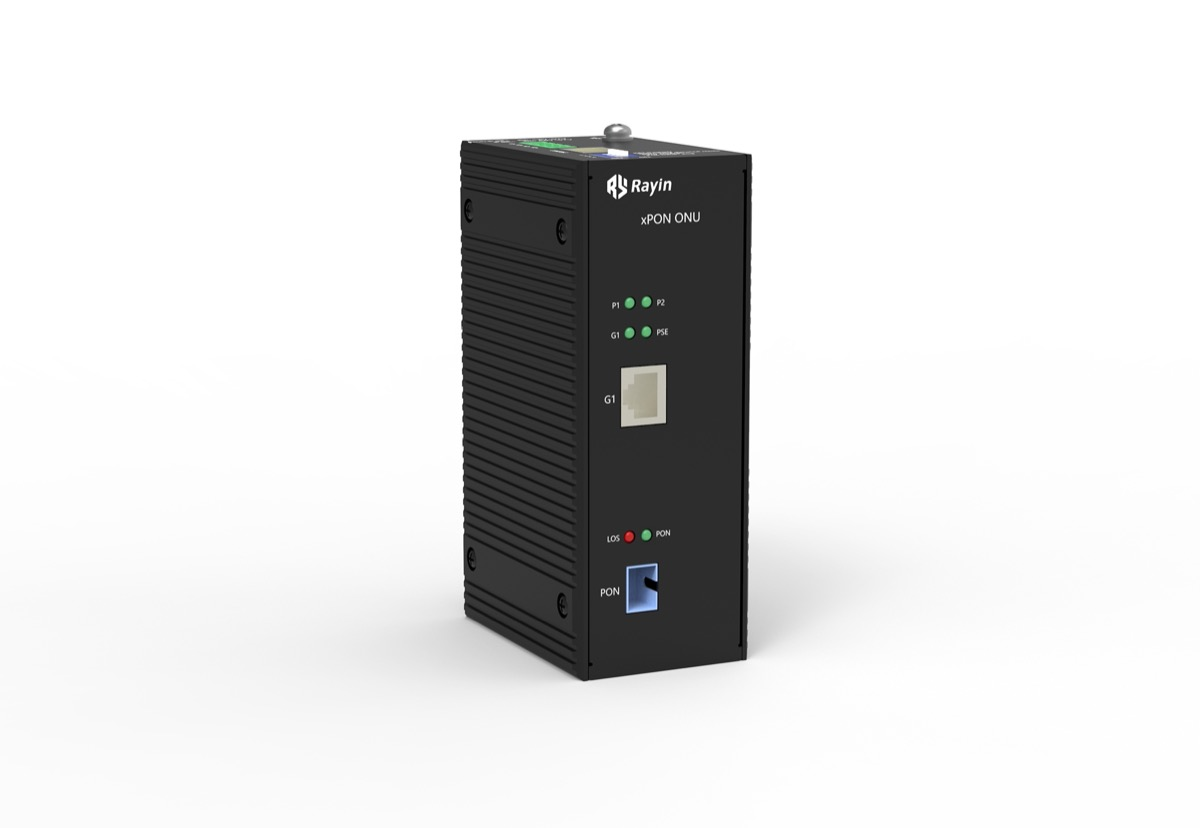
The more consequential shift is architectural rather than speed-related: running fibre directly to the machine instead of to a zone cabinet. Known as fiber-to-the-machine, it removes powered field equipment from the production floor and is where PON's economic argument is strongest.
Five questions convert a trend report into a purchase order:
Is it shipping, or announced? Ask for a part number and a lead time. Announced products have neither.
Which standard, and which optional parts of it? Vendors implement subsets. Get the clause numbers.
Who assessed the security claim? Self-declaration and third-party certification are not equivalent in a tender.
What does it cost in heat? Every added feature consumes power inside an enclosure that probably has no fan.
Can you migrate incrementally? A design that requires a forklift upgrade is a design you will postpone.
Supply conditions deserve a line of their own. Component availability — MLCCs, copper-clad laminate, optical parts — has repeatedly moved both price and lead time for industrial network hardware. Building a second source into the specification is cheap insurance.
Is TSN worth specifying if my traffic is mostly Modbus TCP? Usually not. Modbus TCP tolerates ordinary priority queueing. TSN earns its cost when cycle times are tight enough that a single large frame changes the outcome.
What is the practical difference between GPON and XGS-PON? Capacity and symmetry. GPON offers 2.488 Gbps down and 1.244 Gbps up; the newer generation offers 10 Gbps in both directions. Upstream-heavy industrial workloads benefit most.
Can I mix old and new ONUs on the same OLT port? Often yes on the same fibre plant, because the two generations use different wavelength bands. Confirm it for the specific OLT, since coexistence is a feature, not a guarantee.
Does IEC 62443 apply to switches, or to whole systems? Both, at different levels. Component-level certification covers the device; system-level security levels cover the installation. Tenders increasingly ask for both.
How long should I plan the fibre plant for? Fifteen to twenty years, because the cable and conduit outlive the electronics several times over. Specifying single-mode fibre with generous splitter capacity costs little now and avoids re-cabling later.
About the author: Sara is a Customer Manager at Rayin with over 10 years of experience in the communications field. In her free time, she enjoys badminton and swimming.
About Rayin: Shenzhen Rayin Technology Co., Ltd. — company profile