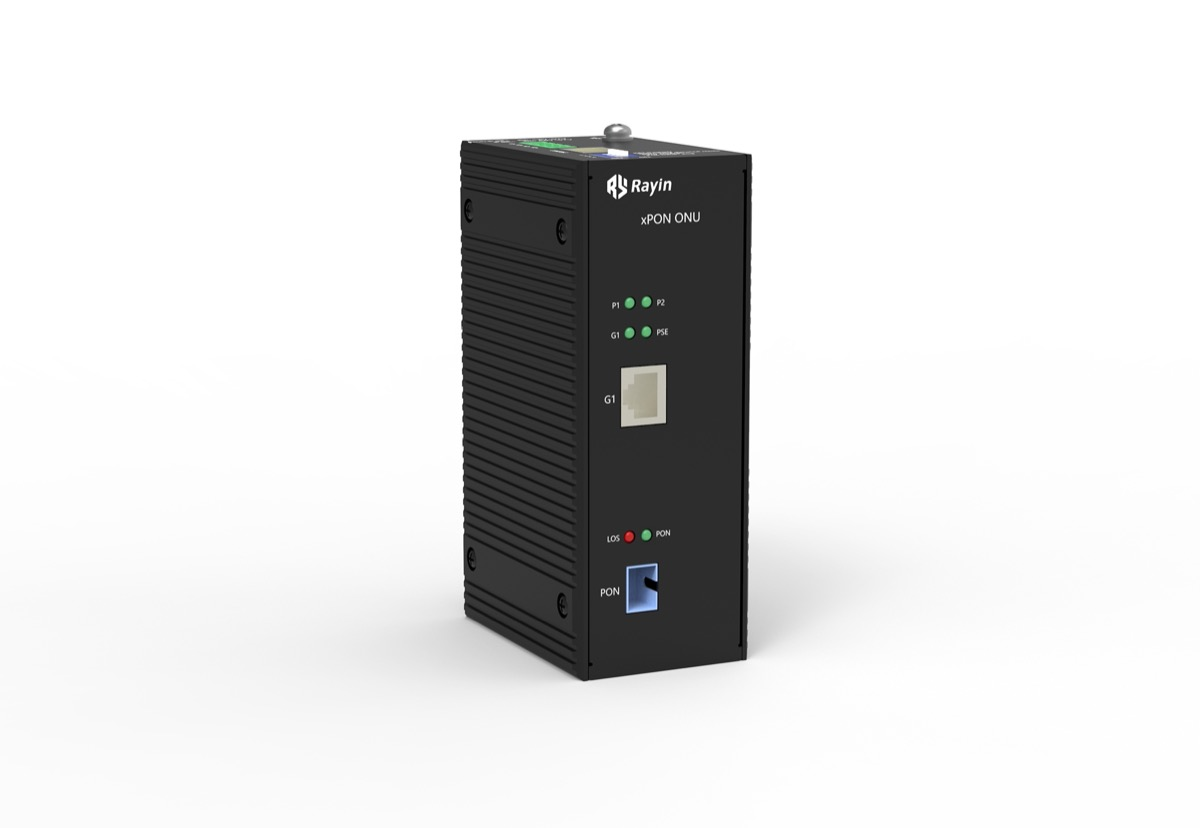
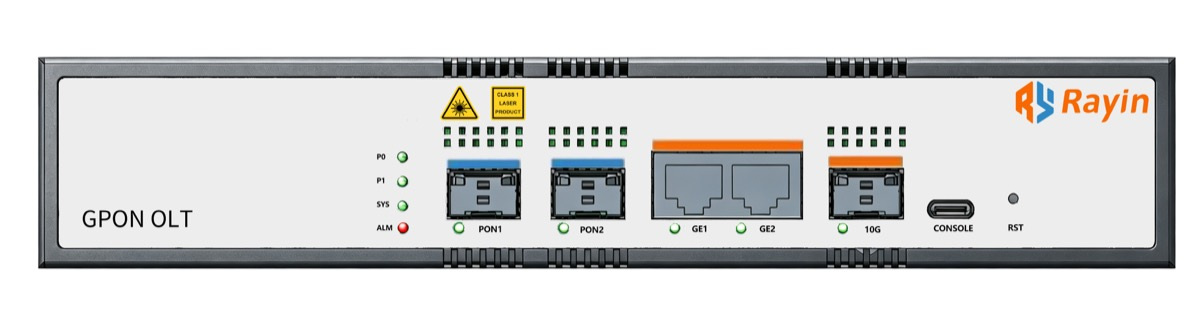
The honest summary of Q1 2026 is that demand was not the constraint — supply was. Rayin (Shenzhen Rayin Technology) is a manufacturer of GPON OLTs and industrial Ethernet switches. Orders for switches, OLTs and optics moved broadly in line with capital projects already approved in late 2025, while the things that actually caused friction were component availability, lead times and price volatility in the bill of materials.

Treat published market totals with caution. Figures differ by definition — some count only Ethernet switches, others include industrial wireless, gateways and services — so compare growth rates within one source, never across sources.
The binding constraint in Q1 was components, not demand. Copper-clad laminate, MLCC and memory pricing fed directly into switch and OLT cost and lead time.
Two technology shifts were visible in actual orders rather than announcements: fibre reaching further down into plants and campuses, and deterministic features appearing in written specifications.
Start by asking what is inside the total. "Industrial network" is not a single category, and the same phrase is used for three different baskets:
| Basket | Includes | Excludes |
|---|---|---|
| Hardware only | Ethernet switches, OLTs, ONUs, optics | Software, services, integration |
| Hardware plus services | Above, plus design and installation | Enterprise IT networking |
| Everything | Above, plus industrial wireless, gateways, IoT platforms | — |
A growth rate quoted against the widest basket can look modest while the switch segment inside it is growing quickly, and vice versa. The practical rule: use one source consistently, look at the segment rather than the headline, and treat any figure quoted without a definition as unusable.
The second filter is currency and geography. A dollar-denominated total absorbs exchange-rate movement, so a quarter with flat unit shipments can still show growth in revenue.
Separating what shipped from what was announced:
| Segment | Direction | Why it matters to a buyer |
|---|---|---|
| Managed gigabit industrial switches | Steady, specification-driven | Tenders increasingly name features, not just port counts |
| 10G uplinks and aggregation | Rising | Vision and historian traffic force uplink upgrades |
| Industrial PON and OLT | Rising | Fibre reaching cells and campus floors, fewer active devices |
| Entry-level unmanaged | Under price pressure | Commoditised, and most exposed to component cost |
| Optics and modules | Tight | Class selection drives what split ratios are achievable |
The unmanaged end is worth watching. It is the segment where a component cost increase cannot be absorbed by differentiation, so price moves first there — and that is where quality shortcuts show up when margins are squeezed.
Three inputs shaped quotes in the quarter, and all three are worth asking about explicitly:
Copper-clad laminate. PCB substrate cost feeds every board. A move here changes quotes for switches and OLTs with a lag of roughly a quarter.
MLCC and passive components. Small parts, large count. Supply tightness shows up as allocation on specific port-density variants rather than across a whole catalogue.
Memory. Both DRAM and flash affect managed devices, where firmware and buffering need both.
The consequence for buyers is practical: quote validity windows shortened, and lead-time commitments became the thing to negotiate rather than unit price. Two habits help — ask for a validity period in writing, and ask which component is driving the lead time on the specific model you are buying.
Two things stayed flat, and both are informative. Physical layer basics did not change: copper access is still capped at 100 m per link by Ethernet framing, and single-mode fibre still removes that limit wherever it is run. And the standards that gate procurement did not change either — the same IEC immunity and ingress ratings, the same IEEE feature clauses, the same ITU-T PON recommendations.
That stability is useful because it means the quarter's disruption was commercial rather than technical. Nothing in the component situation requires a different architecture; it requires a longer planning horizon and a specification precise enough to survive a substitute part. A design that names the standard and the test level can be re-sourced. A design that names a model number cannot.
Qualify two sources for anything with a long lead time. Single-sourcing a managed switch platform during a component squeeze is a schedule risk.
Fix the specification before the price. A tender that names standards, test levels and firmware baseline is comparable between vendors; one that says "industrial switch, 8 ports" is not.
Plan the optical budget early. Module class availability determines which splitter ratios are realistic, and that decision shapes the whole design.
Separate roadmap from deliverable. Features dated to a future release should not sit in an acceptance criterion.

Is the industrial network market growing in 2026? Demand is holding, but the more useful question is which segment. Aggregation, 10G uplinks and industrial PON are where specifications are tightening; entry-level unmanaged hardware is mostly competing on price.
Why do published market totals disagree so much? Because the baskets differ. Some count only hardware, others include services, wireless and platforms. Compare growth rates within a single source, and ask for the definition.
What is driving lead times right now? Components rather than assembly: substrate and laminate, passive components, and memory. Ask which part is constraining your specific model.
Should I lock prices or lock specifications first? Specifications. A precise spec is comparable across vendors and survives a price change; a vague one makes any quote look attractive until delivery.
How does optical module supply affect design? Module class determines achievable optical budget, which determines splitter ratio and reach. Confirm what is actually available before committing to a splitter plan.
About the author: Sara is a Customer Manager at Rayin with over 10 years of experience in the communications field. In her free time, she enjoys badminton and swimming.
About Rayin: Shenzhen Rayin Technology Co., Ltd. — company profile