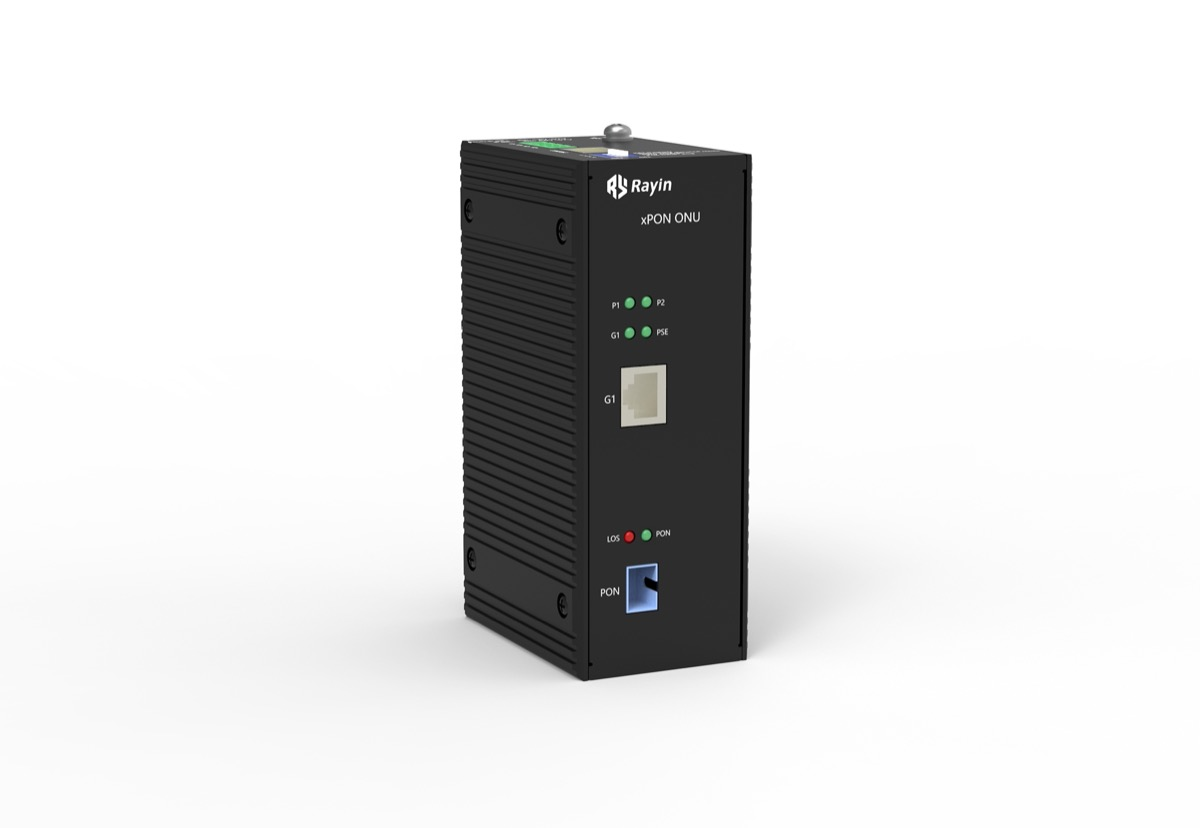
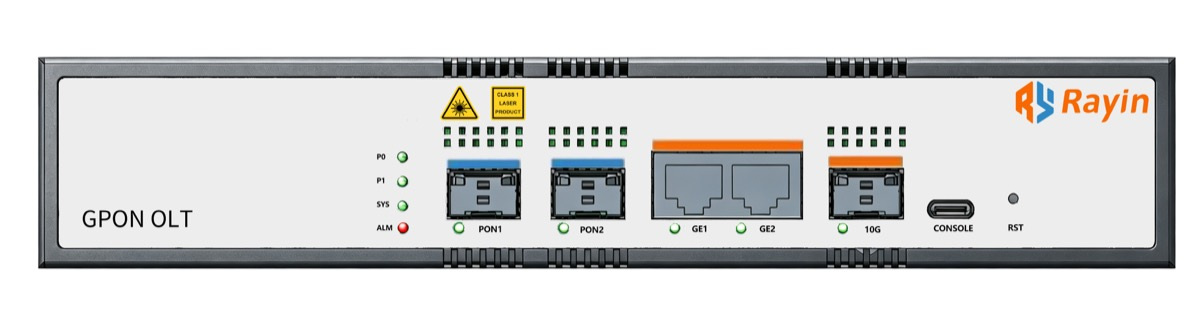
Airport networks stopped being a utility and became operational infrastructure: once identity checks, baggage tracking and stand-side operations all depend on the network, a slow link is a queue at security rather than a slow web page. Rayin (Shenzhen Rayin Technology) is a manufacturer of GPON OLTs and industrial Ethernet switches. The driver is not one document but a set of IATA programmes for identity and processing that all assume the terminal has a network capable of moving identity, video and operational data reliably and separately.
IATA's One ID framework replaces repeated document checks with a single verified identity, which turns the check-in, security and boarding touchpoints into network endpoints that must stay up.
NEXTT describes where the work moves: off-airport processing, advanced processing in the terminal, and interactive decision making. Each one adds network endpoints outside the building.
Segmentation is the design decision that matters. Passenger Wi-Fi, operational systems and safety-related traffic should not share a broadcast domain, however convenient that is to build.
The programmes are worth reading as network requirements rather than as passenger-experience slides.
| Programme | What it does | Network implication |
|---|---|---|
| Single-token identity | One verified identity across check-in, bag drop, security and boarding | Every touchpoint becomes a latency-sensitive endpoint |
| Ready to Fly | Identity verified before arrival at the terminal | Processing moves off-site, adding remote endpoints |
| NEXTT — off-airport activities | Processes happen outside the terminal | City check-in sites need secure connectivity back |
| NEXTT — advanced processing | Automation and biometrics in the terminal | Camera density and uplink capacity rise sharply |
| NEXTT — interactive decision making | Real-time tracking of flights, bags and shipments | Operational data becomes time-sensitive |
IATA has published forecasts of air travel demand roughly doubling over the coming decades, with several billion passengers a year by the mid-2030s. Whether or not any individual airport hits those numbers, the planning conclusion is the same: terminals cannot physically expand fast enough, so throughput has to come from processing efficiency, and processing efficiency is a network problem.
The participating airports in the NEXTT work — including Dubai, London Heathrow, Bangalore, Amsterdam Schiphol and Shenzhen — are instructive because they are all doing the same three things: adding cameras, adding identity endpoints, and moving some of the processing away from the terminal.
An airport network is really several networks that happen to share a building.
| Domain | Traffic | Design requirement |
|---|---|---|
| Operational | Baggage, stands, ground handling, AODB | High availability, own VLAN, priority queuing |
| Safety and security | CCTV, access control, screening | Bandwidth-heavy, retention-driven, isolated |
| Passenger-facing | Wi-Fi, wayfinding, digital signage | High density, untrusted, throttled |
| Airline and handling | DCS, gate systems, load control | Segmented per tenant |
Camera count is the number that surprises people. A terminal upgrade routinely adds hundreds of cameras, each contributing a few megabits, and enforcement-grade recording pushes per-camera bitrates up again. That is an uplink and aggregation problem, not an access-layer one — which is where 10G fibre uplinks and a proper aggregation design earn their cost.
Airport upgrades run alongside live operations, which makes phasing the hard part rather than the technology. The sequence that tends to work:
Build the operational network first. Operational and safety systems move onto the new core before any passenger-facing change, so the critical domains are on new hardware while the old network still carries the rest.
Migrate tenant by tenant. Airlines and handlers move on their own windows, which argues for per-tenant VLANs or VRFs from the start rather than a flat network.
Cut passenger services last. Wi-Fi and signage are visible but not safety-critical, so they absorb the remaining risk.
Keep the old network alive for a full season. Running both in parallel through one peak period costs less than an outage during one.
The physical constraint that shapes all of this is cable route availability. Lifting floors and ceilings in an operating terminal is slow and expensive, which is one reason passive optical designs attract interest: a single fibre can replace a copper chain and free up containment for the next decade of changes.
Separate VLANs per domain, enforced at the port. Operational, security and passenger traffic should not be able to flood each other. Private VLAN or port isolation helps where tenants share hardware.
Protected uplinks. Dual fibre on physically separate routes, or a ring protocol with sub-50 ms recovery. A cut uplink should not silence a pier.
PoE budgeting by camera count. Add the draw of every camera and AP, then leave headroom for the day all of them run at full bitrate.
Industrial hardware outside the terminal. Aprons, baggage halls and perimeter cabinets are not conditioned equipment rooms: wide temperature, fanless, DIN-rail or wall-mount, with surge protection on long copper runs.
Manageability. SNMP, CLI, configuration backup and a documented firmware baseline — a network that cannot be audited cannot be run at airport scale.
Is the IATA Smart Airport Roadmap a single document with deadlines? Not in the way a regulation is. These are programmes with published frameworks and participating airports; implementation timing is set by each airport and its regulators.
Why does a single-token identity matter to the network? Because it removes paper fallbacks. Once identity is verified at a networked touchpoint, that touchpoint has to stay up, and its latency becomes passenger queue time.
How much bandwidth does airport video need? Scale by camera count and resolution rather than by a rule of thumb: hundreds of cameras at several megabits each, more for enforcement-grade recording, all hitting the same aggregation point.
Should passenger Wi-Fi share the operational network? No. Keep them on separate VLANs with the passenger side treated as untrusted and rate-limited. Convenience in cabling is not worth a shared failure domain.
Do apron and perimeter cabinets need industrial switches? Yes. Those locations have temperature extremes, dust, long cable runs and no cooling, which is exactly what industrial hardware is specified for.
About the author: Sara is a Customer Manager at Rayin with over 10 years of experience in the communications field. In her free time, she enjoys badminton and swimming.
About Rayin: Shenzhen Rayin Technology Co., Ltd. — company profile