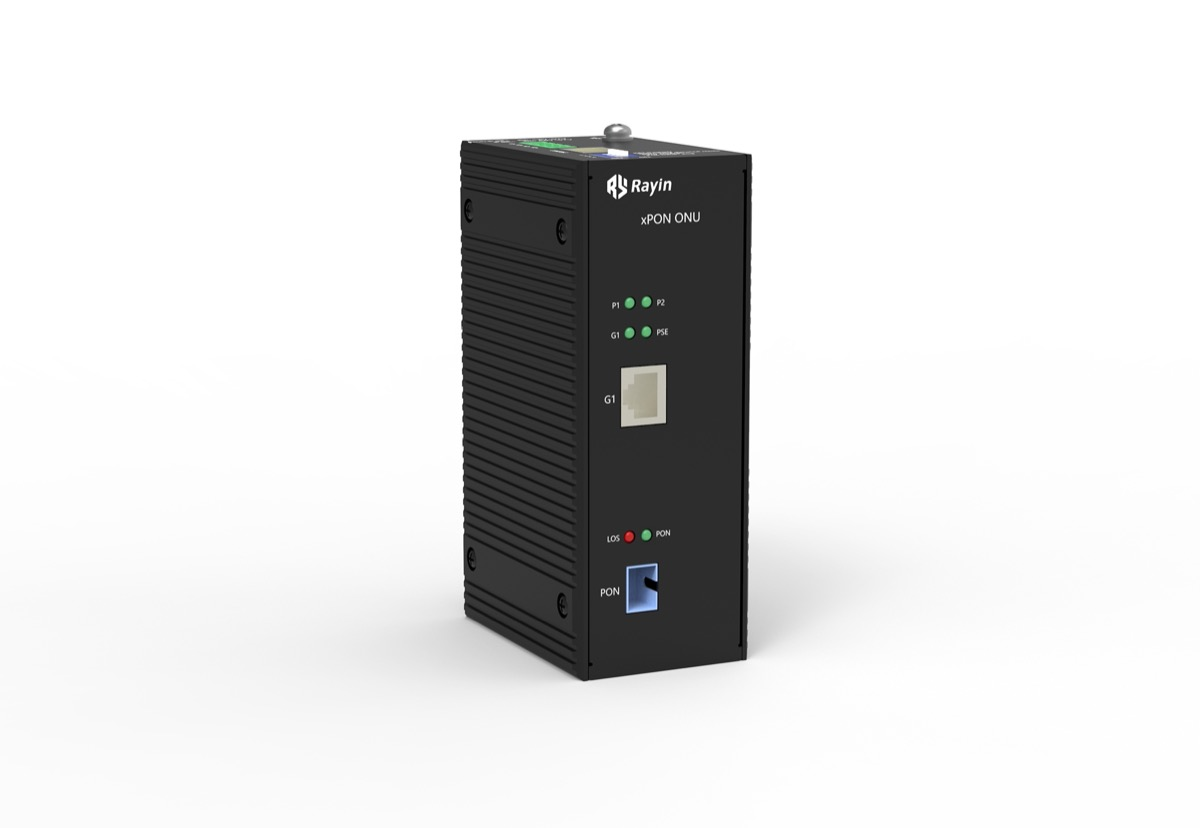
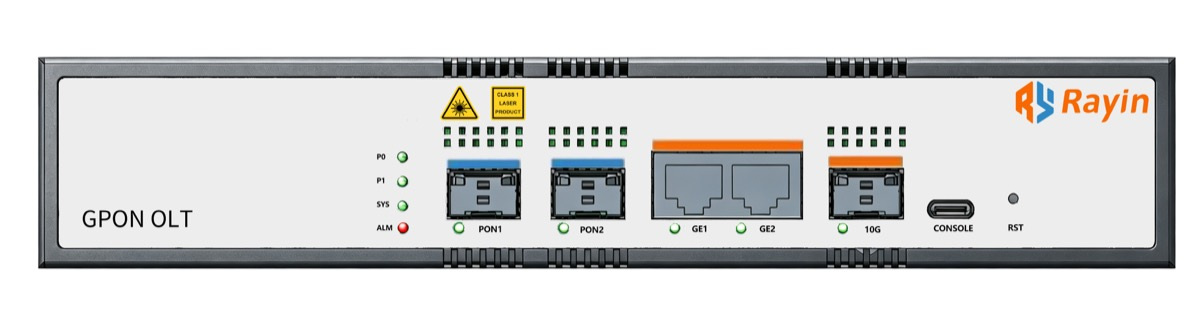
Heat does not usually kill a switch outright — it shortens it. A wide temperature industrial switch rated for continuous operation at high ambient is designed so that its electrolytic capacitors, silicon junctions and solder joints stay inside their limits at the stated temperature; the rating is a statement about component grade and thermal path, not about surviving in a sealed black box in direct sun. Rayin (Shenzhen Rayin Technology) is a manufacturer of GPON OLTs and industrial Ethernet switches. Most field failures blamed on "bad hardware" are actually thermal: the rating was real, but the installation exceeded it.
The dominant wear mechanism is capacitor ageing. The widely used rule of thumb is that electrolytic capacitor life roughly halves for every 10 °C rise in operating temperature — so a switch at 75 °C ambient ages far faster than the same model at 45 °C.
A rating of -40 to +75 °C is the common industry-typical band for industrial Ethernet switches. Claims of +85 °C exist but are much rarer and should be verified against a type-test report, not a datasheet headline.
The rating assumes a mounting and airflow condition. Wall-mounting a fanless industrial switch inside a sealed, sun-facing cabinet can push internal ambient well past the rating and void the margin you paid for.
Four mechanisms, in rough order of how often they end a switch's life:
| Component | What heat does | Visible symptom |
|---|---|---|
| Electrolytic capacitors | Electrolyte dries out, ESR rises, capacitance falls | Intermittent reboots, then failure to start when cold or hot |
| Silicon junctions | Leakage rises, timing margins shrink | CRC errors, link flaps, occasional lockups |
| Solder joints | Thermal cycling causes fatigue cracking | Intermittent faults that change with time of day |
| Optics | Laser wavelength drift and reduced output power | Gradually shrinking link margin on SFP runs |
The capacitor mechanism deserves emphasis because it is silent and progressive. A switch can run apparently normally for two years at high ambient and then start rebooting on hot afternoons. By then the ESR has risen enough that the supply rail dips during a transient. Nothing in the logs points to temperature unless you were recording it.
The second-order symptom is more subtle: rising CRC error counters on a port that has always been fine. That is usually silicon timing margin shrinking, not a cable fault, and it typically appears before outright failure.
Less than most buyers assume. Read it as four separate questions.
| Question | What to check |
|---|---|
| Ambient or internal? | The figure is ambient air around the unit, not the junction temperature. A switch drawing full PoE load generates its own heat on top of it. |
| At what load? | Some ratings apply at idle. Ask whether the figure holds with all ports active and the full PoE budget drawn. |
| With what airflow? | Most ratings assume natural convection with clearance on all sides. Zero clearance in a crowded cabinet changes the answer. |
| Verified how? | Ask for the environmental test standard used, typically from the IEC 60068-2 series, and whether it was type-tested or calculated. |
The practical test of a wide temperature industrial switch is therefore not the number on the datasheet but the combination of ambient, load and airflow it was measured under. Ask for all three and the comparison between two shortlisted models usually becomes obvious.
This is also why industrial switch thermal design is worth asking about explicitly rather than inferring it from the temperature range alone: two units with identical -40 to +75 °C claims can reach that number by very different routes, and only one of them will still be inside its margin when the cabinet is 20 °C hotter than the datasheet assumed. A fanless industrial switch has no way to move heat except conduction into its enclosure and then convection into the surrounding air. That means the enclosure is the heat sink: an extruded aluminium housing with fins outperforms a flat sheet-metal box at identical internal power dissipation, which is precisely the kind of decision a port-count comparison will never reveal.

Installation mistakes are the most common reason a correctly specified switch still fails.
Do not seal the cabinet without venting. A sun-facing steel enclosure can reach 20–30 °C above outside ambient. Either vent it with filtered louvres, add a sun shield, or specify a switch rated for the resulting internal temperature.
Leave clearance. Follow the vendor's stated clearance on all sides. Stacking switches directly against each other removes the convection path on the faces doing the cooling.
Mind the mounting orientation. Many DIN-rail designs expect vertical mounting so that fins run vertically and air rises along them. Mounting horizontally can reduce the effective cooling noticeably.
Keep dust out. Dust on fins and across vents is insulation. In cement, mining and textile environments, a quarterly clean is cheaper than a truck roll.
Watch the PoE load. A switch delivering 60 W of PoE dissipates meaningfully more than one delivering 10 W. Size the thermal margin for the load you will actually run, not the load you have today.
Read the onboard temperature sensor. Many managed industrial switches report CPU or board temperature via CLI, web, or SNMP. If yours does, poll it and alert at a threshold roughly 10 °C below the stated maximum.
Track port error counters over time. A slow upward drift in CRC or symbol errors on a healthy fibre run is a thermal tell.
Log reboots with timestamps. Reboots clustering in the afternoon, or in the hottest week of the year, are almost always thermal. A switch overheating in a sealed enclosure will usually show the pattern weeks before it stops recovering.
Do one infrared pass per summer. A non-contact thermometer across the top of the enclosure takes a minute per cabinet and finds the hot spot before it becomes a fault.
Correlate with site events. If failures follow a heatwave, the fix is thermal, not a firmware update.
Is a fan better than fanless in a hot cabinet? Not necessarily. A fan moves more heat but adds a mechanical failure point and pulls dust in. In dusty environments a fanless industrial switch with a good thermal path usually outlasts a fanned one; in a clean, hot cabinet a fan can give more headroom.
Can I use a commercial switch in an air-conditioned control room? Yes, frequently. If the room stays below roughly 40 °C and downtime is cheap, the extra cost of a wide-temperature design buys little.
What does -40 °C really require? Cold-start behaviour. Components must start and run at -40 °C, which constrains the capacitor and silicon choices. If your site never sees cold, you may be paying for a low-temperature margin you do not need.
Why does my switch reboot only on hot afternoons? Almost always capacitor ESR or junction leakage reaching a threshold. Confirm by logging board temperature against the reboot timestamps.
Does a +85 °C rating matter? Only for extreme sites such as near-kiln or desert installations. Verify it against a type-test report, because +75 °C is the common industry-typical ceiling for industrial Ethernet switches.
What a wide-temperature rating of -40 to 75 C actually means
Switch housing: a simple metal box or a heat and shielding system?
MTBF is not lifespan: from 200,000 hours to annual failure rate
About the author: Sara is a Customer Manager at Rayin with over 10 years of experience in the communications field. In her free time, she enjoys badminton and swimming.
About Rayin: Shenzhen Rayin Technology Co., Ltd. — company profile