The best industrial Ethernet switch for a factory floor or outdoor cabinet is defined by environmental hardening and redundancy, not just port count — look for −40 °C to +75 °C operation, 6 kV surge protection, PoE budget, and sub-50 ms failover. A commercial switch will not survive the heat, dust, or electrical noise of an industrial site.
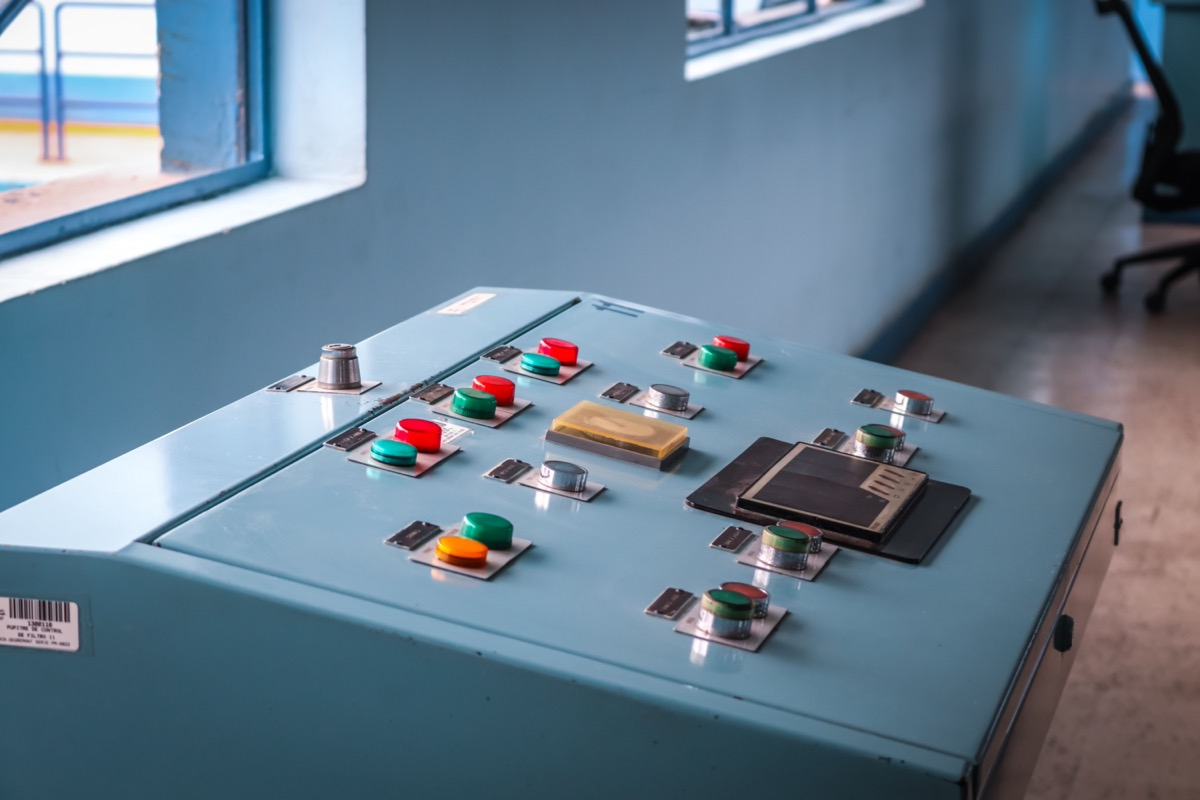
Office switches assume a clean, climate-controlled rack. Industrial sites deliver the opposite: temperature swings, vibration, humidity, and induced surges on long cable runs. The failure modes are predictable — a commercial switch overheats at 50 °C, its plastic ports crack under vibration, and a nearby lightning strike takes it down. An industrial Ethernet switch is built to shrug these off.
| Feature | Why it matters | Typical spec |
|---|---|---|
| Temperature | Survives outdoor/plant extremes | −40 °C to +75 °C |
| Ingress | Dust / washdown resistance | IP40 (indoor), IP67 (outdoor) |
| Surge | Protects long cable runs | 6 kV surge protection |
| Mount | Fits control panels / poles | DIN-rail or rack |
| Failover | No single-link blackout | < 50 ms ring recovery |
Rayin's 8+4 gigabit industrial switch (PoE optional) is a concrete example: wide-temperature −40 °C ~ +75 °C, 6 kV surge protection, and ring failover under 50 ms — built for factory, transport, and outdoor surveillance backbones.
For IP cameras, wireless APs, and phones, choose a managed industrial PoE switch supporting IEEE 802.3af/at/bt — 30 W (PoE+), up to 90 W (PoE++) per port. Size the total PoE budget to the sum of connected devices, leaving 20% headroom. An 8-port model powering eight 15 W cameras needs roughly 120–150 W of PoE budget.
Lead with environment: temperature, IP rating, and surge — before port count.
For edge devices, require PoE (802.3at/bt) and size the total watt budget.
Demand < 50 ms ring failover (ERP/rapid STP) for any process network.
Pick managed with SNMPv3 + 802.1X + ACL so the network is observable and lockable.
Environment and redundancy. An industrial switch runs −40 °C to +75 °C, carries 6 kV surge protection, and recovers from a link break in under 50 ms. A commercial switch is built for 0–40 °C offices and has none of these.
Add the wattage of every powered device and add 20%. Eight 15 W cameras ≈ 120–150 W; add VoIP and APs and you are quickly at 250–400 W, which means an 802.3bt (90 W/port) capable model.
SNMPv3 for secure monitoring, 802.1X port authentication, ACL for domain isolation, and VLAN for traffic separation. Unmanaged switches cannot be observed or secured — they are a blind spot on a process network.
For any network where a cable cut stops production, yes. A ring with < 50 ms failover reroutes around the break automatically; a daisy-chain or star does not. Use ERPS or rapid STP on a managed industrial switch.
The 8+4 gigabit industrial switch with optional PoE covers eight PoE cameras plus four uplink/PLC ports, with wide-temp and 6 kV surge — a single box for most small industrial sites.
Industrial Switch Deployment Checklist: Console to Config Backup
Configure ACL on an Industrial Switch to Lock Down Management
About the author — Sara Tian is a technical writer at Rayin (Shenzhen Rayin Technology), focused on PON and industrial networking. Connect with Sara on LinkedIn.
About Rayin → Rayin company profile