GPON OLT PON ports use high-power BIDI modules because a single fiber must carry both directions and one central office must feed dozens to hundreds of ONUs through deep splits. The power class — C+ through C++++ — is simply how much optical budget the module can spend: each step up adds about 3 to 5 dB (ITU-T G.984.2), which means one more split stage or a dozen more kilometers. Pick the class from your split ratio, distance, and the margin you want to keep.
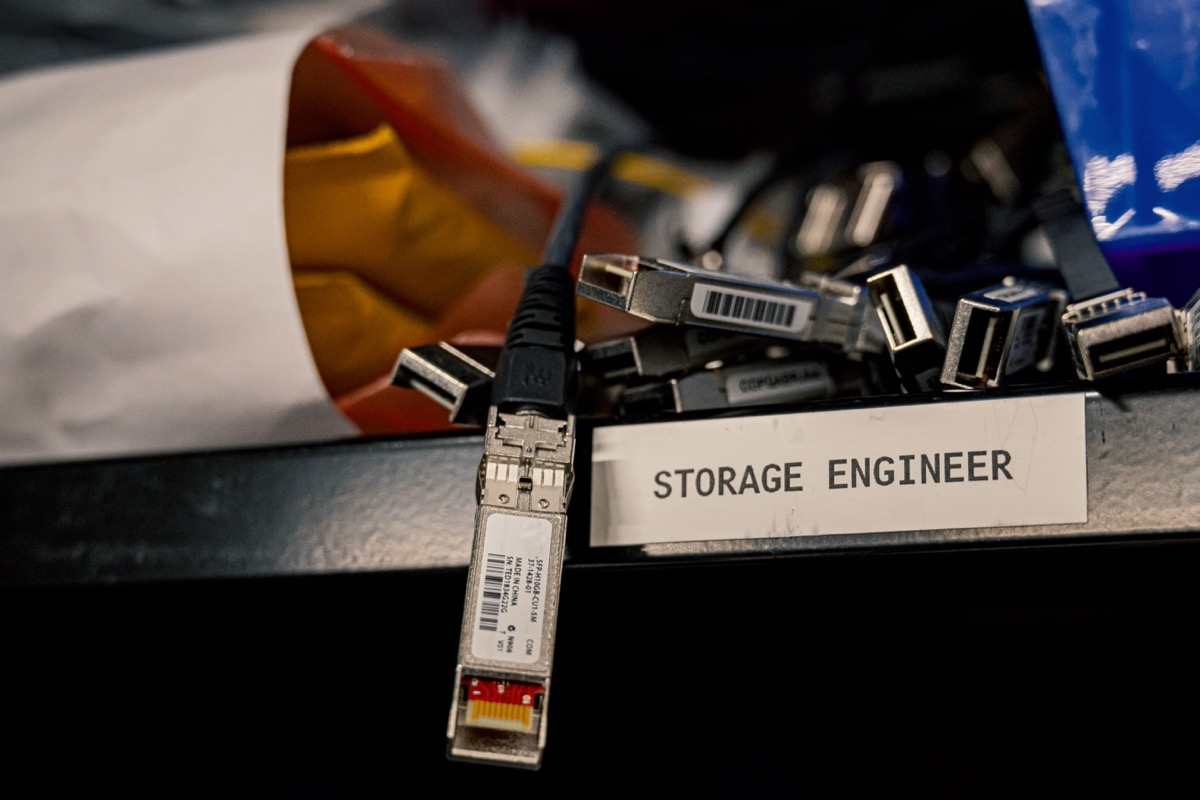
A PON port is BIDI (single-fiber bidirectional): GPON runs 1490 nm down / 1310 nm up on one fiber via WDM; XGS-PON uses 1577 / 1270 nm (G.9807.1).
Power class = optical budget. C+ 32 dB, C++ 35 dB, C+++ 38 dB, C++++ ~40 dB; headline Tx is +7 / +9 / +10 dBm.
The ONU side is lower-class Class B+ (~28 dB) — the central office transmits hard, the user end runs standard power; margin comes from the OLT.
1:128 at 20 km fits C++ (35 dB); 1:256 or 40 km wants C+++ (38 dB); short links near the OLT may need a 5–10 dB attenuator to avoid receiver overload.
A normal switch port uses two fibers (one send, one receive). An OLT PON port uses one — a BIDI (Bidirectional, single-fiber bidirectional) optical module packs both directions into the same SFP cage and separates them by wavelength with WDM, so the two streams never collide on one fiber.
GPON down is 1490 nm, up is 1310 nm (XGS-PON shifts to 1577 nm down / 1270 nm up), all running opposite ways on the same strand. The OLT is the one-to-many office end: it must drive tens to hundreds of ONUs and survive a 1:128 or even 1:256 split, so its PON port has to carry a high-power BIDI module — that is exactly what the C+ to C++++ ladder is for.

| Wavelength | Direction | Carries | GPON rate |
|---|---|---|---|
| 1310 nm | ONU → OLT (up) | User data | 1.244 Gbps |
| 1490 nm | OLT → ONU (down) | User data | 2.488 Gbps |
| 1550 nm | OLT → ONU (down) | CATV / video (optional) | — |
The filter WDM inside a bidi sfp steers each wavelength to its own receiver or transmitter. OLT and ONU PON modules must match wavelengths or they will not register. Power class is the second layer of selection, sitting on top of BIDI.
Power class is the optical budget: how hard the module can transmit, how weak a signal it can still receive, and the difference is the total loss the fiber, connectors, and splitters are allowed to eat. ITU-T G.984.2 defines the high-power C-band for GPON OLT, each step adding 3 to 5 dB of budget — roughly one more split stage or a dozen kilometers.
| Class | Max Tx | Rx sensitivity | Budget | Typical split / reach |
|---|---|---|---|---|
| Class C+ | +3 to +7 dBm | ~ −30 dBm | 32 dB | 1:64 @ 20 km |
| Class C++ | +5 to +9 dBm | ~ −32 dBm | 35 dB | 1:128 @ 20 km |
| Class C+++ | +7 to +10 dBm | ~ −33 dBm | 38 dB | 1:128 @ 40 km / 1:256 short |
| Class C++++ | ≥ +10 dBm | ~ −33 dBm | ~40 dB | 1:256 deep + long (≤ 60 km) |
The +7 / +9 / +10 dBm you see quoted are the headline max Tx of C+ / C++ / C+++. Higher class = bigger budget (32 → 35 → 38 → 40 dB) = more split and reach. Note this is an OLT-side PON module property; the ONU at the far end is usually a lower-class Class B+ (~28 dB).
A gpon sfp class follows the same C+ to C++++ ladder, just at the ONU-facing port. Choosing the class is an accounting problem: total the link loss of your farthest ONU, compare it to the module budget, then keep 3 to 5 dB of margin. Link loss comes from three blocks:
Splitter: 1:32 ≈ 17.5 dB, 1:64 ≈ 21 dB, 1:128 ≈ 24–25 dB, 1:256 ≈ 28 dB.
Fiber: G.652 single-mode ≈ 0.3 dB/km at 1490 nm.
Connectors / splices: 0.3–0.5 dB each; cold splices cost more than fusion.
Quick rules against the table above:
Within 1:64, under 20 km, clean link: C+ (32 dB) is enough and the best value.
1:128, within 20 km: step to at least C++ (35 dB) to leave margin for splitter and connectors.
1:128–1:256, across 40 km, or two-stage split: C+++ (38 dB) is safer.
1:256 deep split + long haul (≤ 60 km): go straight to C++++ (~40 dB).
Rayin's 2-port mini GPON OLT L102P supports 1:128 split per PON port; for deep-split deployments pair it with a C+ or higher high-power PON module so link margin stays ample even in cold winters. The gpon sfp and the ONU's Class B+ together close the link budget, and you should always choose a bidi sfp whose wavelength matches the PON standard.
Higher power is not always better. The OLT receive overload point is about −8 to −12 dBm: if an ONU sits right next to the OLT (a few meters of fiber in the same room), a C+++ strong transmit can saturate the OLT receiver and cause errors. On such short links, insert a 5 to 10 dB optical attenuator at the ONU side or in the link to pull receive back into range.
Power class is about light strength, not line rate. GPON runs 2.488 Gbps down / 1.244 Gbps up asymmetrically; XGS-PON (G.9807.1) runs symmetric 10 Gbps both ways. Whatever the rate, C+ to C++++ are only the OLT PON module's power tiers — the rate is set by the PON standard, and the class is chosen by split and distance.
Can C+ and C++ share one OLT? Yes. Each PON port takes its own module, so different ports can hold different classes. Operationally, sites usually standardize one class per batch to avoid confusing transmit-power tiers during inspection.
Must 1:128 use C++? A single-stage 1:128 within 20 km fits C+ (32 dB) but margin is tight; if you want 3–5 dB of aging and temperature margin, C++ (35 dB) is safer. It is a margin call, not a hard gate.
Why does the ONU use B+ while the OLT uses C+ and up? PON is a tree, one point to many; almost all loss sits in the splitter and long fiber, so the office OLT must transmit hard enough to light the farthest ONU. The ONU sits close to the splitter on a short link, so Class B+ (28 dB) standard power is enough and keeps ONU cost and power down.
Will C+++ at +10 dBm burn the receiver on a short link? It will not burn it, but it can overload it. The OLT receive overload point is about −8 dBm; on a close strong link, insert a 5–10 dB attenuator to bring receive into range, or you get errors.
How do I see the actual transmit power? After insertion, read DDM / DOM on the module: it reports Tx power, Rx power, temperature, and bias current. With SNMP, you can remotely inspect every PON port's transmit sitting in the +3 to +10 dBm band.
Written by Sara, Customer Manager at Rayin — over 10 years in communications, focused on helping ISPs choose PON and industrial-switch hardware for emerging markets.
About Rayin → https://www.szrayin.com/Profile/