Choose the module by the length of the link, not by its data rate. A link works when the optical power budget holds up: transmit power minus receiver sensitivity, minus every loss along the way — fiber, connectors, splitters — still leaves margin. A module's advertised "reach" is simply the distance that budget supports on the matching fiber type. So the first question is never 1G or 10G; it is how long this run is and what fiber it uses.
Rayin (Shenzhen Rayin Technology) is a manufacturer of GPON OLTs and industrial Ethernet switches.
Fiber optic cable types matter just as much as the module itself. Pair the wrong fiber with the wrong optics and the reach collapses, which is why the distance decision and the fiber decision are really one decision.
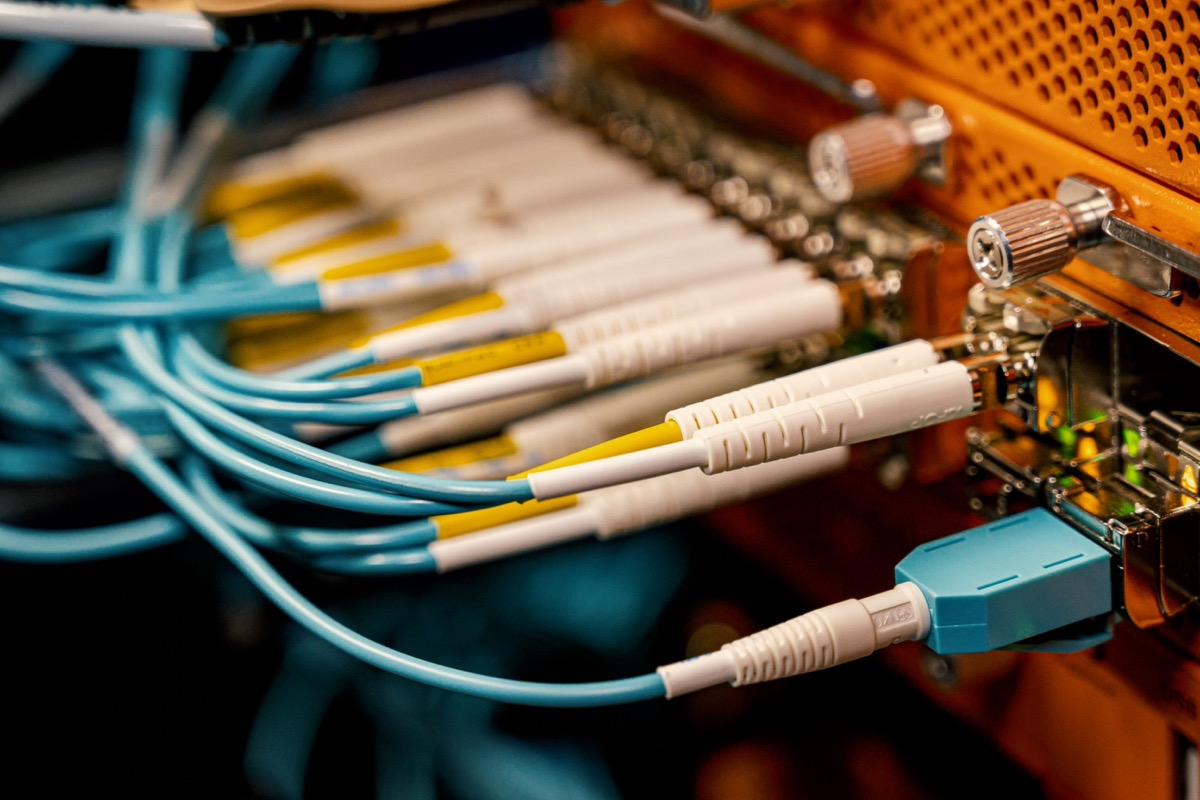
Transmit power minus receive sensitivity gives the available budget. Subtract span loss — fiber attenuation, every connector, every patch, every splitter — and whatever remains is your margin. If that margin is negative, the link will not come up reliably; if it is razor thin, it will work today and fail after the first bend or dirty connector.
The practical sequence is fixed: measure the distance first, confirm the fiber type second, then pick wavelength and power class. Reverse that order and you end up buying by habit.
Multimode optics run at 850 nm over OM3, OM4, or OM5 multimode fiber, driven by a VCSEL laser. They are cheap and sip power, and they plug in and just work — which is why they own the short reach inside a data centre or between adjacent equipment rooms.
Typical 10G reach is about 300 m on OM3 and about 550 m on OM4. Past that, modal dispersion smears the signal and the link gives up. That ceiling is the whole story of multimode: excellent value up to a few hundred metres, unusable beyond it.
Single mode optics use 1310 nm for mid-range work — commonly 10 km and 40 km — or 1550 nm for long reach from 40 km out to 80 km and beyond, running over OS2 single mode fiber with a DFB laser. Dispersion is low and the signal travels a long way.
The trade is cost: both the single mode module and OS2 fiber cost more, and 1550 nm long-reach modules are expensive. Drop a single mode module into a 50 m in-room link and you have spent real money for no benefit.
| Wavelength / type | Fiber | Typical distance | Cost | Best fit |
|---|---|---|---|---|
| 850 nm multimode | OM3 / OM4 | 300–550 m | Low | Short reach inside a room |
| 1310 nm single mode | OS2 | 10–40 km | Medium | Campus and metro mid-reach |
| 1550 nm single mode | OS2 | 40–80 km and up | High | Long-haul trunk |
Buy too little reach and the budget runs out — the link sits in a weak-light region where bit errors climb and the link eventually drops. Buy too much and the extra spend and power draw are pure waste; a 1550 nm long-reach module on a 50 m patch is simply the wrong part for the job.
Rayin's PON line is specified with optical modules matched to the link distance, and the industrial switch line follows the same approach. Company background is on the Rayin profile.
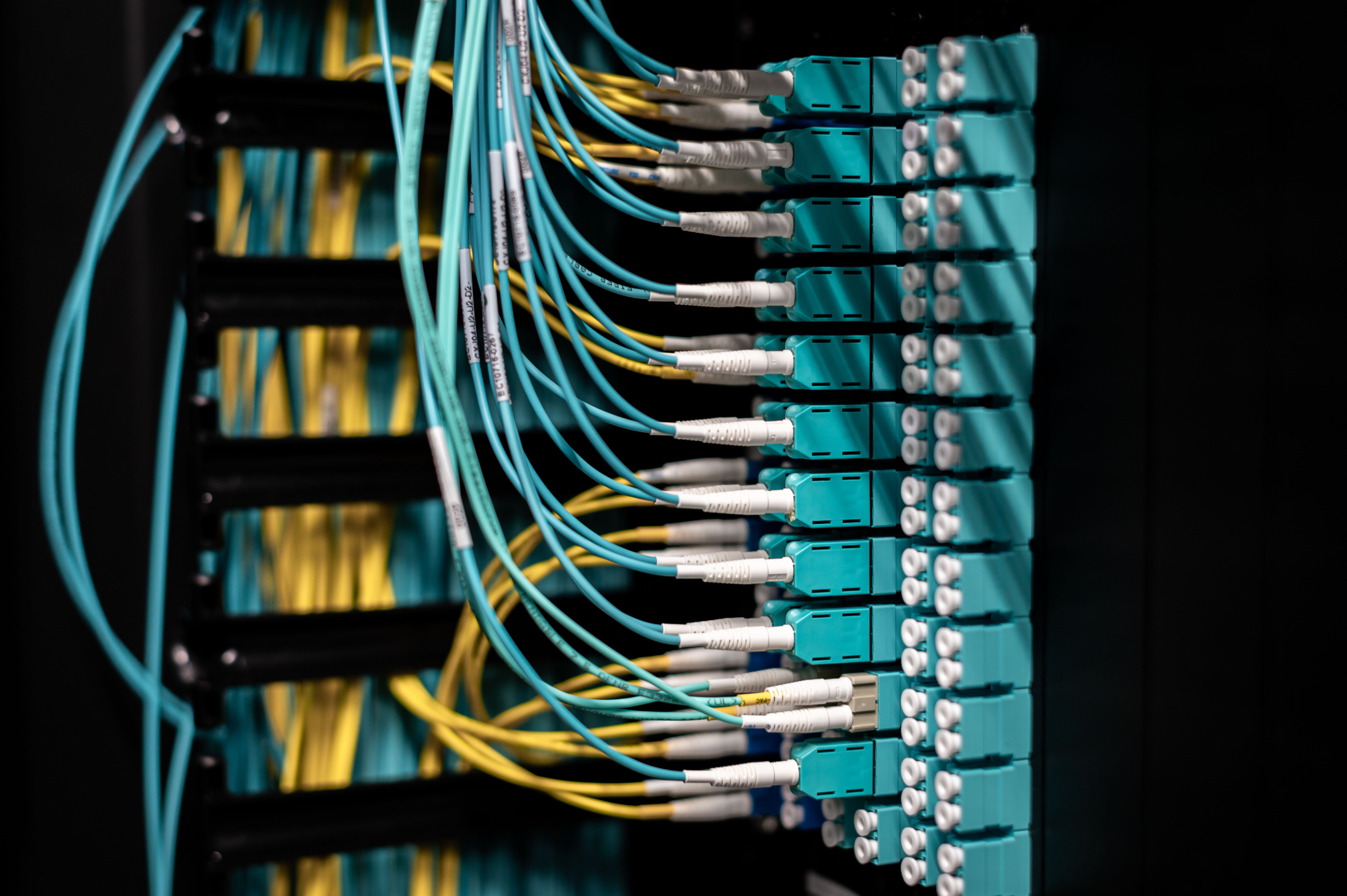
Can I mix multimode and single mode modules? No. A multimode module on single mode fiber — or the reverse — has the wrong coupling efficiency and the wrong dispersion behaviour. At best the reach shrinks dramatically, at worst the link never comes up. Module and fiber type must be matched.
Same 10G rate — why is single mode noticeably more expensive? Single mode needs a DFB laser and tighter optics; multimode gets by with a cheaper VCSEL. Within a few hundred metres, multimode is clearly the better value.
A module is rated 10 km — is running 8 km safe? Safe. The rating normally includes margin. But every connector, patch, and bend in the span counts against it, so do not spend the whole margin. A PON link with splitters needs its budget calculated separately.
How do I confirm the real distance and loss on site? Read the fiber type printed on the cable jacket, measure the route length, then check transmit and receive power with an optical power meter. DDM (digital diagnostics) also reports live TX/RX power from the switch, so you can compare it against the rated budget and see what margin is left.
What order should I decide things in? Distance first, fiber type second, wavelength and power class last. Reversing that sequence is the most common reason modules get bought wrong.
Optical Module DDM: How to Read TX/RX Power from Your Switch
GPON OLT SFP Optical Module Power Class C+ to C++++ in One Table
About the author: Sara — Customer Manager at Shenzhen Rayin Technology Co., Ltd., 10+ years helping ISPs and integrators build industrial networks.
About Rayin: Shenzhen Rayin Technology Co., Ltd. — Company Profile