The 100-meter limit is not a law of physics — it is the safe margin written into the IEEE 802.3af/at/bt standard. Past 100 m the copper line drops too much voltage and the signal loses its margin, so compliant PoE devices simply refuse to power on. You have three realistic ways to go farther: a PoE extender, a long-range industrial PoE switch, or fiber backhaul with local injection.
Rayin (Shenzhen Rayin Technology) is a manufacturer of GPON OLTs and industrial Ethernet switches.
Pick the method by total distance and how much you care about uptime. A few scattered cameras at 250 m is a different problem from a cross-campus run that must stay up for years.
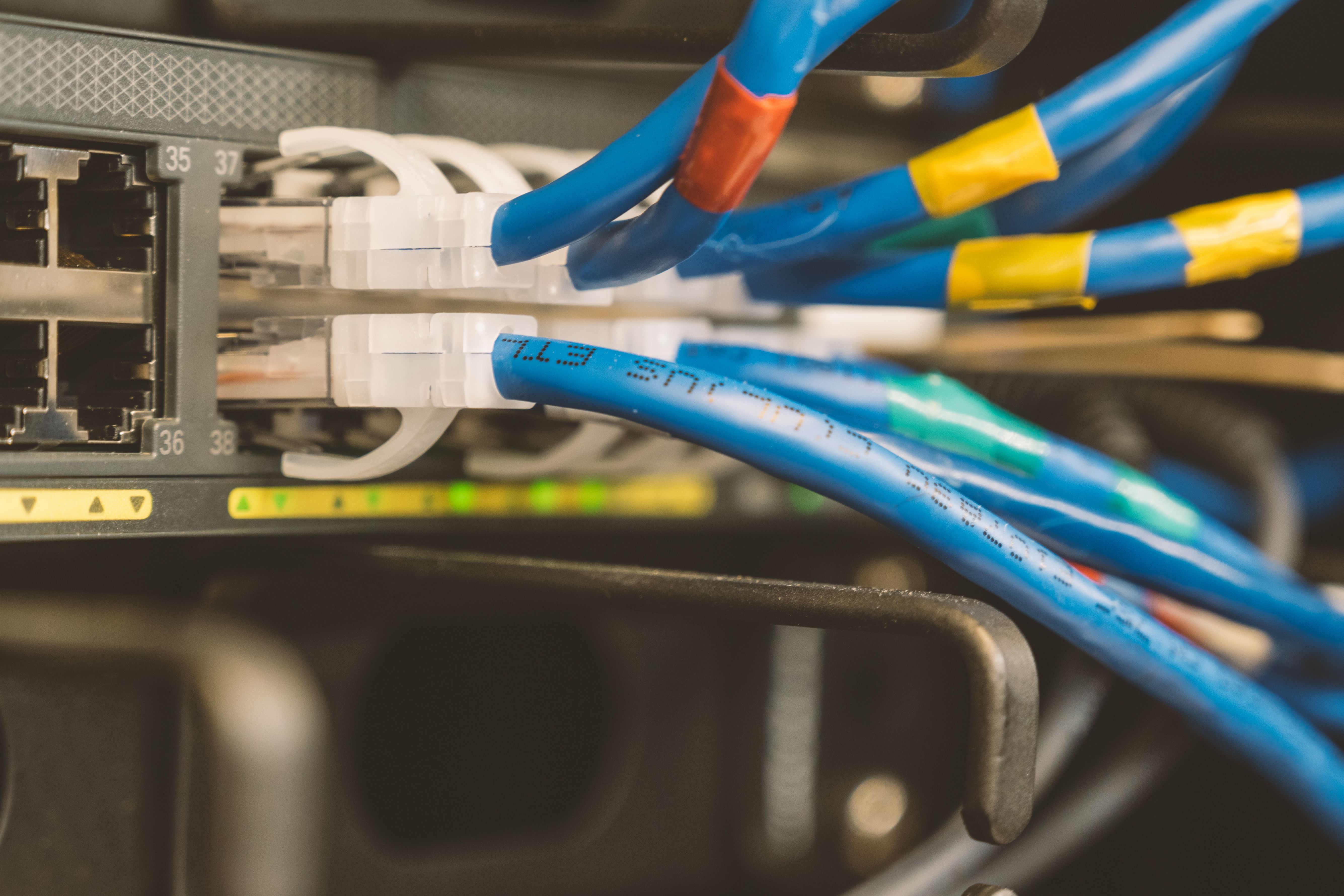
Standard PoE (802.3af/at/bt) shares the Ethernet distance budget: roughly 90 m of horizontal cable plus 10 m of patch leads. Beyond that, two things happen at once — the wire resistance eats voltage, and the signal loses margin. A terminal either gets too little power or fails to negotiate speed.
Take a 24AWG Cat5e run carrying a 30 W load out to 100 m: the line loss is about 5–8 V. Go farther and the powered device simply will not start. That is the wall, and it is electrical, not administrative.
A poe extender sits mid-span, takes the upstream PoE, and re-injects both power and signal for the next stretch. Each stage pushes the reach out by roughly another 100 m, and you can cascade several.
The cost is real: every stage adds loss and a failure point, and the extender itself draws power — usually from the upstream PoE. It fits point-to-point spots at 200–300 m where you do not want to pull fiber.
Many an industrial PoE switch ships a "long-range mode" that drops the link to 10 Mbps and stretches power out to 250 m. Lower speed means more signal margin, so the longer line still works.
This is ideal for cameras and access control — devices that need a live picture but barely touch bandwidth. The catch: the long-range port must be the switch's own long-range port. Mix it with ordinary devices and they negotiate at 100M/1G and the trick fails.
When the run reaches hundreds of meters, or crosses buildings and campuses, fiber wins. Use an industrial switch to carry data over fiber optic cable to the far end, then power the cameras or APs locally with a PoE switch or injector. Fiber takes no distance loss; power is solved at the edge, and the two no longer drag on each other.
The trade is upfront cost — you pull fiber and put optics at both ends. But the far end almost never needs a service call.
| Method | Extra distance | Speed impact | Failure points | Best for |
|---|---|---|---|---|
| Extender | +100 m per stage (cascadable) | Barely changes | Many (one per stage) | Scattered spots at 200–300 m |
| Long-range PoE switch | 250–500 m | Drops to 10M | Few | Cameras / access control far away |
| Fiber backhaul + local injection | Kilometer-scale | None | Few | Cross-building / cross-campus |
Add up total distance and terminal power first. Inside 300 m with scattered endpoints, an extender or a long-range port is enough. Past 300 m, or anywhere you need years of stable service, go straight to fiber backhaul. Either way, leave voltage headroom at the terminal — do not run a device right at its power threshold.
For long-range edge access, Rayin's industrial PoE switches support long-distance supply and fiber uplink, and the PON line can also handle remote backhaul. Company background is on the Rayin profile.
Can I cascade a PoE extender three times to reach 400 m? In theory each stage adds 100 m, but each stage also draws power and adds loss. After three stages the voltage margin at the end is thin, and any one stage failing kills everything downstream. In production, stay under two stages; for long runs, fiber backhaul is the steadier choice.
Is 10 Mbps enough for a camera on long-range mode? A single 1080p stream runs 2–8 Mbps, so 10M is plenty. You only feel the pinch when many streams converge, or when you move to 4K and on-device AI recognition. A long-range port suits a single end device, not an aggregation uplink.
Why not just use thicker cable, like 23AWG, to go farther? Thicker wire trims voltage drop a little, but Ethernet loss is not only resistance — frequency and crosstalk matter too. The physical-layer margin at 100M/1G is finite; fatter cable helps at the edge, not the root. It treats the symptom, not the cause.
If the far-end PoE switch loses power on a fiber backhaul, what happens? Give the end device dual power or a local UPS. Industrial models widely support 12/24/48V wide-input and 1+1 redundancy. The backhaul fiber does not depend on the end power, so only the small edge switch drops — the blast radius stays small.
Which method should I default to for a new site? Under 300 m with sparse endpoints, an extender or long-range port. Over 300 m, or where downtime is costly, fiber backhaul. Wrong choice means a remote camera that drops power every few days — far more annoying than a little extra cabling budget. For sites that mix both cases, Rayin's industrial PoE switches with long-range ports and fiber uplinks cover under-300 m drops and cross-campus runs from one platform.
PoE Power Negotiation: 802.3af/at/bt Class and the LLDP Handshake
SCADA Needs a Managed PoE Switch With No Single Point of Failure
About the author: Sara — Customer Manager at Shenzhen Rayin Technology Co., Ltd., 10+ years helping ISPs and integrators build industrial networks.
About Rayin: Shenzhen Rayin Technology Co., Ltd. — Company Profile