Industrial Switches vs. Industrial PON: A Comparison of Optimal Application Scenarios, Helping You Choose the Right Switch for Industrial Control Systems
In the process of industrial digital transformation, smart factories, and the implementation of industrial internet networking, industrial switches and industrial PONs are two core networking devices. Many industrial control professionals cannot distinguish the differences between the two and choose the wrong one for the right scenario. This article breaks down the best application scenarios and core differences of the two devices based on actual needs such as industrial Ethernet, remote device access, and long-distance networking in factories, to help you make the right choice.
Industrial switches: ideal for short-range, high-density networking and real-time applications.
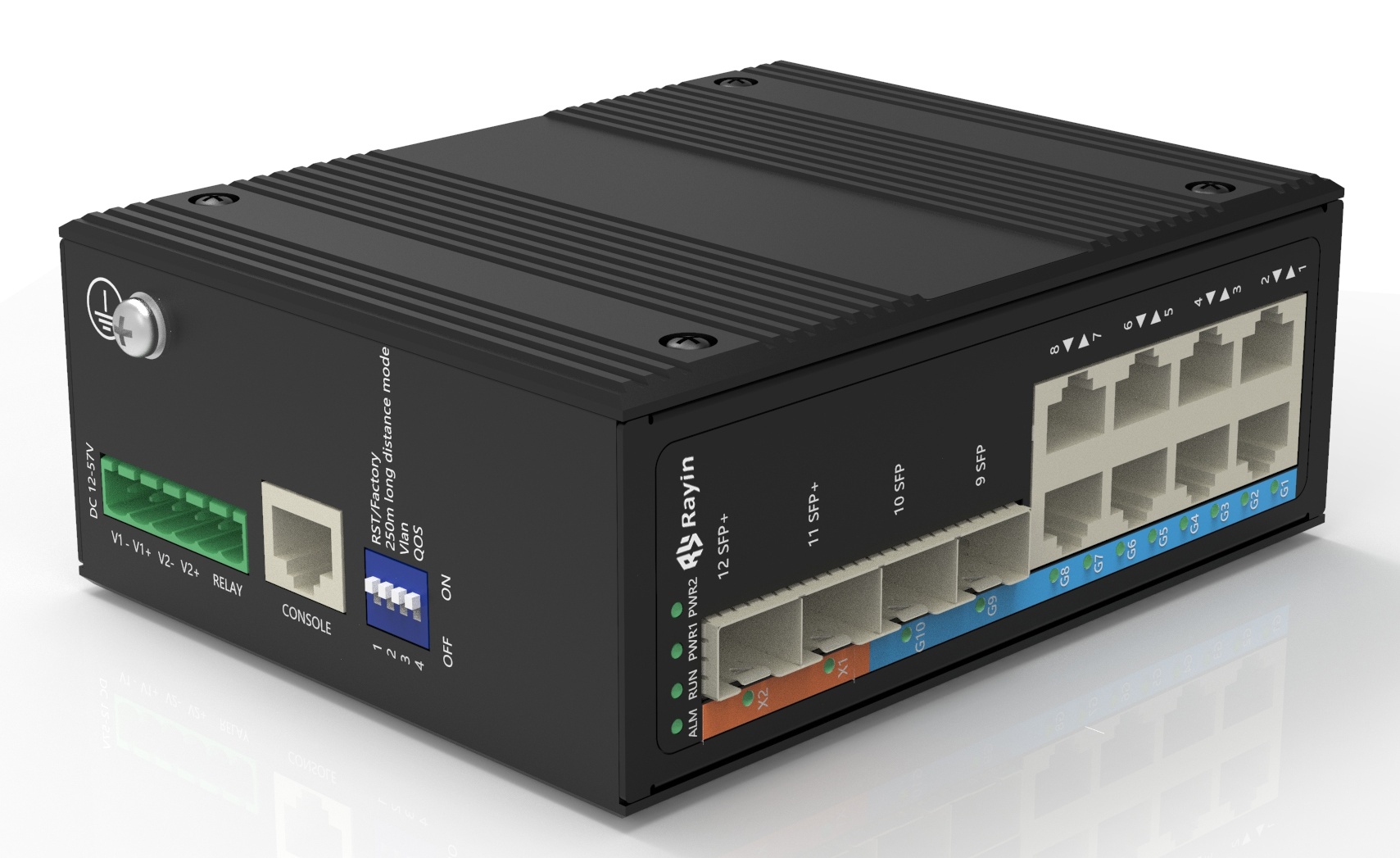
Industrial switches feature high-speed point-to-point transmission and low-latency forwarding, making them a standard component for dense equipment networking in workshops. They are suitable for scenarios such as industrial automation production lines, AGV scheduling, PLC control, and machine vision.
It supports full gigabit/10-gigabit ports, ring network redundancy, and QoS priority scheduling, making it suitable for scenarios with dense equipment, short transmission distances (within 100 meters), and extremely high requirements for low-latency industrial communication. It can directly connect to terminals such as sensors, industrial cameras, and servo motors to ensure real-time data interaction, making it a cost-effective choice for small workshops and local equipment networking.
Industrial PON: Long-distance, wide-coverage, passive optical networking tool
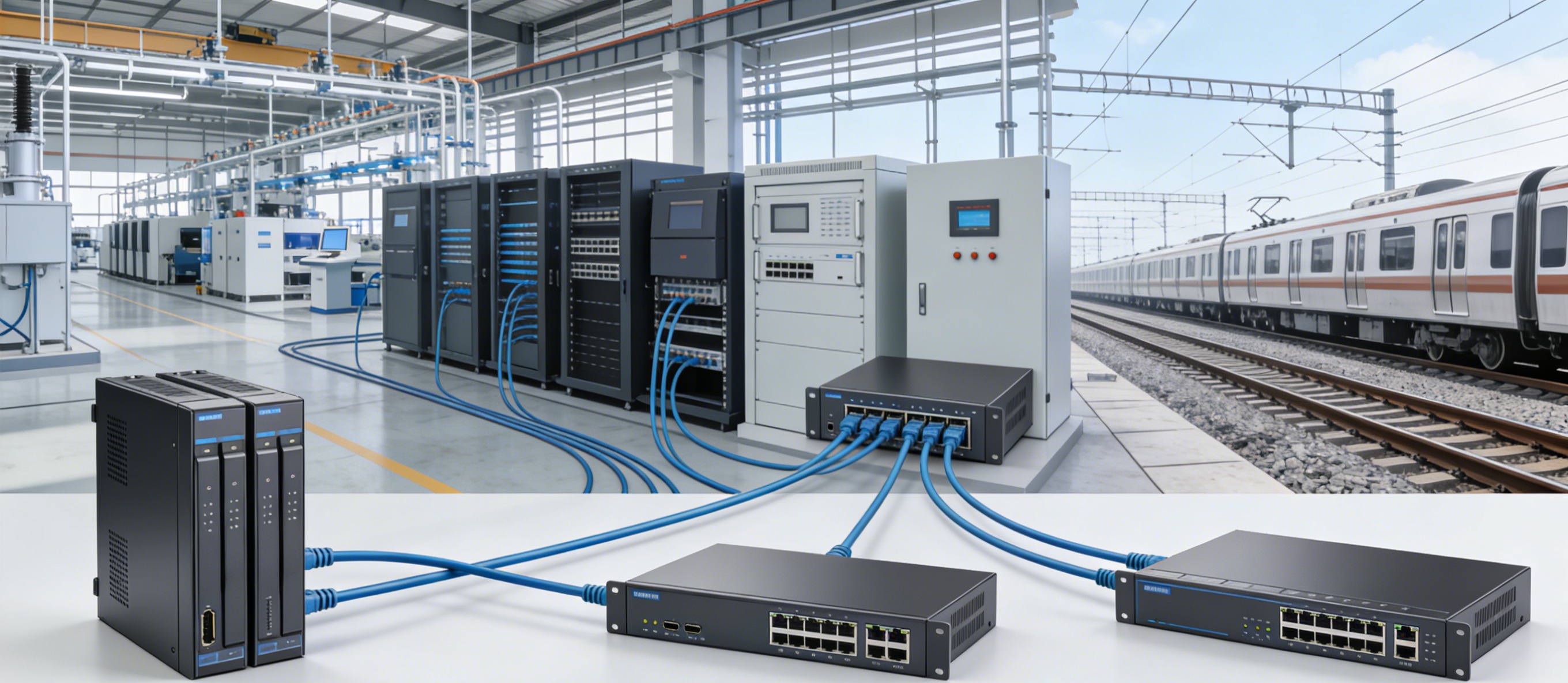
Industrial PON adopts a passive optical network architecture and relies on optical modules to achieve long-distance transmission. It is the core solution for large factories, outdoor parks, and multi-building distributed networking, perfectly solving the pain points of difficult cabling and long distances in traditional networking.
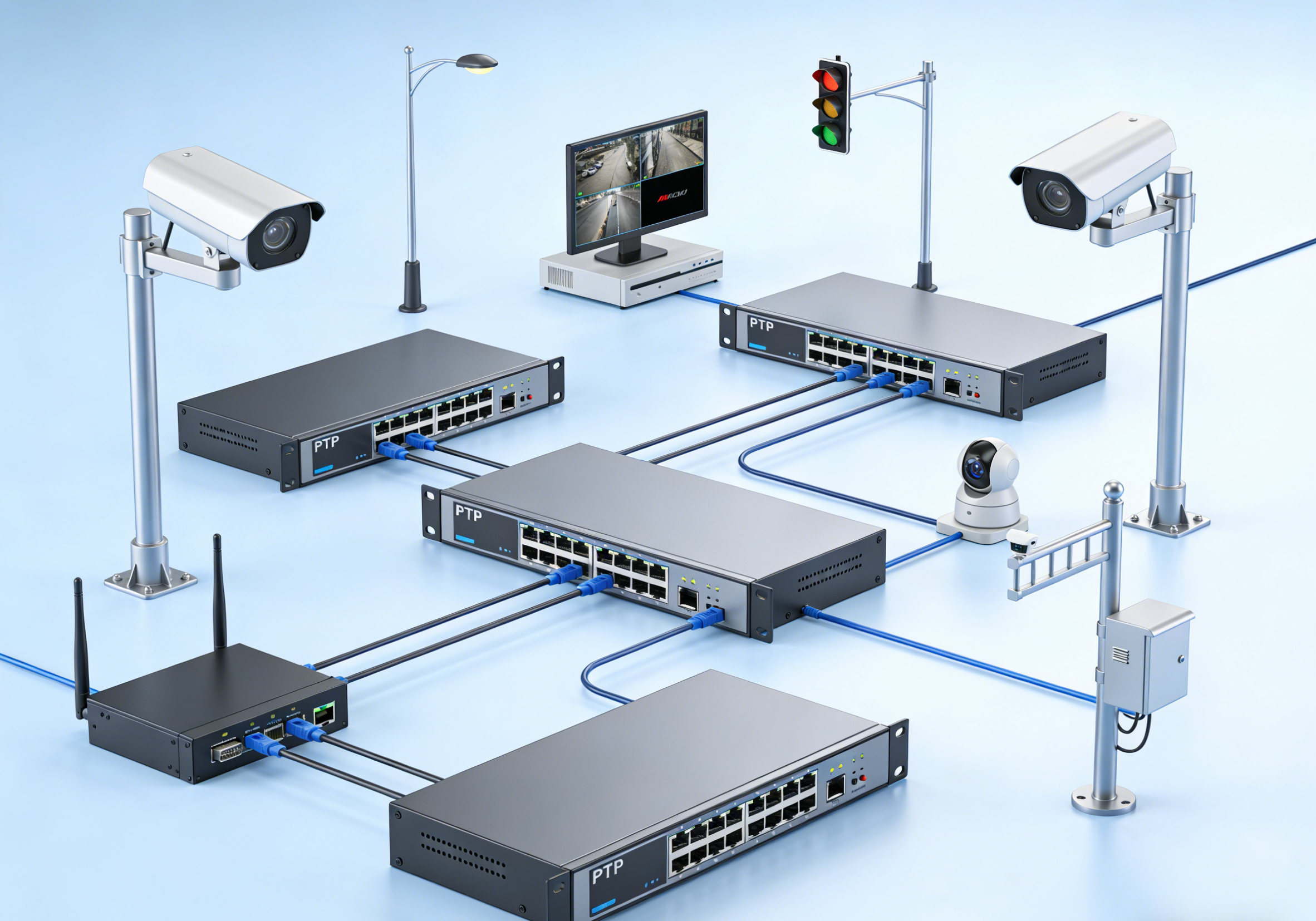
It supports long-distance transmission over a single fiber (up to 20 kilometers) and passive nodes that require no power supply. It is suitable for outdoor monitoring, remote instruments, distributed equipment in mining areas/parks, and cross-workshop data aggregation scenarios, saving cabling costs and maintenance efforts. It meets the needs of long-distance transmission of industrial data and large-scale terminal access, making it the preferred solution for full-domain networking of smart factories.
A one-sentence summary of the core scenarios
For workshops with short distances, dense equipment, and a focus on real-time control, choose an industrial switch to meet the needs of high-speed networking in industrial settings.
For long-distance, distributed access in factory areas, outdoor cabling, cost reduction and efficiency improvement, choose industrial PON, which is suitable for industrial full-area optical networking.
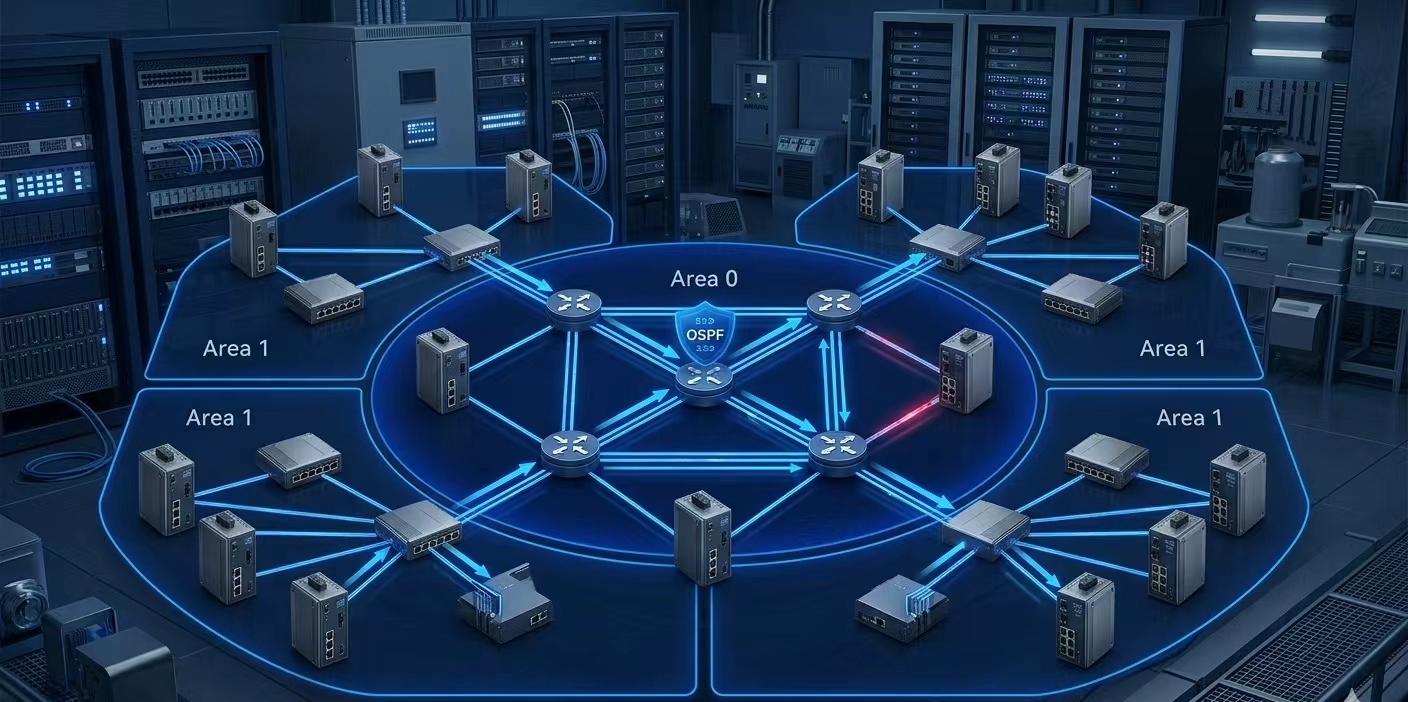
In actual industrial control networking, the two are often used together: industrial switches are used for end-point access, and industrial PONs are used for long-distance aggregation, taking into account both real-time performance and coverage, and building a solid foundation for the industrial Internet.