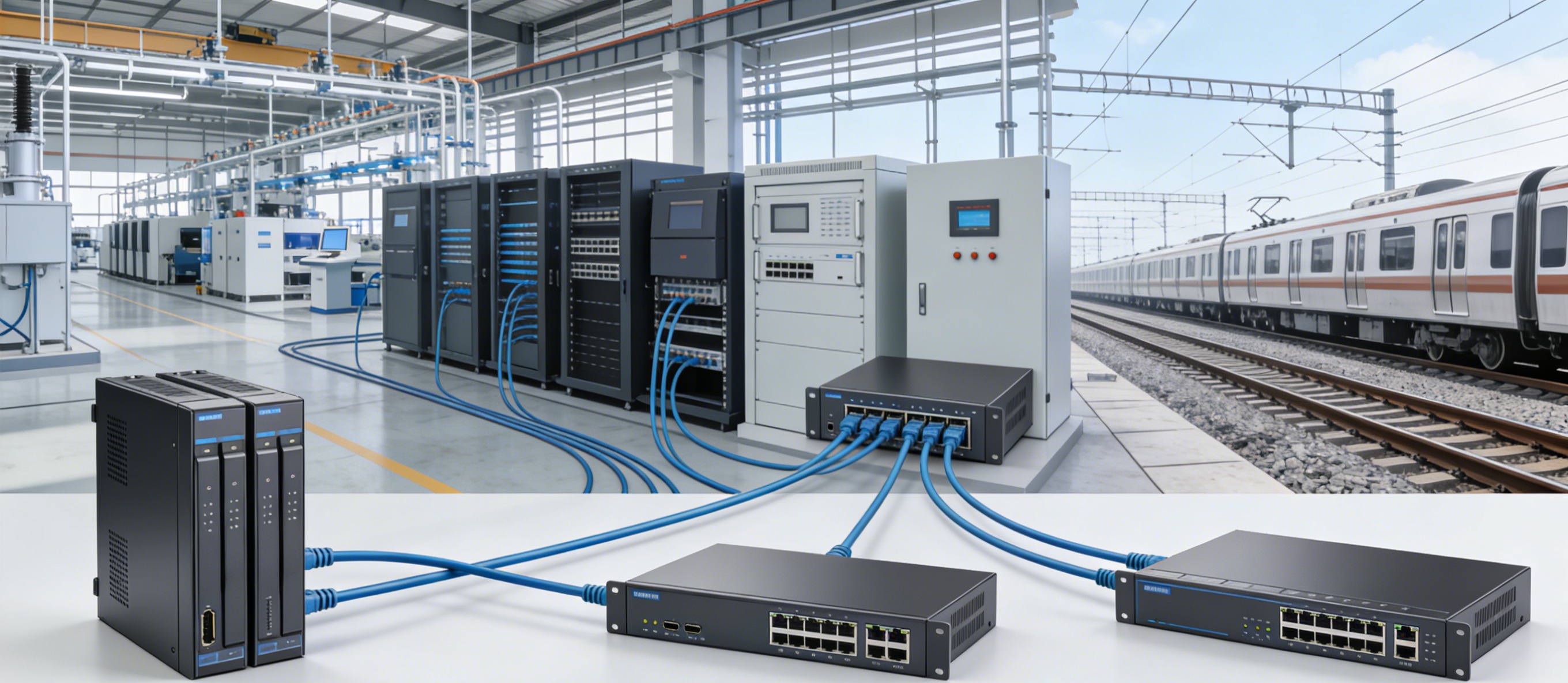
Extreme environmental conditions such as persistent high temperatures in summer, poor heat dissipation in enclosed cabinets, and exposure to direct sunlight in open-air stations frequently cause malfunctions in industrial communication equipment, including downtime, disconnections, and transmission anomalies. These directly threaten the production safety and stable operation of critical industries such as power, rail transit, metallurgy, and mining. High temperatures are the most common environmental hazard to industrial communication equipment, making effective high-temperature protection and wide-temperature adaptability crucial for ensuring uninterrupted and high-quality operation of industrial networks.
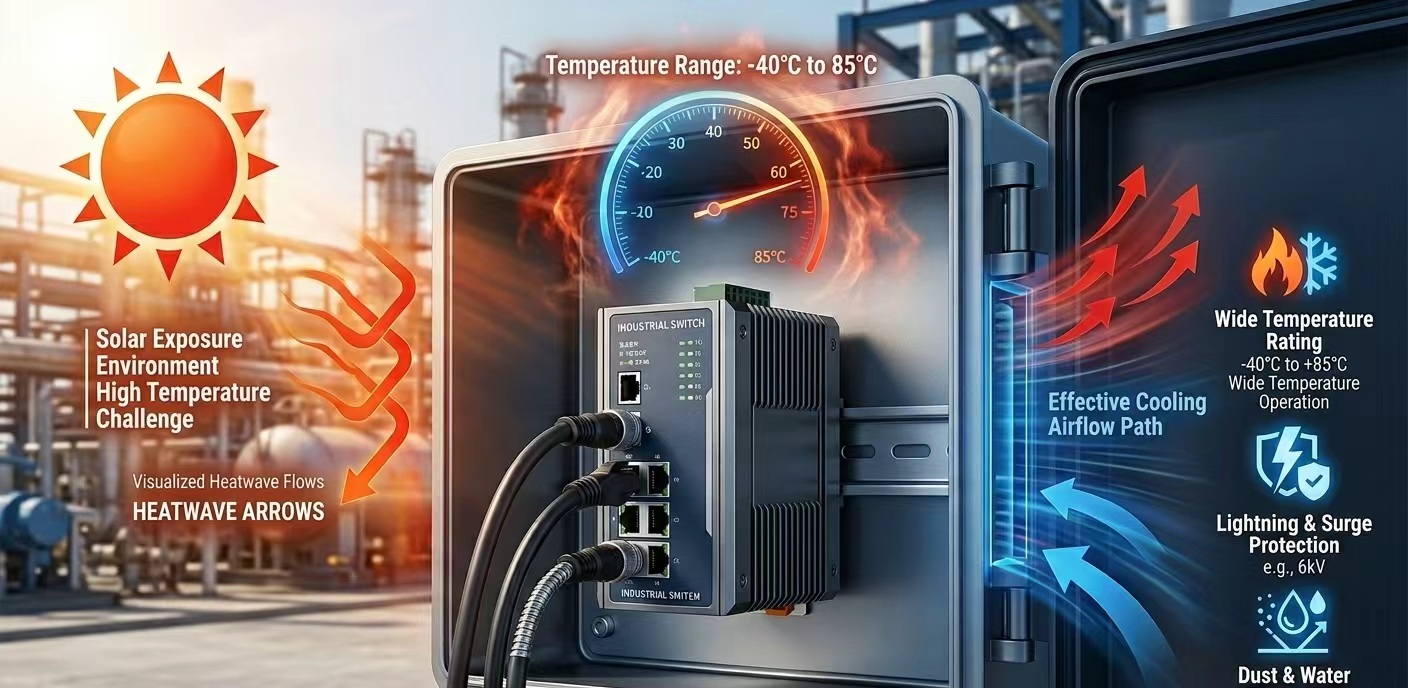
Unlike ordinary network equipment, communication equipment in industrial settings must meet the stringent requirement of 24/7 uninterrupted operation. High-temperature environments can easily lead to accelerated aging of equipment components, decreased data transmission rates, unstable link connections, and even permanent hardware damage, making it unsuitable for the continuous demands of industrial production. To address the challenges of high temperatures, the primary task is to select industrial-grade switches and other equipment with a wide operating temperature range of -40℃ to 85℃. By employing high-temperature resistant components and optimizing efficient heat dissipation structures, the heat resistance and operational stability of the equipment can be improved from the hardware level.
Besides hardware selection, proper on-site installation and daily maintenance are equally essential. During installation, ensure the equipment is in a well-ventilated environment, strictly avoid direct sunlight and enclosed storage to prevent heat buildup. Regularly clean the surface and interior of the equipment to prevent blockage of heat dissipation channels and ensure efficient heat dissipation. Furthermore, the equipment's comprehensive protection design, including lightning protection, electromagnetic interference protection, and redundant power supplies, further mitigates various risks arising from high-temperature environments, significantly improving its reliability and anti-interference capabilities in harsh conditions.
In specialized industrial settings such as smart substations, highway monitoring, and field base stations, high temperatures are often accompanied by harsh conditions including high humidity and high dust levels, placing higher demands on the protective capabilities of industrial communication equipment. Only through a dual approach of "wide-temperature hardware selection + scientific installation and maintenance" can the incidence of equipment failures caused by high temperatures be effectively reduced, thus building a solid "breakwater" for industrial production communications and providing strong support for the long-term stable and safe operation of industrial systems across various sectors.