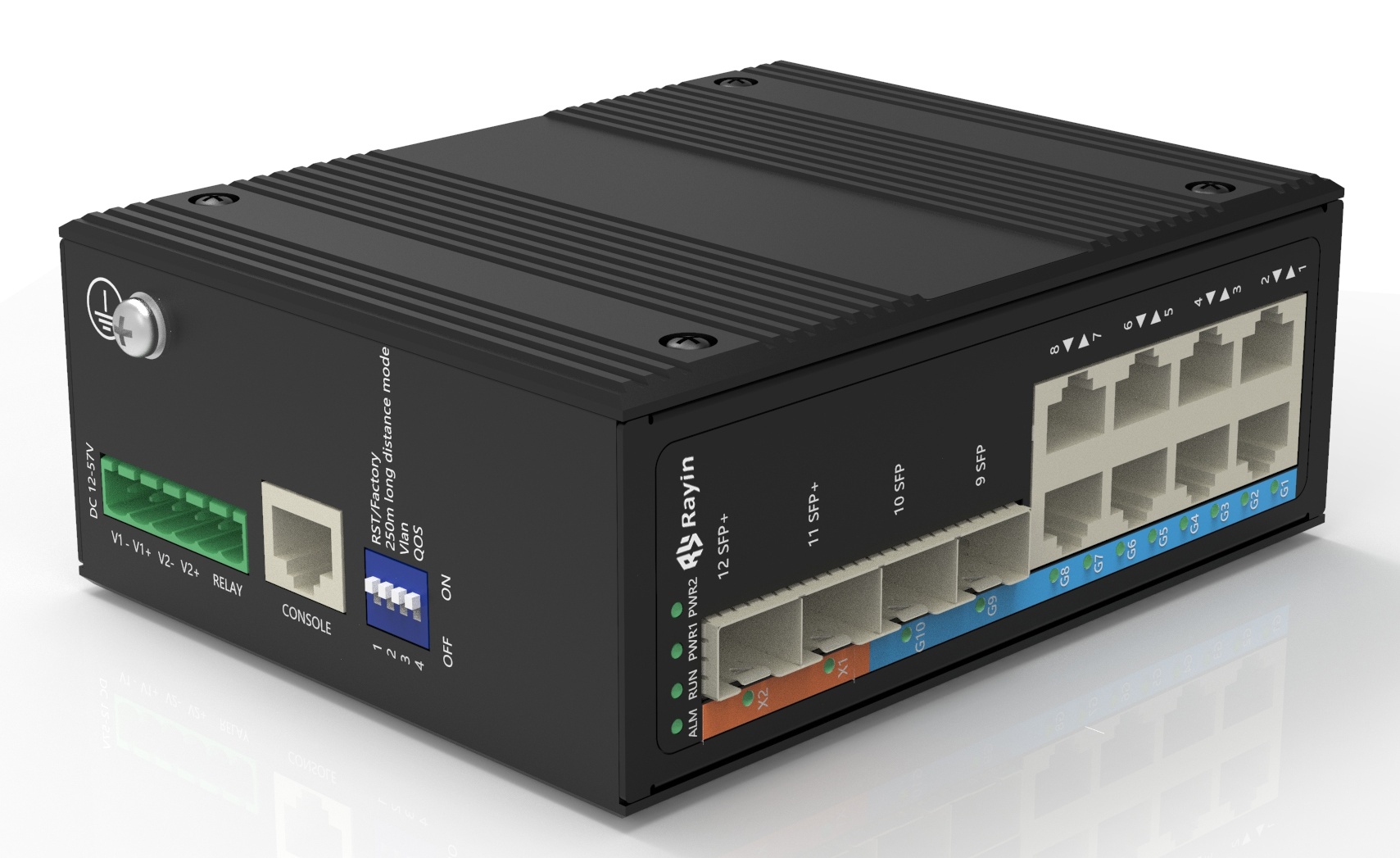
Relay Alarm, essentially a Dry Contact switching output, serves as a critical "physical spokesperson" for industrial switches. Its primary mission is to trigger external sirens, link with PLC/SCADA systems, or cut off associated equipment the moment a device abnormality occurs—especially in unmanned, remote, or non-managed environments where instant fault perception is vital.
Power Failure: One of the dual redundant power inputs fails or experiences voltage instability.
Port Link Down: Critical ports (e.g., connected to high-speed cameras, servers, or uplinks) experience link loss or fiber breakage.
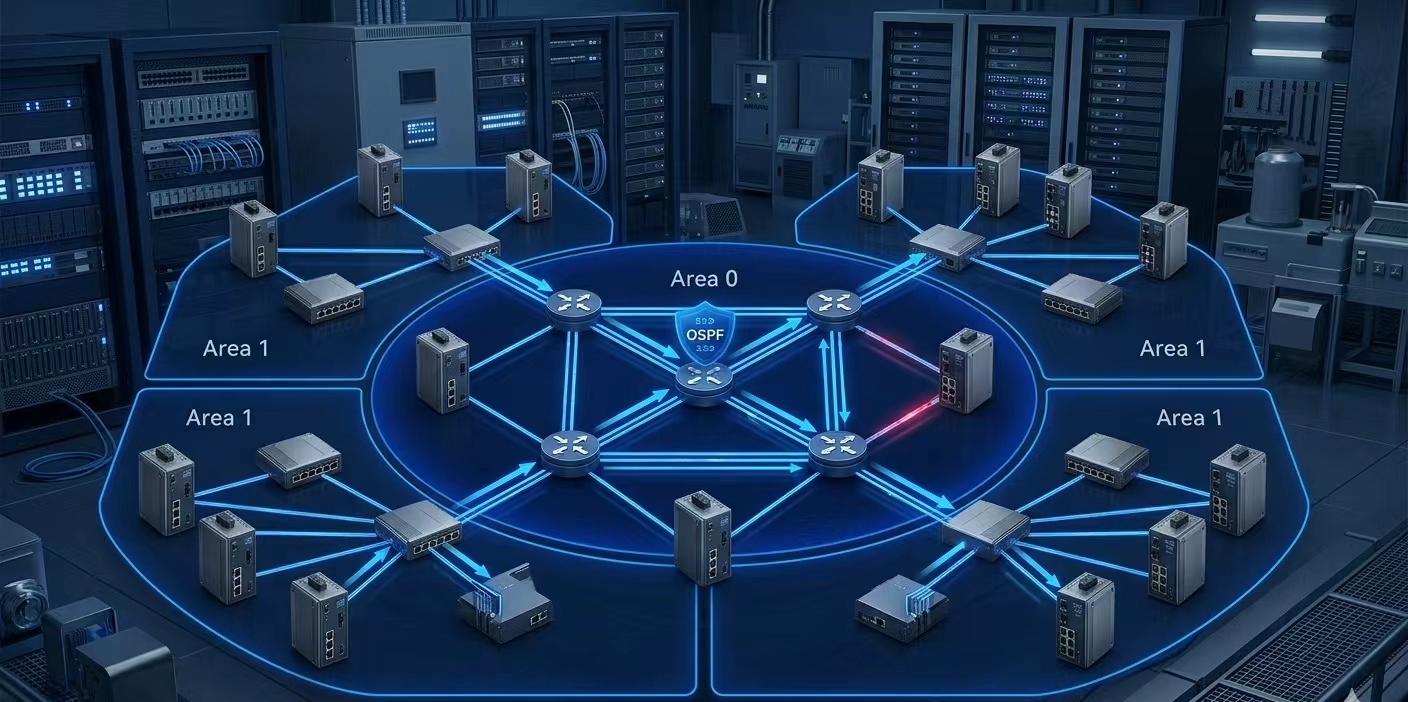
Ring Topology Fault: Failure in industrial ring protocols like ERPS or SW-Ring, where the link cannot self-heal.
Traffic Abnormalities: Detection of network loops, broadcast storms, or PoE overload (available on specific models).
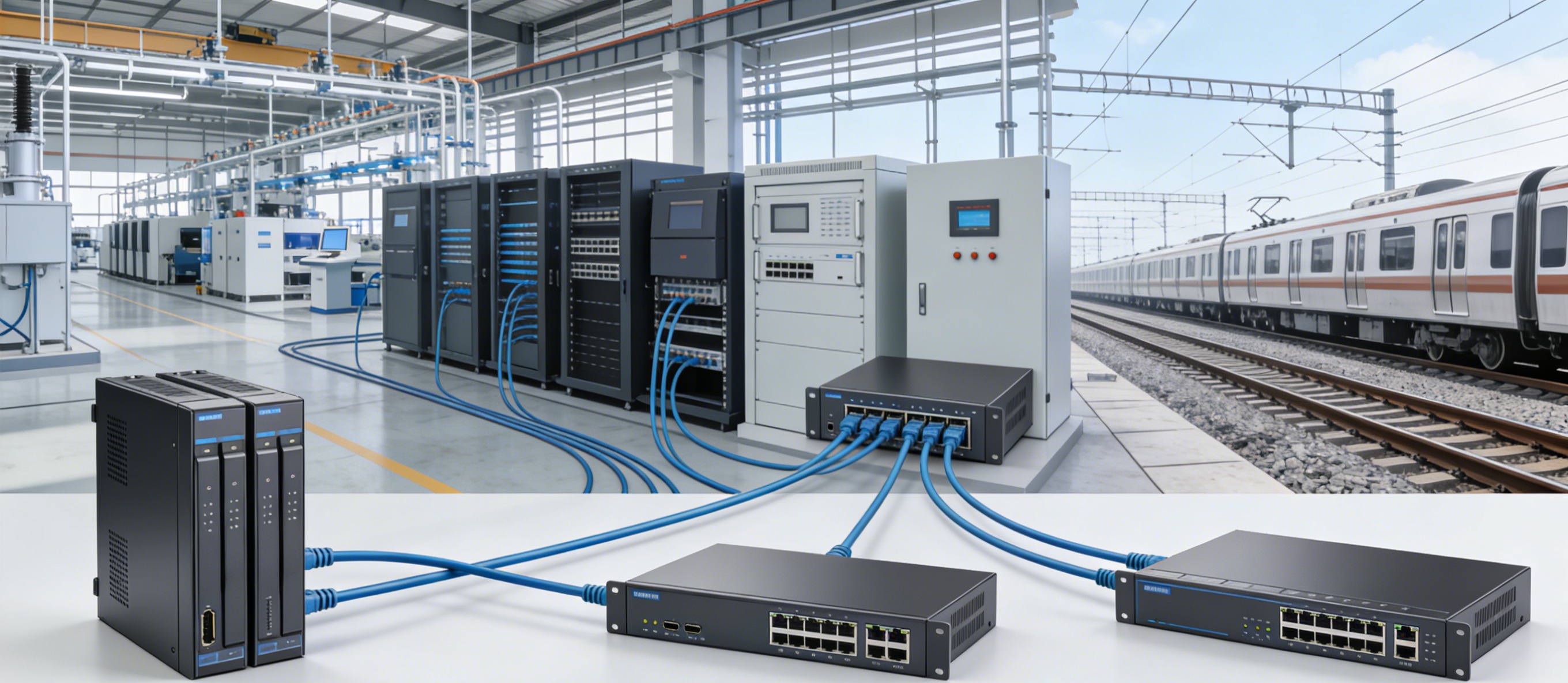
Smart Manufacturing & Factory Automation: If a Machine Vision camera or Servo Motor loses connection, the relay instantly triggers the Andon System and onsite warning lights. It can even signal a PLC for an Emergency Stop (E-Stop) to prevent production defects.
Broadcast & Studio Production: For mission-critical SMPTE ST 2110 workflows, any camera stream interruption triggers a studio alarm, facilitating an immediate switch to backup UPS or redundant equipment to prevent audio-video desync.
Smart Grid & Substations: Link loss immediately activates local buzzers and sends a "Switch Fault" signal to RTU/SCADA systems at the dispatch center. It also synchronizes with fault recorders to log the exact moment of network interruption.
Rail Transit (Metro/High-speed Rail): Network failure in onboard switches triggers a buzzer in the driver’s cabin; roadside fiber breakage prompts an instant alert in the Integrated Supervisory Control System (ISCS).
Mining, Oil & Gas (Hazardous Areas): In high-risk environments, a network outage can trigger explosion-proof sirens and interlock with ventilation or gas monitoring systems to ensure safe shutdown and evacuation.
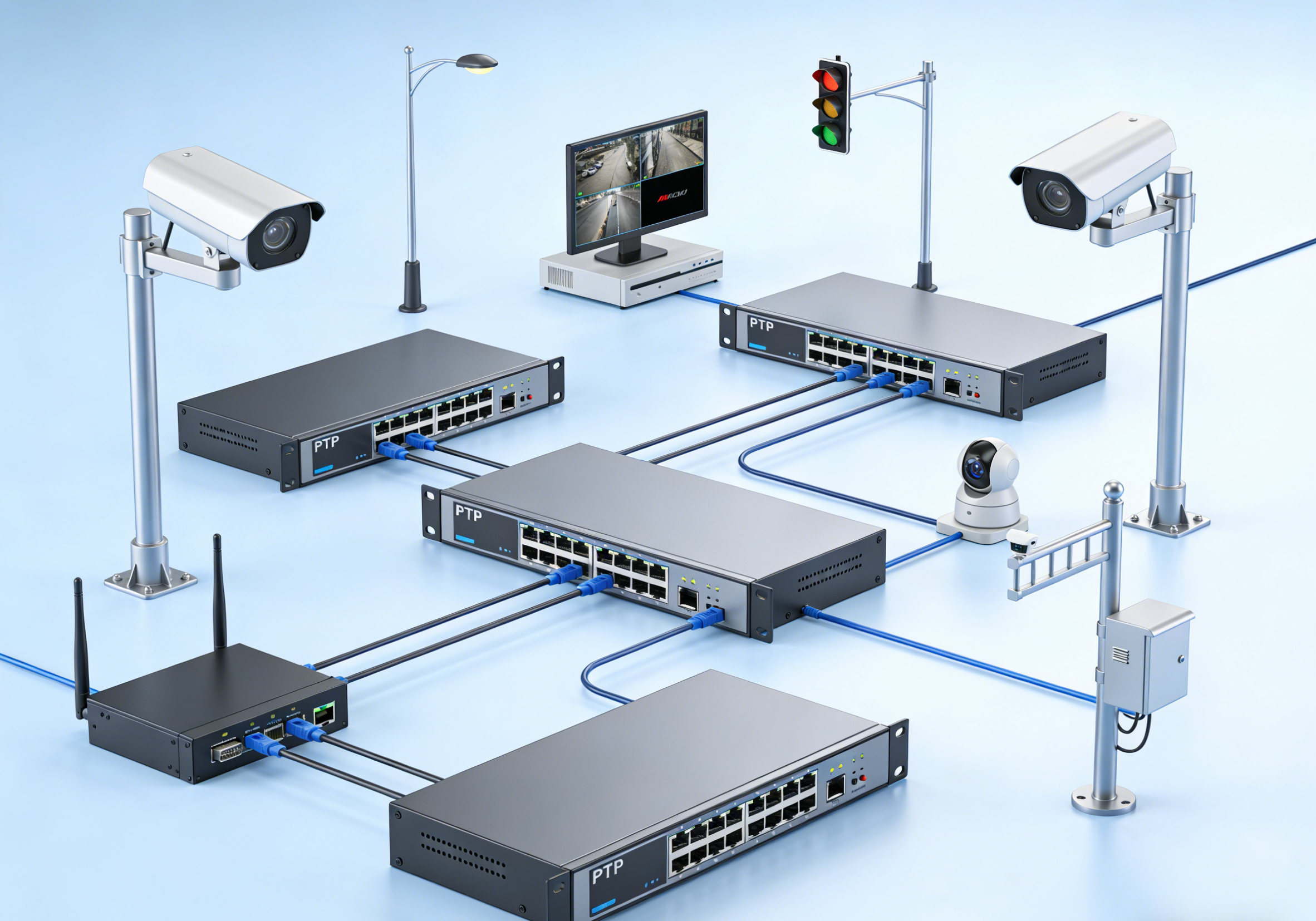
Smart City & IP Surveillance: If an outdoor aggregation switch loses power, the control center matrix displays an alert, allowing the system to downgrade "Electronic Police" operations and helping maintenance teams pinpoint the exact failure location.
Contact Type: 1-channel Normally Open (NO) contact; open under normal conditions, closed during an alarm.
Rated Load: 1A @ 24VDC or 0.5A @ 120VAC, compatible with most low-voltage control circuits.
External Integration: Directly connects to 24V signal towers, PLC Digital Input (DI) modules, or intermediate relays to drive high-power industrial equipment.
Non-Managed Monitoring: For unmanaged switches without WEB/SNMP access, the relay is the only reliable hardware-level alert mechanism.
Safety Interlocking: Network anomalies can instantly trigger physical protection logic (e.g., machine shutdown or power interlocking), preventing minor network issues from escalating into major safety accidents.
Downtime Reduction: By replacing manual inspections with second-level active alerts, maintenance teams can instantly locate power, port, or fiber faults, drastically reducing MTTR (Mean Time To Repair).
Summary:
Relay output is the "Last Line of Defense" for industrial switches. For mission-critical scenarios like broadcasting, power dispatching, and automated factories where "zero downtime" is the goal, it provides an indispensable hardware-level safety net.