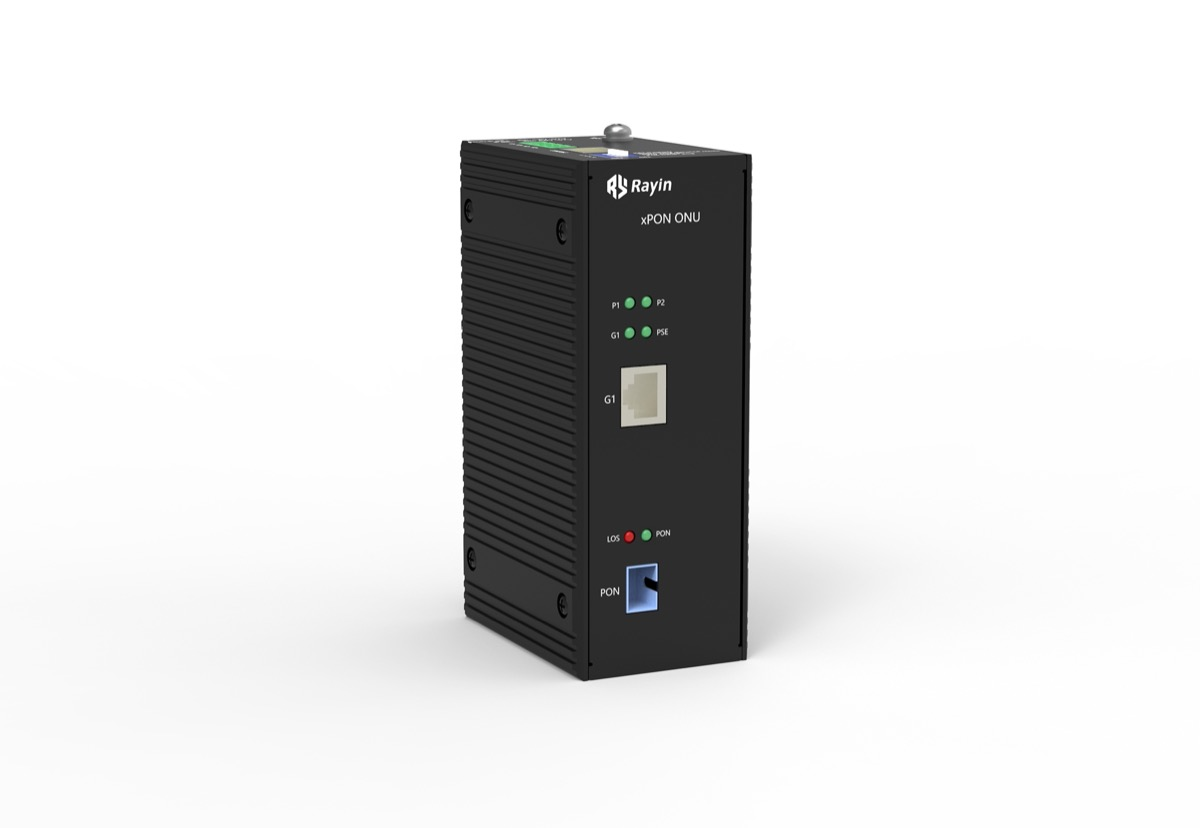
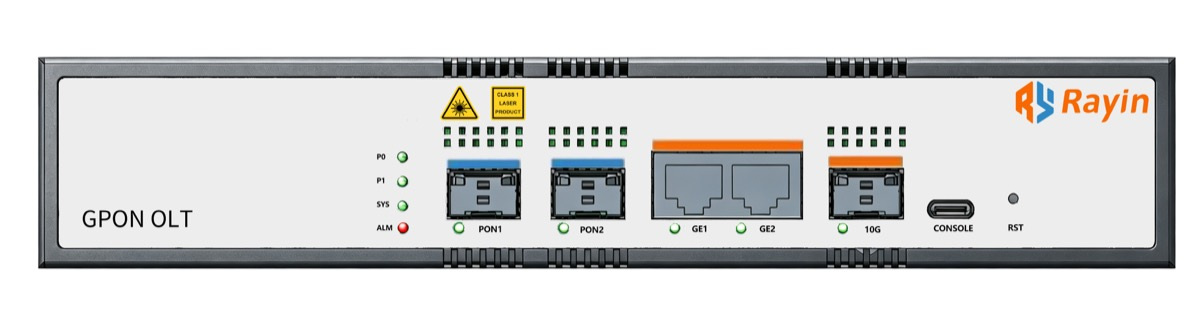
A roadside network is a small industrial network that happens to live in a cabinet beside a road: roadside units, cameras and sensors at the edge, an aggregation switch in the cabinet, and a fibre backhaul to the traffic centre or an edge compute node. Rayin (Shenzhen Rayin Technology) is a manufacturer of GPON OLTs and industrial Ethernet switches. The design work is mostly not about bandwidth — it is about the cabinet, the power, the surge and the uplink, because those are what actually fail.

Bandwidth rarely breaks a roadside design; power and environment do. Size the cabinet thermal budget and the surge protection before counting megabits.
End-to-end latency targets for cooperative safety messaging sit in the tens of milliseconds for demanding use cases and around 100 ms for awareness messaging (industry-typical), which makes the backhaul path part of the safety case, not just plumbing.
Ring or dual-uplink protection is standard practice here. A single uplink on a roadside cabinet means every camera and RSU behind it goes dark together.
A typical intelligent transport deployment concentrates four classes of device at one location, and each one lands on the switch differently.
| Device | Typical network need | Practical note |
|---|---|---|
| Roadside unit (V2X) | Low bandwidth, latency-sensitive | Give it its own priority queue |
| Traffic camera | 4–20 Mbps per stream, higher for 4K | PoE powered, so budget watts per port |
| Radar / lidar sensor | Modest bandwidth, sometimes raw UDP | Multicast or dedicated VLAN |
| Signal controller | Very low bandwidth, high criticality | Should not share a failure domain with video |
An 8+4-port gigabit industrial switch — eight copper ports for powered devices, four SFP slots for fibre — is the common cabinet choice precisely because it separates those roles: powered edge devices on copper, uplink and ring on fibre, with VLANs keeping video away from control traffic.
Per intersection, the total is usually modest: several HD cameras at 4–8 Mbps each, plus sensors, plus the RSU. A gigabit uplink handles a single junction with margin. What consumes capacity is aggregation — a corridor where ten junctions feed one fibre, or a deployment that moves to 4K streams for enforcement evidence.
| Consideration | Typical planning figure | Why it matters |
|---|---|---|
| HD camera stream | 4–8 Mbps | Baseline per-camera budget |
| 4K camera stream | 15–25 Mbps | Roughly triples per-camera demand |
| Cooperative awareness latency | ~100 ms end to end | Awareness messaging target |
| Demanding safety use cases | Tens of ms | Constrains backhaul, not just the RSU |
| Switch recovery on link loss | Under 50 ms with ring protocols | Keeps video and control up through a fibre cut |
The latency figures are industry-typical planning values from ETSI and 3GPP-style cooperative ITS work, not a universal requirement — confirm against the use cases your authority actually intends to run. The important structural point is that latency is end to end: a fast radio does not help if the backhaul adds tens of milliseconds of its own.
Power. Cabinets get a single feed more often than anyone admits. Dual DC inputs on the switch, plus monitored UPS, remove the most common single point of failure.
Surge. Roadside copper runs are long and exposed. Look for surge protection on copper ports and a proper earth — standards such as IEC 61000-4-5 define the test, and the level should be stated.
Heat. A sealed cabinet in direct summer sun can exceed 60 °C internally. A fanless wide-temperature switch with a derating curve you have actually read beats a commercial switch with a fan that dies in year two.
Uplink. Fibre cuts happen during roadworks. Ring protocols such as ERPS, or a second uplink on a physically separate route, keep the site reporting.
Water and dust. IP rating per IEC 60529, plus cable glands done properly — most ingress failures are gland failures, not enclosure failures.
Do roadside deployments need 10G uplinks? At a single junction, usually not — a gigabit uplink covers several HD cameras and sensors. 10G becomes relevant at aggregation points where many junctions feed one fibre.
Why is PoE budgeting important here? Cameras and some RSUs draw power from the switch. If the total draw exceeds the PoE budget, ports brown out at the worst moment, often only when all cameras are running at full bitrate.
Is V2X traffic hard on latency? The awareness messages are small and frequent; demanding safety use cases want tens of milliseconds end to end. That makes the backhaul path part of the requirement rather than an afterthought.
Should video and signal control share a switch? They can share hardware but should not share a broadcast domain. Separate VLANs, and a priority queue for control and V2X traffic, keep a video surge from starving critical packets.
What redundancy is normal for a roadside cabinet? Dual power inputs on the switch and a protected uplink path — a ring protocol or a second fibre on a separate route — plus remote monitoring so a silent cabinet is noticed quickly.
About the author: Sara is a Customer Manager at Rayin with over 10 years of experience in the communications field. In her free time, she enjoys badminton and swimming.
About Rayin: Shenzhen Rayin Technology Co., Ltd. — company profile