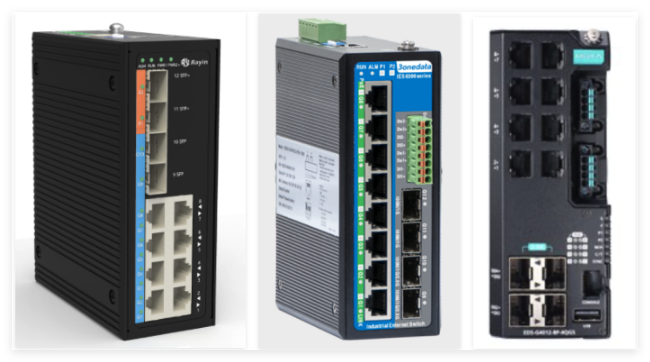
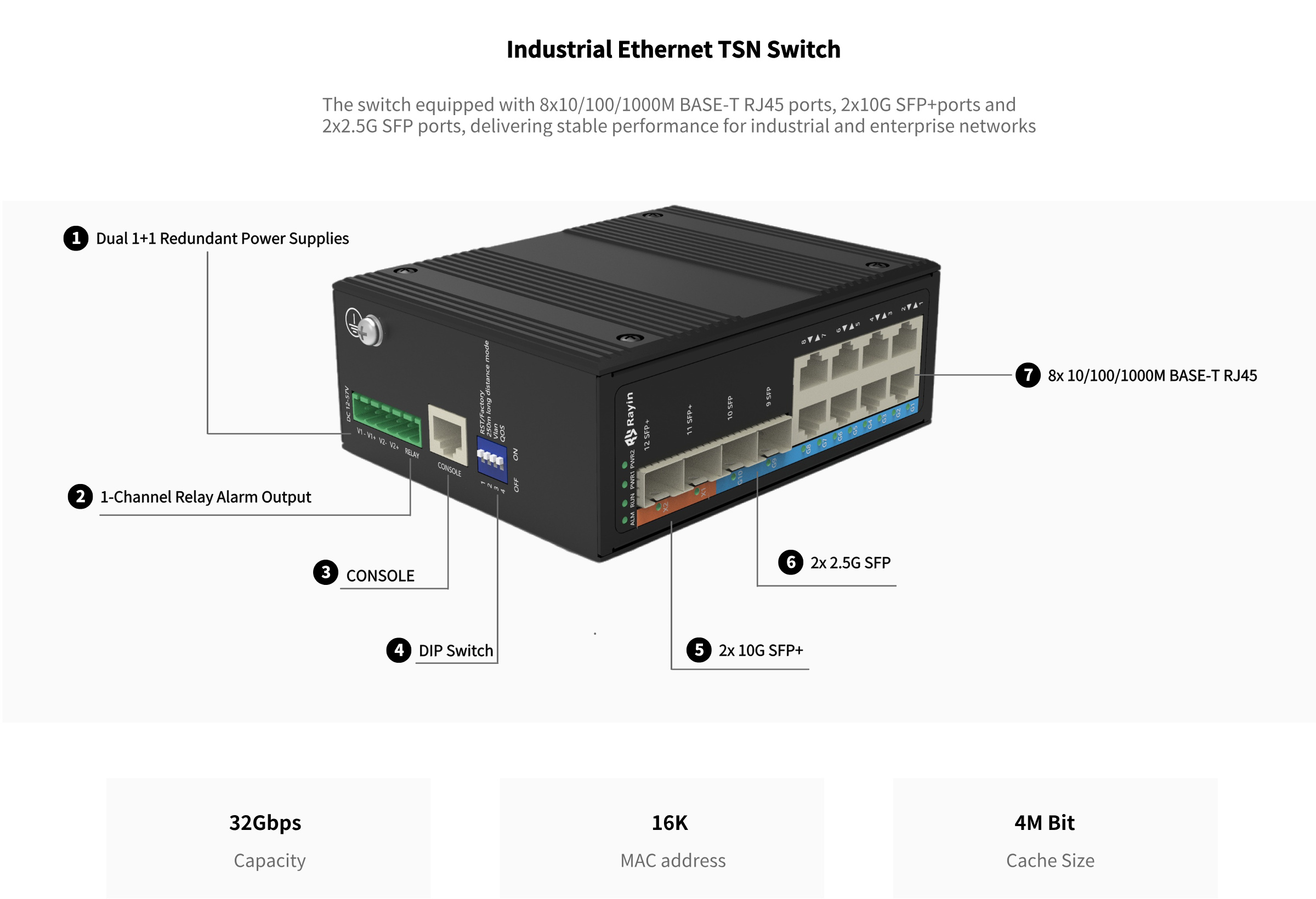
Selection of Industrial Switches: Is switching from unmanaged switches to light-managed ones a waste of money?
In industrial networking, there has been a misconception for a decade: "If unmanaged switches can work, don’t choose light-managed switches . Many junior engineers have a simple logic: fewer functions mean lower problems. But is that really? This article will help you find how to choose the right industrial switch for different industrial scenarios.
1. Misconceptions about Unmanaged and Light-managed Industrial Switches
Almost all engineers who choose unmanaged industrial switches cite "stability" as the primary reason before. However, this viewpoint was only right before 2010.
Reason 1: in early years, managed switches were not reliable, they are more expensive than unmanaged swithes, but thay are frequently suffered from system crashes and bugs. In comparison, unmanaged switches utilized fixed function SOC, without operating system, can plug and play and even more stable. But nowadays, in one side, to cut costs, many compromises were made in unmanaged switches design, regarding interference resistance, port protection, and buffering. In the other side,today’s light-managed switches, adopt dedicated hardware acceleration chips,and simplify OS design. This design not only drastically shortens boot time, but also reduces the probability of system crashes to nearly zero.
Reason 2: Unmanaged switches are not stable at all. Many people say, "My unmanaged industrial switch has been worked for more than 7 or 8 years". But they do not share the troubling situations they encountered before, for example, when the network suddenly slows down or experiences packet loss, you don’t know which port is faulty? when a device failure triggers a broadcast storm, engineers have to unplug cables one by one for troubleshooting; when a production line stops, you have no logs to trace the fault. Unmanaged switches do not actively report errors, once a problem happens, the entire network It may break down and the troubleshooting time can easily take hours.
Reason 3: Light-managed switches are not complicated. Many people reject light-managed switches, partly because they have never used them and partly because they are fear of configurations However, today’s industrial light- managed switches could easily be configured, because, first, they are ready to use right out of the box, default settings can satisfy more than 90% industrial scenarios; second, they feature a full web interface,a drag-and-drop VLAN setup, a click-based ring configuration, and users don’t need to understand CLI commands; third, they have a one click diagnostic function that automatically checks port status, link quality, network loops, and so on. In summary, light-managed switches’s configuration is easy, just need toplug them in. And while in case of faults, light-managed switches will inform you which port has the problem, and they can even automatically fix the problem.
2. The Biggest Differences Are "Fault Isolation Capability" and "Observability"
If we only talk about the differences in function, you could list a long table outlining that light-managed switches support VLANs, QoS, and ring networks, but unmanaged switches do not. However,the fundamental differences are fault isolation capability and observability. These are also the two core requirements of industrial networking environments.
Difference 1: Fault isolation capability. This is the most crucial safeguard in industrial settings. Give a real-life example we've encountered, a small medical device manufacturing company integrated an 8-port unmanaged switch into the network configuration, connecting 5 PLCs and 3 industrial cameras. When one camera's network chip failed, it began to send broadcast packets wildly, causing the entire network to be instantly overwhelmed by broadcast storms.. The maintenance engineer spent nearly one hour and a half to fix the problem. This shutdown directly resulted in a production loss of about 800,000RMB.
If the production line used light-managed switch, this downtime would not have occurred, because light-managed switches support port isolation, support each device's broadcast domain to be separated. A failure in one device would not affect others; Light-managed switches also support broadcast storm suppression, automatically limiting the broadcast packet flow per port, even if one device malfunctions, it will not bring down the entire network; Additionally, light-managed switches automatically log fault information, notifying you: "Port 7 detected a broadcast storm at 15:22 and has automatically limited the flow." The onsite maintenance engineer could solve the problem within 10 minutes.
Difference 2: Observability. intermittent failures are a headache for engineers. For example, industrial cameras occasionally dropping frames;PLC communications are inconsistent, requiring a reboot of the switch every time, and the same issue happens again several days later; and fluctuating network speeds, with no clarity on whether it’s a device or line problem. Unmanaged switches are completely helpless for these issues. In contrast, light-managed switches provide a comprehensive network health report, including real-time traffic for each port, error packet counts, and packet loss rates; CRC errors on links, collision counts, and signal quality; device operating temperatures, voltage, and uptime duration; all historical fault timestamps, types, and port information. With this data, engineers no longer need to rely on "guessing" and "testing", and most faults can be identified and resolved within minutes.
3. When to use unmanaged switches or light-managed switches?
Based on the above, we have summarized a simple selection framework for practical industrial scenarios.
Situation 1: The following scenarios are suitable for unmanaged switches:
· Isolated devices: a single CNC machine, barcode scanners, individual temperature and humidity sensors ;
· Temporary short-term projects: temporary site monitoring, exhibition networking, short-term testing platforms;
Situation 2: If any of below scenarios, you cannot use a unmanaged switch.
· Any scenarios requiring ring network: Ring network is the most basic redundancy solution for industrial networks, but unmanaged switches do not support.and one single point of failure can bring down the whole network;
· Scenarios with more than 8 devices: When there are more than 8 devices, the probability of broadcast storms will increases exponentially, and unmanaged switches cannot cope with that;
· Scenarios involving industrial cameras or visual inspection: Industrial cameras are very sensitive to bandwidth and latency. Unmanaged switches lack QoS, resulting in frame loss and packet delay;
· Critical devices on the production line: PLCs, robots, motion controllers, any network interruption will cause the production line shutdown;
· For long term projects: the operation and maintenance costs will be much higher than equipment purchase costs.
Situation 3: light-managed switches are suitable for more than 90% of industrial scenarios.
Today's industrial light-managed switches have almost become the standard configuration for industrial scenarios. They could perfectly balance cost, function and stability. Firstly, the price is only 1/3 to 1/2 of fully managed switches; Secondly, function can cover 95% of the needs of industrial scenarios; Thirdly, stability is comparable to unmanaged switches, and may even be better; Fourthly, operational costs are much lower than unmanaged switches. Especially for current storage chip prices rising, light- managed switches have become the good optional solution.
If you have any questions about selecting industrial switches or need to consult technical parameters of industrial switches, please visit the Rayin Technology official website (www.szrayin.com) for consultation.