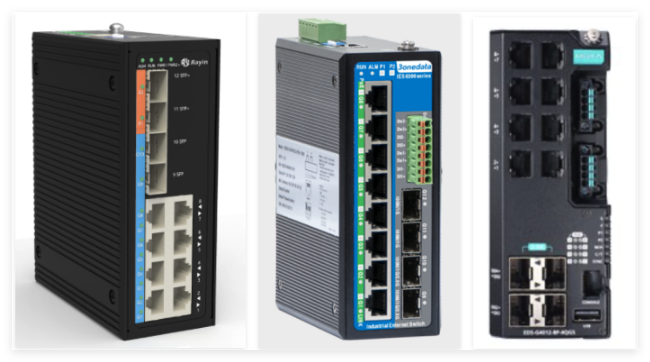
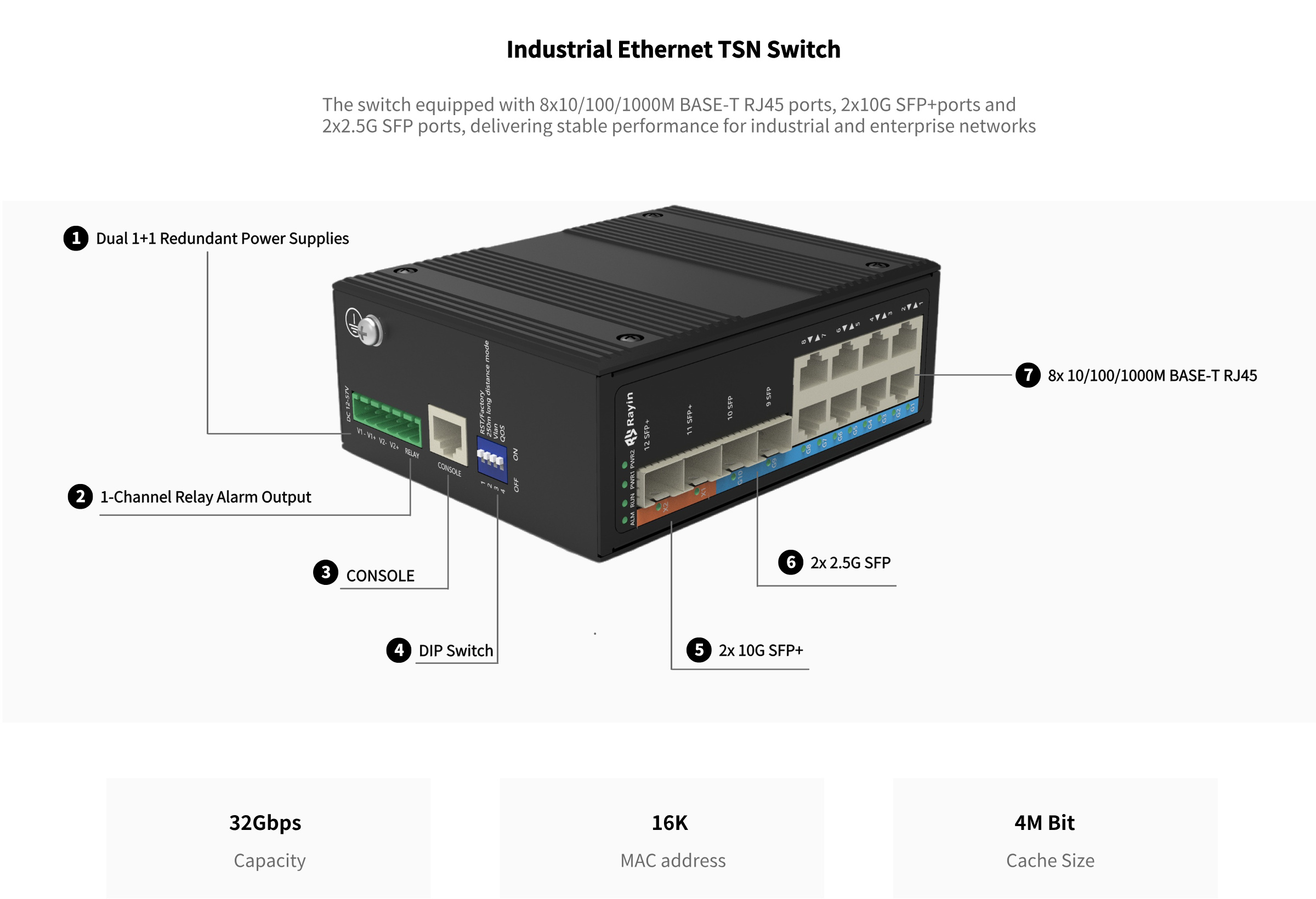
The principle of industrial switch Bypass function is one of the core hardware protection mechanisms in high-reliability industrial network design. According to statistics, in a series industrial network, a single switch failure will cause communication interruption of all downstream nodes, with an average economic loss of more than 100,000 yuan per failure. This article will explain in detail the hardware implementation principles, key technical parameters, typical application scenarios and actual case analysis of the Bypass function to help engineers correctly select and deploy Bypass industrial switches.
Table of Contents
• I. Core Definition and Value of Bypass Function
• II. Hardware Implementation Principle of Bypass Function
• III. Key Technical Parameters of Bypass Function
• IV. Synergy Between Bypass and Ring Network Protocols
• V. Analysis of Typical Application Scenarios
• VI. Clarification of Common Misconceptions
• VII. Frequently Asked Questions (FAQ)
• VIII. Summary
I. Core Definition and Value of Bypass Function
1.1 What is Bypass Function
Bypass function is a special hardware protection mechanism on industrial switches. When the switch itself encounters unexpected power failure, system failure or needs restart maintenance, it can automatically directly connect the physical lines of the two key network devices it connects, bypass the faulty switch, and ensure the most basic network communication is not interrupted.
We can imagine it as an intelligent "network emergency channel":
• Normal working state: All data flows through the switch for high-speed switching and management
• Fault state: Data is directly transmitted through the physical bypass channel without passing through the internal circuit of the switch
1.2 Core Value of Bypass Function
In industrial environments, network interruptions may lead to serious consequences such as production line shutdowns, traffic signal out of control, and mine safety monitoring failures. The value of Bypass function lies in:
• Prevent single point of failure from spreading: A single switch failure will not affect the entire series link
• Gain time for troubleshooting: Provide valuable "golden time" for technicians to troubleshoot and replace equipment
• Reduce economic losses: Limit the scope of failure impact to the faulty switch itself without affecting downstream equipment
• Improve system availability: Increase the Mean Time Between Failures (MTBF) of the network system by more than 300%
II. Hardware Implementation Principle of Bypass Function
2.1 Basic Circuit Structure
The industrial switch Bypass function is mainly composed of three parts: DPDT (Double Pole Double Throw) relay, control circuit and power management circuit:
Normal working state: |
Core working mechanism:
• The relay is in the normally closed state (Bypass state) by default
• After the switch is powered on, the control circuit drives the relay to switch to the normally open state (normal working state)
• When the switch is powered off or the system fails, the relay automatically returns to the normally closed state to realize physical link pass-through
2.2 Difference Between Electrical Port Bypass and Optical Port Bypass
At present, there are two main Bypass implementation methods for industrial switches, and their technical principles and application scenarios are different:
Type | Implementation Method | Switching Time | Transmission Distance | Typical Applications |
Electrical Port Bypass | Copper cable relay | 3-5ms | ≤100m | Short-distance industrial automation |
Optical Port Bypass | Optical switch | 1-3ms | Up to tens of kilometers | Long-distance rail transit, electric power |
2.3 Trigger Mechanisms
The Bypass function supports multiple trigger methods to ensure reliable activation under various fault conditions:
• Power Trigger: The most basic trigger method, automatically activated when the switch is powered off
• Watchdog Trigger: Monitors the system running status and automatically activates when the system crashes
• Manual Trigger: Manually switch to Bypass state through Web interface or CLI (Command Line Interface) commands
• Link Failure Trigger: Automatically activates when a specific port link disconnection is detected
III. Key Technical Parameters of Bypass Function
3.1 Switching Time
Switching time is the most important indicator to measure the performance of Bypass function, referring to the time from fault occurrence to link recovery:
• Relay-type Bypass: 3-5ms (including contact bounce time)
• Solid-state Relay-type Bypass: <1ms
• Optical Switch-type Bypass: 1-3ms
Key Note: For industrial control systems with high real-time requirements, the switching time must be less than 10ms, otherwise it may lead to loss of control instructions or system misoperation.
3.2 Electrical Parameters
• Contact Resistance: ≤50mΩ (@1A, 24VDC), excessive contact resistance will cause signal attenuation
• Insulation Resistance: ≥1000MΩ (@500VDC), ensuring electrical isolation
• Rated Current: ≥2A, meeting the requirements of Gigabit Ethernet signal transmission
• Insertion Loss: <3dB@100MHz, ensuring signal quality
3.3 Reliability Parameters
• Mechanical Life: ≥10^6 switching cycles
• Electrical Life: ≥10^5 switching cycles (@1A)
• Operating Temperature: -40℃~+75℃, meeting industrial environment requirements
IV. Synergy Between Bypass and Ring Network Protocols
4.1 Why Dual Redundancy is Needed
Many engineers believe that with ring network protocols (such as RSTP, ERPS, MRP), the Bypass function is unnecessary, which is a common misunderstanding.
Limitations of ring network protocols:
• Depend on the normal operation of the switch software system
• Switching time is usually between 20-50ms
• When the switch hardware fails or is powered off, the ring network protocol completely fails
Advantages of Bypass function:
• Pure hardware implementation, independent of any software
• Switching time is in the millisecond level
• Even if the switch is completely damaged, it can ensure the smoothness of the physical link
4.2 Dual Redundancy Architecture
The best practice is to adopt a Bypass + ring network protocol dual redundancy architecture:
• Software level: Ring network protocols handle problems such as fiber breaks and port failures
• Hardware level: Bypass function handles problems such as switch power failure and system crash
This architecture can achieve 99.999% network availability, meeting the high reliability requirements of key industries such as rail transit, electric power, and mining.
V. Analysis of Typical Application Scenarios
5.1 Rail Transit On-Board Network
Application Background: The network in subway and high-speed train carriages adopts a series architecture, and the failure of the switch in any carriage will cause the entire train network to be interrupted.
Role of Bypass function:
• When the switch in a certain carriage fails, the Bypass function automatically activates to directly connect the switches of the front and rear carriages
• Ensure the normal operation of train control signals, video surveillance and passenger information systems
• The train can continue to run to the terminal station to avoid stopping in the tunnel
5.2 Expressway Electromechanical System
Application Background: Cameras, information boards and traffic signal controllers along the expressway are connected in a "daisy-chain" series mode, with a distance of tens of kilometers.
Role of Bypass function:
• When the switch in a certain section fails, it will not affect the communication of equipment in the front and rear sections
• Maintenance personnel can replace the faulty equipment at an appropriate time without affecting traffic
• Greatly reduce the maintenance cost of the expressway electromechanical system
5.3 Underground Mine Safety Monitoring System
Application Background: The underground mine environment is harsh, and equipment is prone to failure. The interruption of the safety monitoring system may lead to major safety accidents.
Role of Bypass function:
• Ensure uninterrupted communication of key systems such as gas monitoring and personnel positioning
• Even if the switch is damaged due to power failure or environmental factors, it can ensure data transmission
• Provide reliable communication guarantee for mine safety production
5.4 Power Distribution Network Automation System
Application Background: The power distribution network automation system needs to monitor the power grid operation status in real time, and any communication interruption may lead to the failure of timely detection and handling of power grid faults.
Role of Bypass function:
• When the switch in a certain substation fails, it will not affect the communication of the entire distribution network
• Ensure the timely issuance of power grid dispatching instructions and real-time upload of operation data
• Improve the stability and reliability of the power system
VI. Clarification of Common Misconceptions
❌ Misconception 1: With ring network protocols, Bypass function is unnecessary Ring network protocols can only handle software-level failures and cannot cope with switch power failure or hardware damage. In key industrial applications, Bypass function is an essential hardware protection mechanism. |
❌ Misconception 2: All Bypass functions are the same The Bypass implementation methods of different manufacturers vary greatly. Poor Bypass design may lead to too long switching time, serious signal attenuation or poor reliability. When selecting, focus on parameters such as switching time, contact resistance and mechanical life. |
❌ Misconception 3: Bypass function will affect network performance In normal working state, the Bypass function does not participate in data transmission at all and will not have any impact on network performance. Only in the fault state, data is transmitted through the bypass channel. |
❌ Misconception 4: External Bypass protectors are better than built-in Bypass External Bypass protectors require additional power supply and wiring, increasing failure points and maintenance costs. Built-in Bypass function has higher integration and better reliability, and is the current mainstream solution. |
VII. Frequently Asked Questions (FAQ)
Q: Will the Bypass function activate when the switch restarts?
A: Yes. When the switch restarts, the system will temporarily lose control of the relay, and the Bypass function will automatically activate. After the restart is completed, the system will automatically switch back to the normal working state. The whole process is usually within 30 seconds.
Q: Does the Bypass function support PoE power supply?
A: Yes. The Bypass function of Rayin Technology TNS5500D series PoE industrial switches can transmit both data and PoE power at the same time. When the switch fails, PoE power supply will also continue to be transmitted through the bypass channel.
Q: How to test whether the Bypass function is working properly?
A: You can test it through the following methods:
1. Disconnect the switch power supply and observe whether the link status of upstream and downstream devices remains normal
2. Manually switch to Bypass state through the Web interface and test whether data transmission is normal
3. Use a network tester to measure the signal quality and delay in Bypass state
Q: Will the Bypass function increase the power consumption of the switch?
A: It will increase a small amount of power consumption. The working current of the relay is usually between 10-20mA, which has little impact on the overall power consumption of the switch.
VIII. Summary
In-depth understanding of the principle of industrial switch Bypass function is the basis for designing high-reliability industrial networks. As a pure hardware protection mechanism, the Bypass function can ensure the smoothness of the physical link and prevent the spread of single point failures under extreme conditions such as switch power failure and system failure.
In practical applications, the dual redundancy architecture of "Bypass + ring network protocol" should be adopted, and the appropriate Bypass type and parameters should be selected according to specific application scenarios. Rayin Technology industrial switches provide reliable Bypass function to meet the high reliability requirements of key industries such as rail transit, electric power and mining.
Remember, in industrial network design, "hardware protection is the last line of defense", and Bypass function is the most important link in this line of defense.