Many quality engineers and purchasers in the telecommunications industry have the same question, Why samples pass, but mass production fails, such as, some PCB board have random reset issues, some freeze at high temperatures, and others show unstable communication. Why did all tests pass during sample testing, but problems keep popping up in mass production? This article analyzes in detail, including five common reasons and corresponding solution ways.

1. Reason One: Incomplete Sample Testing
Sample testing only verifies "typical operating conditions," such as normal temperature, nominal voltage, and standard load. However, while in mass production products face various extreme conditions, such as, high temperatures, low temperatures, voltage fluctuations, load transients, electromagnetic interference.
A typical example: A factory’s wide-temperature gigabit industrial switch sample, which performed very good during testing at room temperature. However, it was discovered that the equipment could not start in low-temperature environments. The reason was that low-temperature testing was not conducted before, and a certain capacitor's value sharply decreased at low temperature.
Solution: In subsequent sample testing, a complete testing plan should be established, including high and low-temperature operation (-40℃ to 75℃), voltage bias (±10%), load transient response, and other tests. The testing range should at least cover the specifications claimed in the datasheet.
2. Reason Two: Component quality varies due to batch differences
The materials used during the sample phase may be purchased through regular channels. During mass production, due to material shortages, components may be purchased from other distributors or from batches that do not meet the required standards. Different batches of materials may have different parameters.
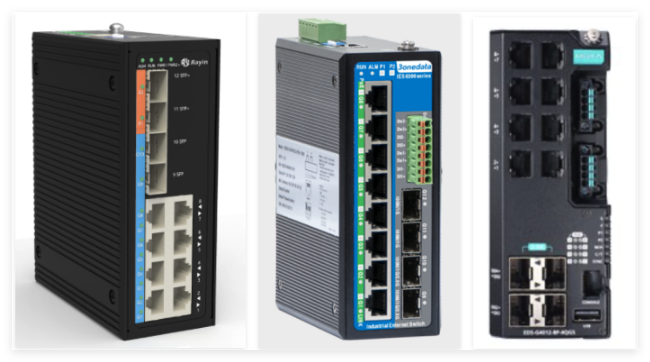
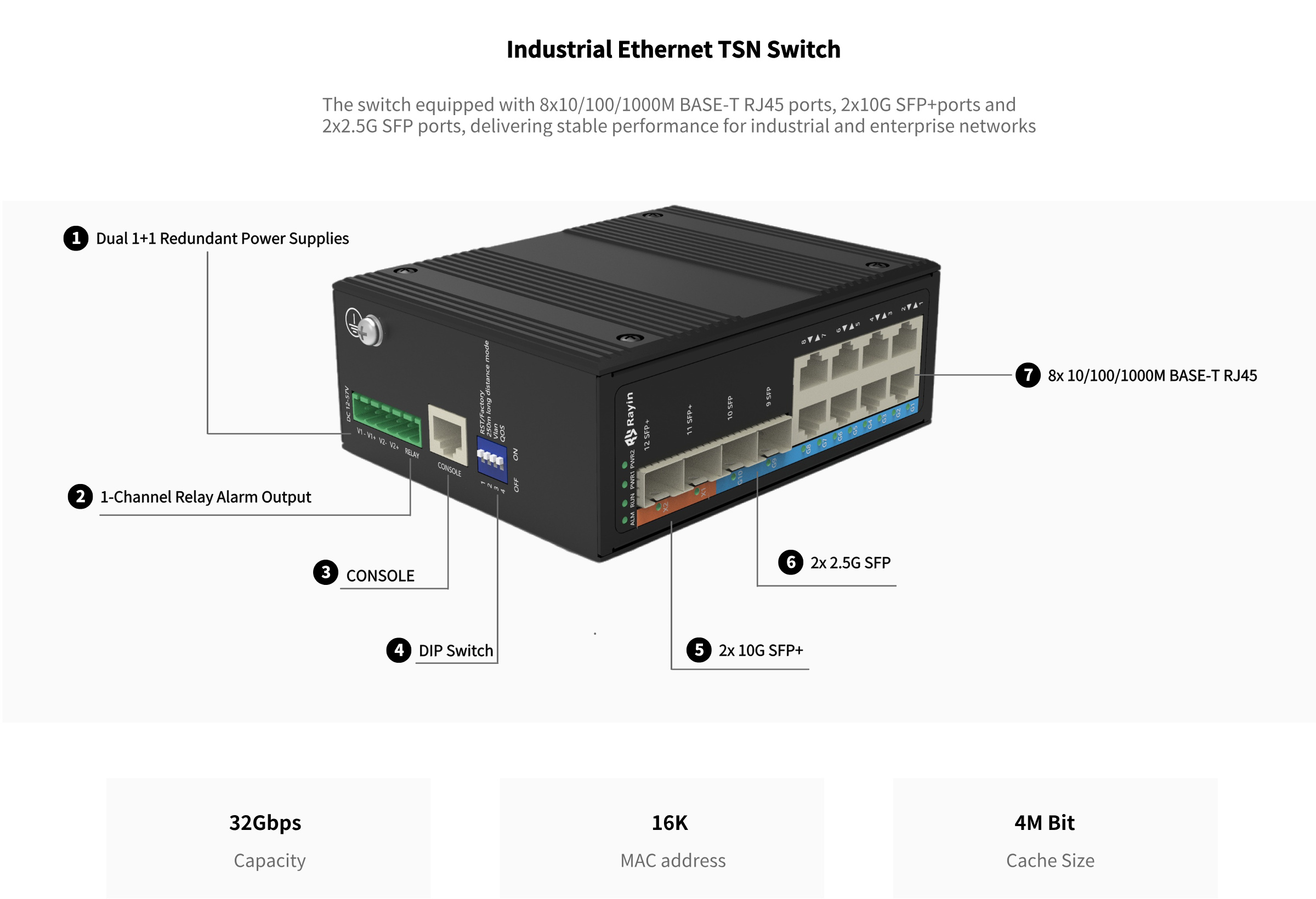
A typical example: We once had an 8-port Gigabit industrial switch with 2 SFP fiber & 8 electrical ports., it’s SMT mount’s surface resistors claimed a nominal accuracy of 1%, but for one batch of the material, the actual distribution was at the upper limit, another batch was at the lower limit. This caused the output voltage in the voltage divider circuit to exceed normal range.
Solution: First, the materials used during the sample phase should come from normal supply channels, Second, before mass production, conduct IQC on new batches of materials and perform sampling tests on key parameters. If necessary, require suppliers to provide batch consistency reports.
3. Reason Three: Production Process Window Drifted
The sample stage may have progressed smoothly because engineers were personally monitoring the production line and manually adjusting parameters. In mass production, inconsistencies in welding quality can arise due to changes in personnel, equipment, and parameter drift.
A typical example: We once tested a gigabit fiber optic switch for long-distance transmission. The peak temperature during the sample reflow soldering was 245°C, and the soldering effect was perfect. However, during mass production, although the basic settings for reflow soldering were the same, the actual temperature measured on the board showed only 230°C, finally resulting in cold soldering.
Solution: During the sample stage, production should follow the mass production process parameters without any "special treatment." In mass production, strengthen the monitoring of the temperature curve for each shift's test furnace, and implement SPC monitoring of key process parameters (solder paste thickness, placement pressure, peak reflow soldering temperature) to drift detected and make timely adjustments.
4. Reason Four: PCB Manufacturing Issues
The sample PCB and the mass-produced PCB may not be produced by the same board manufacturer. The sample PCB was sourced from a specialized manufacturer, but for mass production, purchaser switched manufacturers to save costs. Although the specifications are the same, the new PCB manufacturer may not have been re-validated, leading to differences in PCB line width, impedance, and board thickness during mass production, which can cause signal integrity issues.
A typical example: We developed a fanless industrial gigabit switch for outdoor monitoring for a client, with a high-speed differential line impedance design of 100Ω±5%. The sample batch measured exactly 98Ω, while the mass production batch processed at the lower limit of 92Ω, resulting in closed eye patterns.
Solution: Try to fix the PCB supplier. If the PCB supplier has multiple factories, each change requires re-validation testing, and for every mass order, they should provide impedance test reports.
5. Reason Five: Inconsistent Testing Methods
Sample testing may involve engineers manually measuring each unit with precision instruments, while mass testing may use automated ICT or FCT testing. There may be differences in testing procedures, contact points, and judgment thresholds.
A typical example: During sample testing, all parameters are white-box tests. In batch testing, it is black-box testing with a shorter testing time. If there are margin issues in the design, it may lead to batch problems.
Solution: Sufficient margin must be reserved for sample testing, and the number of tests should be more than 5-10 units, ensuring that the margin does not reach the lower limit.
6. How to avoid "Samples OK, Mass Production NG"?
Establish a phased verification process of "Sample → Small Batch → Mass Production":
Phase One: Sample Verification (5-10 pieces), complete functional and performance testing, including at least high and low temperature, voltage bias.
Phase Two: Small Batch Trial Production (100-500 pieces), using mass production materials, processes, and testing tools. Collect throughput statistics, analyze root causes of defects, and improve design or processes.
Phase Three: Mass Production (>1000 pieces), continuous SPC monitoring, and random reliability checks.
Be sure complete Phase 1 & 2 prior to mass production.
7. How does Rayin Technology help customers avoid mass production risks?
Rayin Technology strictly follows the IPD process for development, with high entry barriers for suppliers. All components are sourced from leading manufacturers in the industry. For industrial switch products, the entire machine undergoes aging tests, and random high and low temperature and vibration tests are conducted. The company has a dedicated small batch trial production line specifically for helping customers develop various customized industrial switches, such as 16-port full Gigabit managed industrial switches, industrial wide-temperature Gigabit switches, layer 2 managed Gigabit industrial switches with VLAN isolation, redundant power industrial Gigabit switches for factory monitoring, and Gigabit industrial switches for mining monitoring networks. Customers can verify product quality and reliability by testing 20-50 units before formal mass production.
If your current supplier has "ongoing problems after scaling up," you can visit Rayin Technology's official website (www.szrayin.com) for consultation.