XGS-PON puts 5G small-cell backhaul on a single passive split: one trunk fiber feeds dozens or hundreds of cells through a passive splitter, so the per-station cost collapses compared with running dedicated fiber to every node. Its symmetric 9.953 Gbps per ITU-T G.9807.1 is what makes the upstream-heavy small cell work at all.
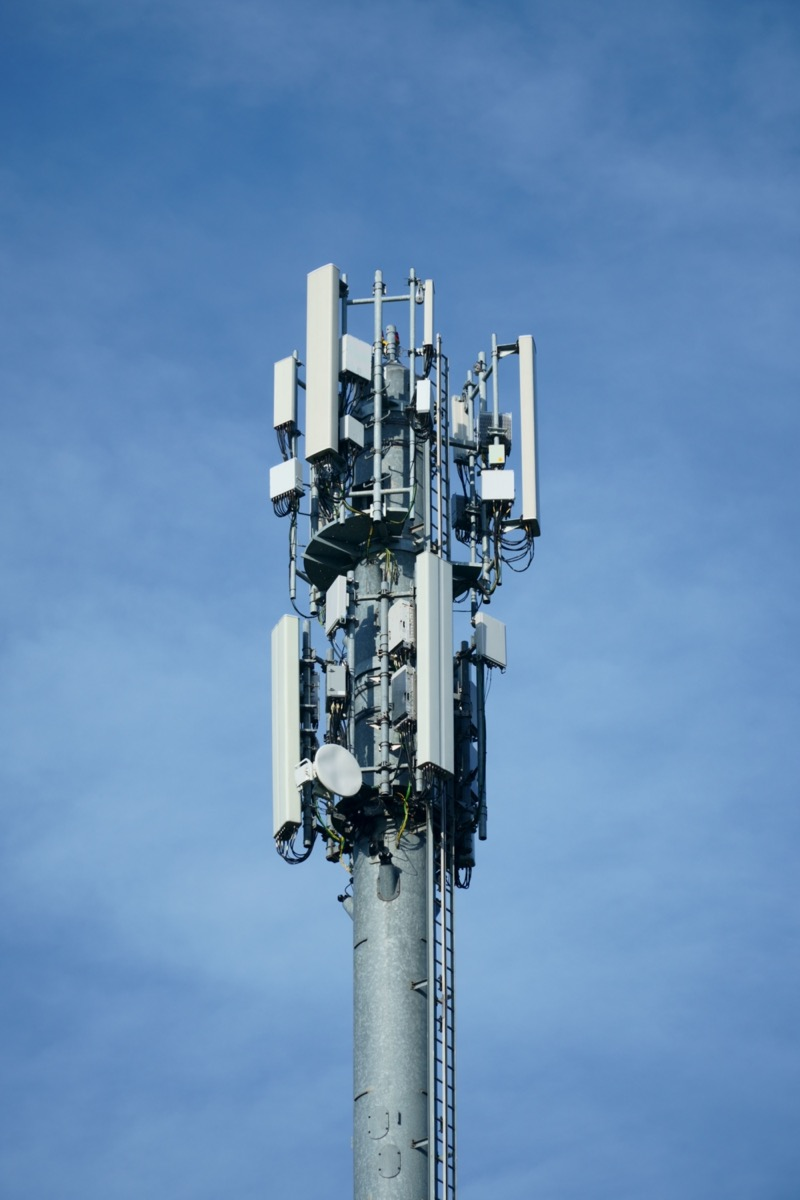
Small cells are many, scattered, and bursty — exactly the profile a passive optical split amortizes best.
XGS-PON is symmetric (9.953 Gbps up and down); GPON's 1.244 Gbps upstream is the bottleneck that saturates first.
Sync rides on the PON: inject 1588v2 (PTP) and SyncE at the OLT, transparent to the ONU-side cell, landing at ±1.5 µs — enough for 5G TDD frame alignment.
One XGS-PON port at 1:64 delivers close to 10G of shared backhaul, far cheaper than 64 leased lines.
Dense 5G means micro, pico, and indoor cells on rooftops, street corners, and basement ceilings. Each one needs backhaul, and the sum is where the cost explodes. A dedicated fiber per cell is impractical; microwave is boxed in by line-of-sight and interference.
The traffic isn't macro-shaped. Peak per micro cell runs 1–5 Gbps, pico cells hundreds of Mbps to 1 Gbps, indoor scaled by antenna count. The mean fluctuates hard. Air-interface latency is tight, so the backhaul keeps a margin and forwarding stays sub-millisecond to a few milliseconds. And 5G needs phase/time sync, so the backhaul must carry 1588v2 (PTP) and, ideally, SyncE frequency sync. Between the cell and the aggregator, eCPRI (control/user-plane split) is jitter-sensitive.
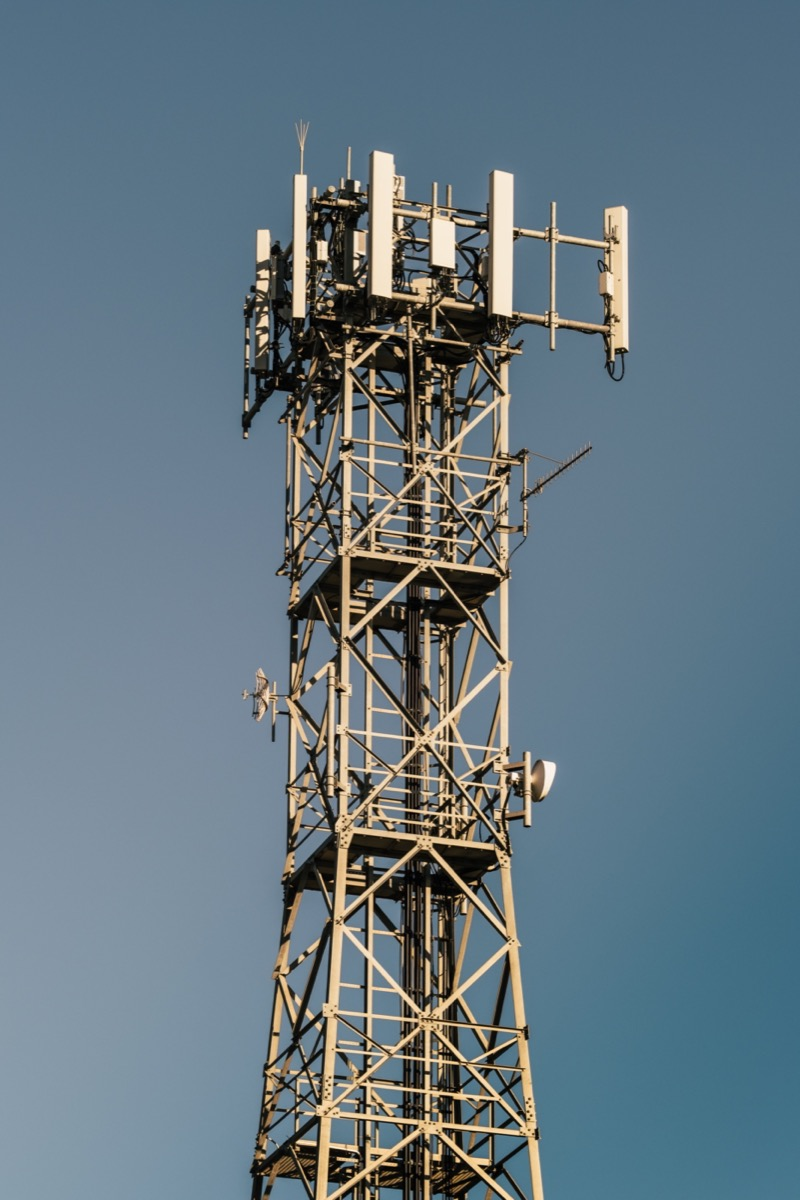
GPON per ITU-T G.984 is 2.488 Gbps down / 1.244 Gbps up. Upstream is the constraint, and a small cell's user-plane backhaul is upstream-heavy — it fills first. XGS-PON (G.9807.1) is 9.953 Gbps symmetric. At 1:64 or 1:128 per port, every cell still hits its peak. Symmetry is the whole point: an asymmetric PON chokes on the uplink while XGS-PON hands each direction the same 10G.
| Dimension | Fiber direct | Microwave | PON backhaul |
|---|---|---|---|
| Per-station cost | High (leased line) | Medium (LOS-limited) | Low (passive split amortized) |
| Bandwidth | Dedicated, high | Interference-prone | Shared 10G symmetric |
| Density rollout | Hard to scale | Environment-limited | 1:64 / 1:128, easy to densify |
| Sync | Good | Average | 1588v2 + SyncE |
| Ops points | Many fibers | RF tuning | Only the OLT, in one place |
Note: PON has no native hard sync, but XGS-PON lets the OLT inject a 1588v2 clock that passes transparently to the ONU-side cell. Stack SyncE and frequency sync lands around ±1.5 µs, meeting 5G TDD frame alignment. Critical sites get Type B dual-PON-port protection so a fiber cut never drops the clock.
Rayin's in-development 1-port XGSPON OLT is built for the edge 10G-symmetric headend. Today the mass-produced Mini GPON OLT L102P carries mid-density small-cell backhaul as a transition; when the XGS-PON line card lands, bandwidth upgrades at the headend while the terminal ONU stays put.
Step 1 — Count density and per-station peak. Tally micro and pico cells in the coverage area; take 1–5 Gbps per micro as the peak. If the total exceeds 5G, move to one XGS-PON — don't force GPON to the ceiling.
Step 2 — Pick XGS-PON or GPON. Mid-low density (under 2G total backhaul per port) is fine on GPON. High density or upstream-heavy loads go straight to XGS-PON symmetric 10G, with 30% headroom.
Step 3 — Set split ratio and routing. 1:64 or 1:128 follows station distance. Run the OS2 single-mode trunk to the cell-cluster edge, place the passive splitter in the building distribution room, and put the ONU inside the cell chassis.
Step 4 — Uplink and clock injection. 10GE uplink from the OLT to the 5G core, with 1588v2 + SyncE enabled at the OLT so every cell gets phase sync.
Step 5 — Protection and management. Type B dual-homing on critical cells, SNMPv3 across the whole backhaul, auto-switch on fiber break with the clock uninterrupted.
Can PON backhaul latency meet 5G? XGS-PON forwarding latency is sub-millisecond; with scheduling margin the whole backhaul stays within a few milliseconds, covering most 5G services outside uRLLC.
Why not just use GPON? GPON's 1.244 Gbps upstream saturates on cell backhaul first. XGS-PON's symmetric 9.953 Gbps keeps both directions clear even at 1:128.
How is sync delivered over a passive split? The OLT injects 1588v2 and SyncE; the signal passes transparently through the splitter to the ONU and cell, landing near ±1.5 µs.
What split ratio should I choose? 1:64 for typical clusters; 1:128 only when density is high and the power budget allows. Keep the ONU inside the cell chassis to trim the last copper hop.
Do I need to replace ONUs to move to XGS-PON? No. With Rayin's path, the terminal ONU stays unchanged; only the headend line card upgrades from GPON to XGS-PON.
Written by Sara, Customer Manager at Rayin — over 10 years in communications, helping carriers and integrators design PON backhaul for dense 5G rollouts.
About Rayin: Shenzhen Rayin Technology Co., Ltd. — Company Profile