China's Ministry of Industry and Information Technology has set a target of upgrading no fewer than 50,000 industrial enterprises to new industrial network technologies by 2028, through its action plan for integrating and empowering the industrial internet with artificial intelligence. Rayin (Shenzhen Rayin Technology) is a manufacturer of GPON OLTs and industrial Ethernet switches. For anyone specifying equipment into that pipeline, the practical question is not whether the target is met but which technologies it actually pulls into tenders — and which of them you can buy today.
A target of 50,000 enterprises by 2028 is a procurement signal, not a technology mandate. It moves deterministic networking, IPv6 and edge compute from "nice to have" into written specifications.
Maturity is uneven. Industrial PON and managed gigabit Ethernet are deployable now; TSN features and edge AI are specified per standard and must be named individually in a tender to mean anything.
Write the acceptance criteria into the contract. A policy deadline does not make a vendor roadmap deliverable, and the gap between announcement and shipped feature is where projects slip.
The plan couples two things that used to be procured separately: the industrial network underneath, and the AI workloads on top of it. That coupling is why network characteristics — latency, determinism, addressing, and how much data can be collected from the shop floor — become a policy concern rather than an engineering preference.
The technologies usually grouped under "new industrial network technologies" in this context:
| Technology | What it changes | Deployable in 2026? |
|---|---|---|
| Time-sensitive networking | Bounded latency on standard Ethernet | Yes, per feature — name the standard |
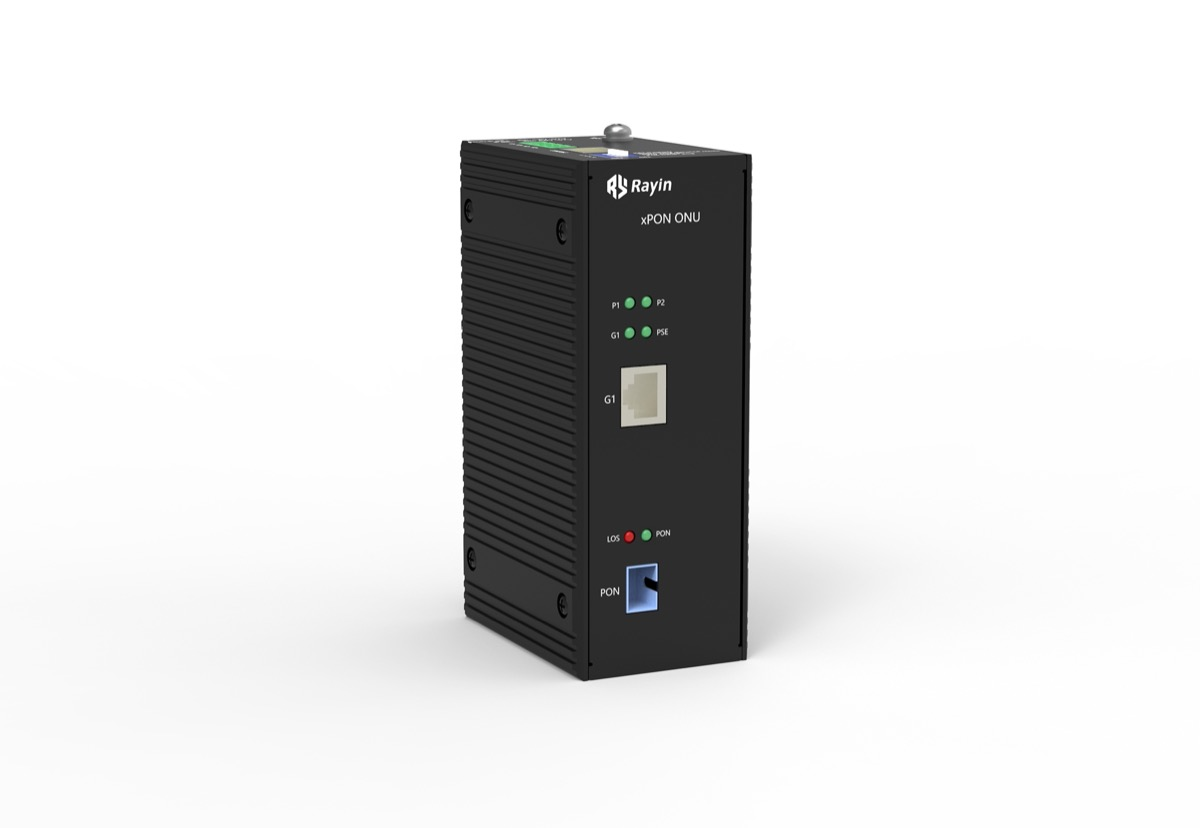
| Industrial PON / F5G | Passive fibre to the cell, fewer active devices | Yes, widely |
| Industrial 5G and 5G-Advanced | Wireless for mobile assets | Yes, with spectrum and coverage caveats |
| IPv6 end-to-end | Address space for dense sensor deployments | Yes, but verify on every device |
| Edge compute nodes | Inference near the line | Yes, as a separate purchase |
| Deterministic IP / wide-area determinism | Cross-site coordination | Early, verify per deployment |
The keyword is deterministic. A network that merely moves packets is no longer the requirement; one that moves them within a stated bound is.
Three things follow, and none of them require waiting until 2028.
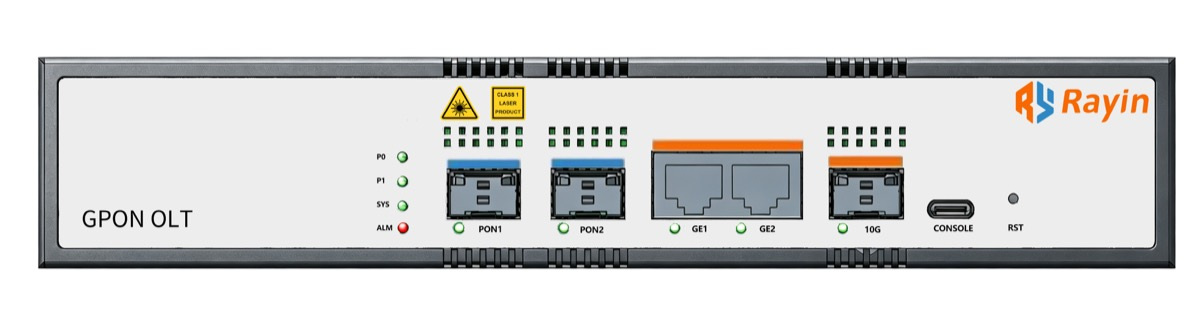
First, treat IPv6 as a checklist item rather than a project. If every sensor gets an address and the network is still IPv4-only with NAT in the middle, the data collection layer becomes the constraint. Confirm IPv6 support on switches, OLTs and ONUs in writing, because "supported" sometimes means "in a later firmware".
Second, name the deterministic features you are buying. "Supports TSN" is not a specification. IEEE 802.1Qbv scheduled traffic, 802.1Qbu frame preemption and 802.1AS timing are three different features, and a device can ship one without the others.
Third, plan the physical layer for the traffic you will have, not the traffic you have today. Machine vision is the usual surprise: a single uncompressed UHD stream can consume most of a 10G uplink, and a cell that was fine at gigabit is not fine once cameras move to a higher resolution.
Most tender documents fail on wording rather than intent. The difference between a line that can be enforced and one that cannot is usually a standard number and a test condition:
| Tender line | What it usually means | What to write instead |
|---|---|---|
| "Supports TSN" | Any single feature, or none shipped yet | Name 802.1Qbv or 802.1Qbu, demonstrated at acceptance |
| "Industrial grade" | A marketing phrase | Operating range in degrees, plus the immunity level and a test report |
| "IPv6 ready" | May arrive in a later firmware | IPv6 forwarding and management on the shipping release |
| "Low latency" | Unmeasurable | A figure in microseconds at a stated offered load |
| "Managed" | A web page exists | SNMPv3, a CLI, and configuration backup and restore |
A short list that survives contact with a real procurement process:
Name the standards and the levels. For each deterministic feature, the clause number; for security, the target level and whether it was assessed by an accredited body or self-declared.
Require a demonstration, not a datasheet. A latency and jitter measurement on the exact configuration, at the expected load, before acceptance.
Fix the firmware baseline. Record the version that passed the demonstration, and make subsequent upgrades a change-controlled activity.
Insist on manageability. SNMP, a CLI and a documented configuration backup path are what let a 50,000-enterprise rollout be operated at all; an unmanaged box cannot be audited.
Ask about supply, not just capability. Component constraints have already moved lead times and prices on switches and OLTs; a specification that ignores availability will be renegotiated later.
Is this plan a funding programme for individual factories? It is a national target that shapes provincial and sector-level implementation. Money and mandates arrive through local programmes, so check the specific scheme applicable to your region and sector rather than assuming direct support.
Does 50,000 enterprises mean 50,000 network rebuilds? No. Most upgrades are incremental: replacing access switches, adding fibre to cells where copper has run out of reach, and enabling features already present in silicon.
Which technology should come first? Whichever removes your current constraint. If distance or cabinet space is the problem, fibre wins. If motion control jitter is the problem, look at TSN features. If addressing is the problem, IPv6.
How do I avoid buying a roadmap? Ask for the feature to be demonstrated on shipping firmware at acceptance, and record the firmware version in the contract. A promise dated to a future release is not a deliverable.
Is security part of the network upgrade? It should be. Treat the security target level as a gating requirement alongside latency, and require evidence of assessment rather than a self-declaration.
About the author: Sara is a Customer Manager at Rayin with over 10 years of experience in the communications field. In her free time, she enjoys badminton and swimming.
About Rayin: Shenzhen Rayin Technology Co., Ltd. — company profile