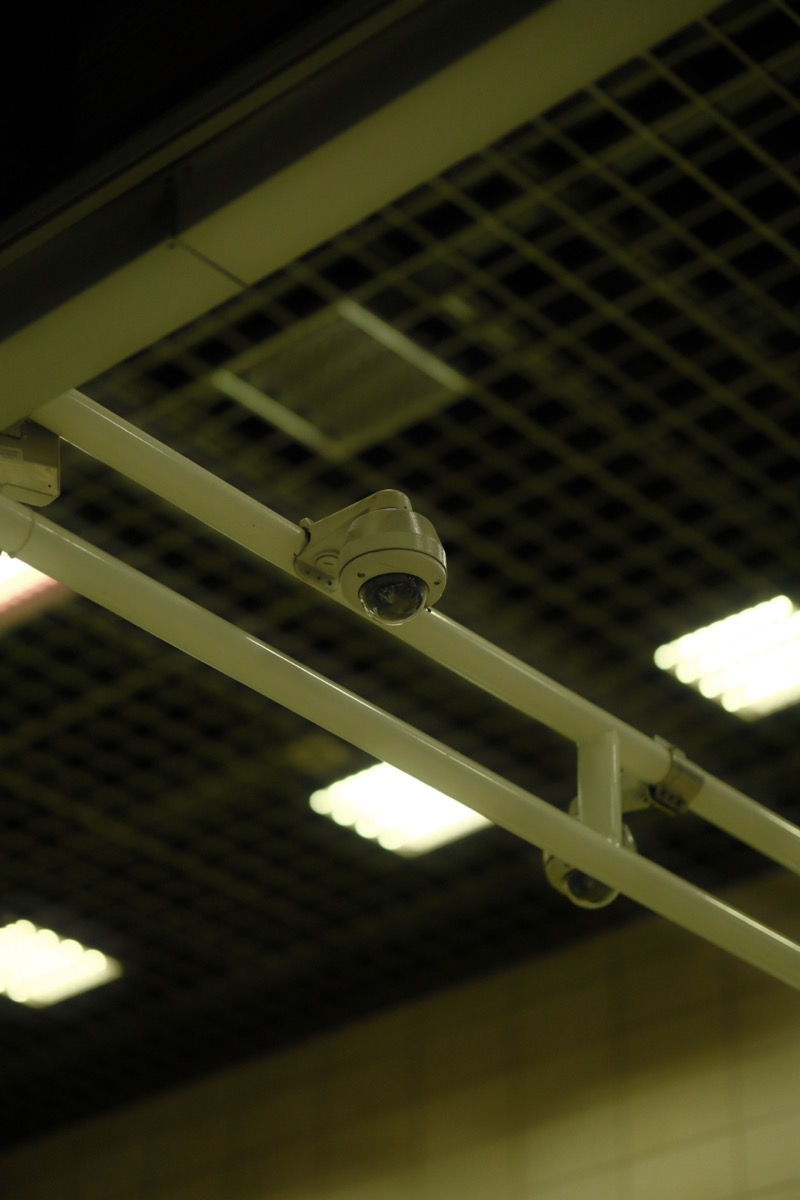
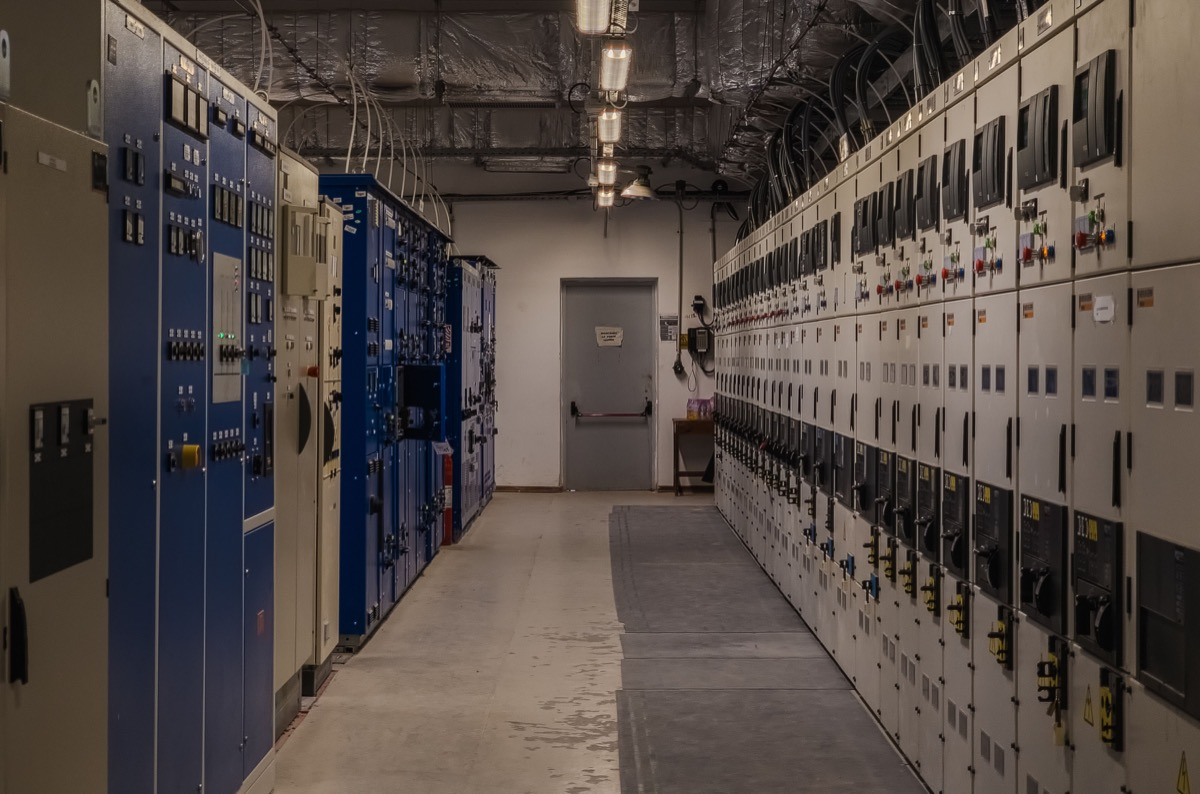
A renewable plant is a factory spread over square kilometres, so its network is decided by distance: fiber on the backbone, a ring wherever a cut must not stop production, and passive optical for scattered endpoints where nobody can run power. Inverter monitoring, substation protection and perimeter CCTV then share one plant network on separate VLANs.
Rayin (Shenzhen Rayin Technology) is a manufacturer of GPON OLTs and industrial Ethernet switches.
The temptation is to copy a factory layout and stretch it. That is where plant networks go wrong, because four constraints change at once — distance, weather, staffing and the mix of traffic. Working through those four is what produces the design.
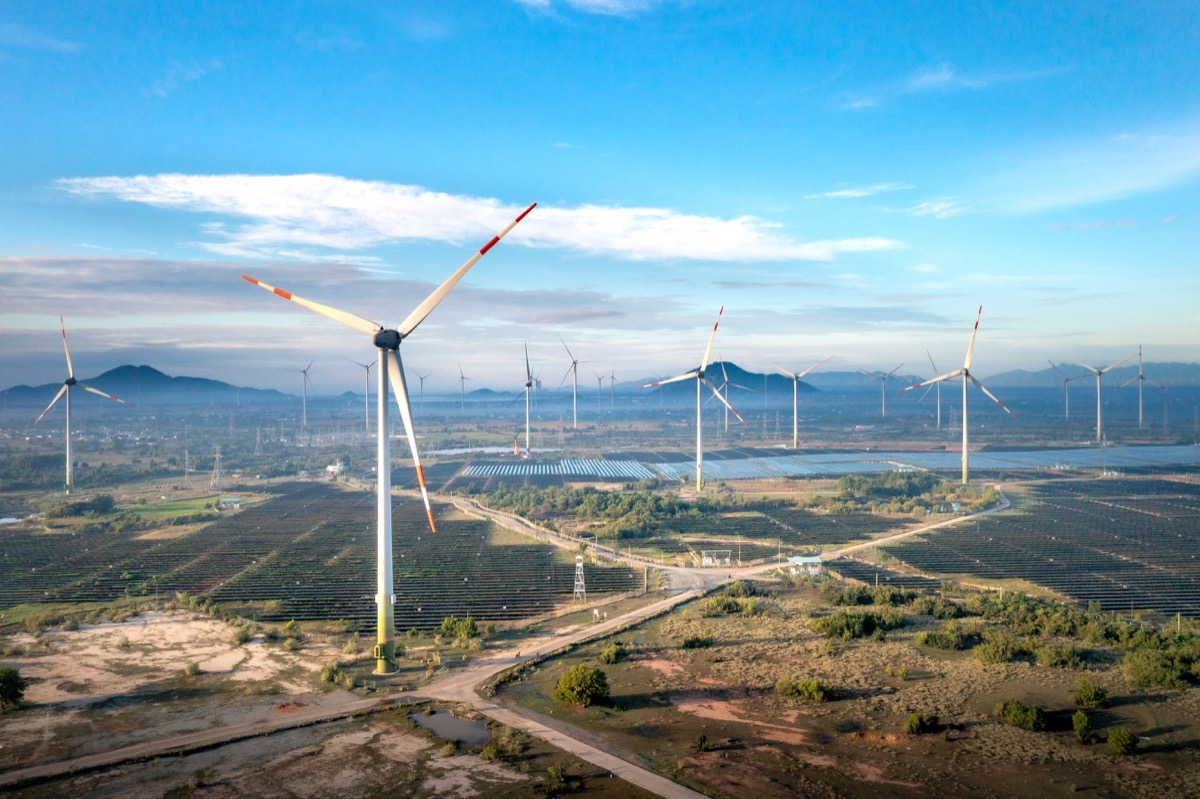
Distance. An inverter sits far beyond the 100 m limit of copper Ethernet, and wind turbines line up along a ridge kilometres apart. The backbone can only be fiber.
Weather. Equipment is mounted on tower bases and inside box-transformer enclosures. Summer sun pushes the enclosure past 60 °C, winter takes it to −30 °C, and the site sits at the edge of a lightning strike zone, so the network has to survive induced surges. Wide-temperature hardware and surge protection are not optional.
Nobody on site. A plant is staffed by a handful of O&M engineers, so how fast the network heals itself decides how fast a fault is answered.
Mixed traffic. Second-level inverter and box-transformer collection, the interbay traffic of an IEC 61850 protection scheme inside the substation, perimeter CCTV and a power-forecast weather station all live on the same site with very different security levels and bandwidth profiles. They have to be separated into VLAN domains.
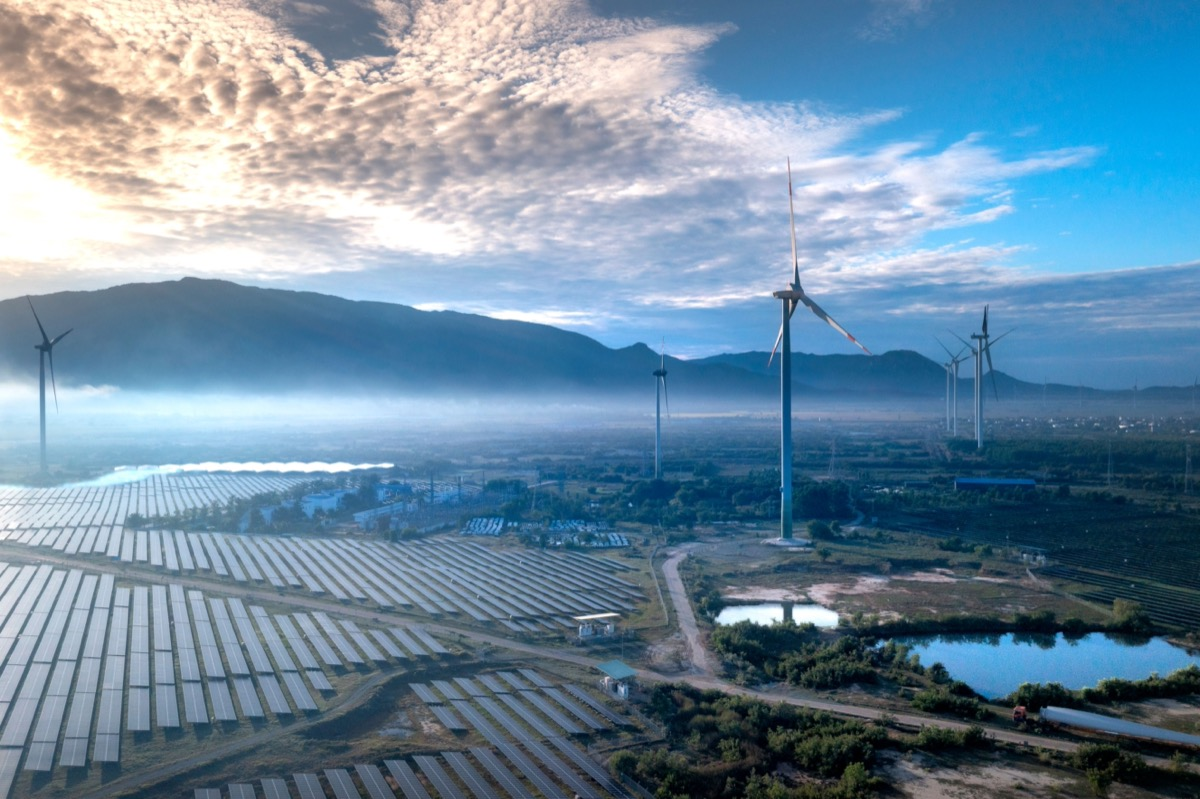
The plant backbone is a fiber ring network. The substation is the core node, and partition switches are strung along the PV area, the turbine area and the access road to close the ring. It runs ERPS (ITU-T G.8032): if a cable is dug through or a span degrades, traffic diverts in under 50 ms. Each partition switch on the ring collects the inverters and box-transformer units of its own array on the spot.
For endpoints that are scattered along the site boundary — a remote weather station, a river-level gauge, far perimeter cameras — there is no power and no convenient node, so industrial PON fills in. One fiber from an OLT at the substation feeds a passive splitter that drops a dozen points, with zero active devices and zero local power beyond the splitter. Used together, the fiber ring network carries the bulk of the site while PON reaches the points the ring cannot economically touch.
| Dimension | Fiber ring (backbone) | Industrial PON (long remote runs) | Star (direct) |
|---|---|---|---|
| Behaviour on a cut | Diverts and heals in under 50 ms | Trunk down means all down, needs dual uplink | That branch is lost |
| Fiber used | Long ring path | One trunk plus short drops | One run per point, the most |
| Power at the endpoint | Needed at every node | None past the splitter | Needed at every point |
| Latency | Stable, millisecond class | Millisecond class | Millisecond class |
| Where it belongs | Main collection area with mutual backup | Perimeter, weather and other one-off points | A small yard next to the machine room |
Optical loss. Take a 20 km ring — about 15 km around the PV area plus 5 km of turbine spurs. Single-mode fiber at 0.35 dB/km gives 7 dB end to end. Six nodes with two connectors each, so four connectors at the two ends of any link, is 4 × 0.5 dB = 2 dB, and splices at roughly one per kilometre add 0.05 × 20 ≈ 1 dB. The worst link, about a 4 km span, totals roughly 3.4 dB, comfortably inside the 26 dB budget of an industrial optical port.
The PON tail is where attention is actually needed. An OLT with a C+ module driving a Class B+ ONU has a 28 dB budget. A tail 12 km from the substation costs 4.2 dB, a 1:16 split costs 13.5 dB, and connectors add 3 dB — 20.7 dB, leaving 7.3 dB, which passes. Move to a 1:32 split at 17.5 dB and the margin falls to 3.3 dB, right on the line: at that point either step up to a C++ module or reduce the number of split legs.
Data volume. Forty inverters at one frame per second and 500 bytes per frame is 40 × 0.5 KB/s = 20 KB/s ≈ 0.16 Mbps. Eight turbine-base collectors at 50 KB/s each add about 0.4 Mbps, box transformers and BMS together stay under 0.5 Mbps, and weather and power forecasting take less than 0.1 Mbps. Production traffic is under 1.5 Mbps in total.
Video is what actually consumes bandwidth: 30 cameras at 4 Mbps is 120 Mbps. Which is why a gigabit ring is more than enough for the production data, and why the real design task is to give video its own VLAN with rate limiting so a camera burst cannot eat into the determinism of the inverter monitoring traffic.
| Device | Interface | How it connects | VLAN |
|---|---|---|---|
| Inverter | RS485 or Ethernet | Collector aggregates them, then into a ring node | Production collection |
| Box-transformer unit / BMS | Ethernet | Straight into a ring node | Production collection |
| Turbine-base collector | Ethernet or fiber | Tower-base switch into the ring | Production collection |
| Perimeter and tower cameras | Copper PoE or optical | PoE port or PON ONU | Security, rate-limited |
| Weather station, river gauge | RS485 | Serial gateway behind a PON ONU | Production collection |
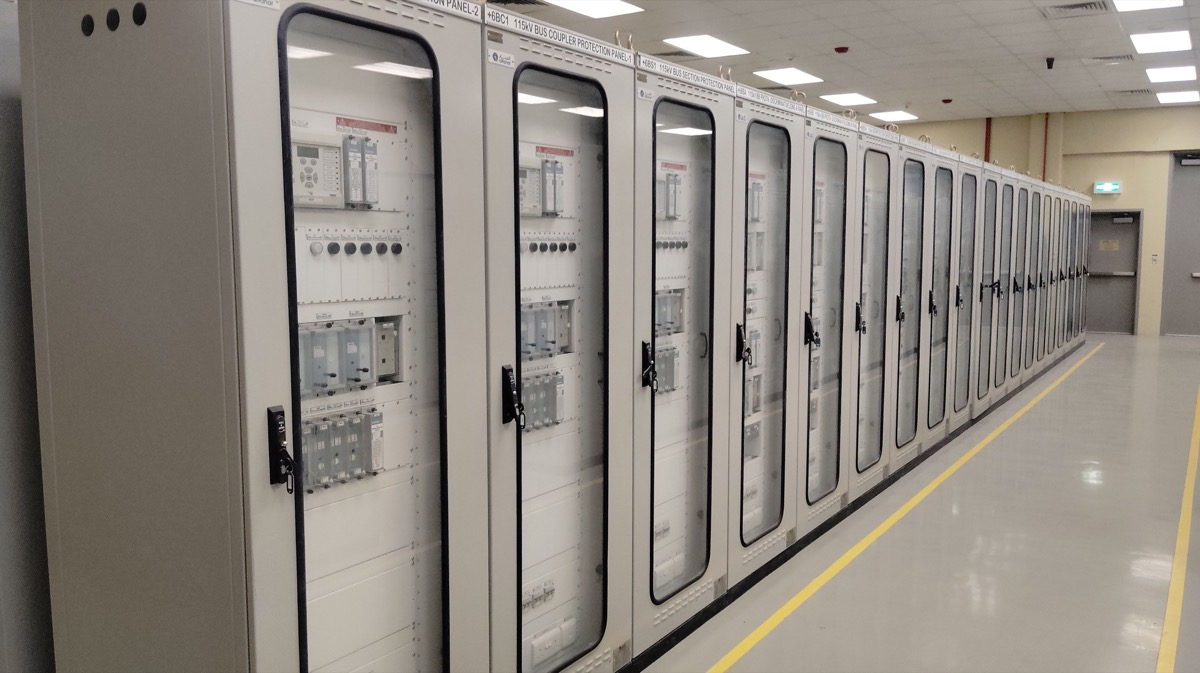
| Substation protection and control | Ethernet | Independent IEC 61850 network | Automation, dedicated |
Rayin's industrial switches and GPON head-end split the site the same way: a fanless wide-temperature switch on the tower base or beside the box transformer, and an OLT in the substation where the fiber converges. Selection guidance for the switch side is in the industrial switch range.
Our inverters are older RS485 models — how do they reach Ethernet? Put a multi-port serial server in each array and daisy-chain 8–16 inverters on its RS485 bus, then convert to Modbus TCP into the ring switch. Mind bus length and termination resistance: keep the total within about 800 m inside one array and group distant inverters locally rather than running one 485 bus across the whole plant.
Can the IEC 61850 devices in the substation share this ring? Not directly, and it is better not to try. Interbay protection traffic has strict latency and reliability requirements and lives under power-sector security zoning. Run it as its own network per the grid monitoring rules and exchange data with the plant management network through an isolation device. The ring described here carries production-management collection and security; draw that boundary at the design stage.
Ports keep failing in lightning season — what actually fixes it? Three things. Specify ports rated for 6 kV surge per IEC 61000-4-5 and verify each unit's local ground resistance is ≤4 Ω. Use shielded twisted pair for the RS485 and Ethernet entering the equipment, with the shield grounded at one end only. And fit signal surge protectors on long inter-array runs. Most "lightning-season port failures" trace back to missing or fake grounding: a surge device with no discharge path is the same as no device.
The PON tail feeds perimeter cameras — if the fiber is cut, is the whole tail gone? Yes, and that is the price of PON sharing one medium. For points where losing the record matters, either run the trunk on two diverse routes with dual PON ports for protection, or move the perimeter cameras onto the ring and leave PON only for the genuinely remote points that are hard to power. Allocate by criticality rather than by one method for everything.
Is a solar monitoring system on the same ring a problem? No, as long as it is treated as one more VLAN. The array inverters, box-transformer units and a solar monitoring system all generate low-rate telemetry, and keeping them in the production collection VLAN means a slow or misbehaving collector cannot disturb protection or video traffic. What matters is the boundary, not the device list.
SCADA Needs a Managed PoE Switch with No Single Point of Failure
How an Industrial Switch Carries Modbus TCP Without Dropping Packets
About the author: Sara — Customer Manager at Shenzhen Rayin Technology Co., Ltd., 10+ years helping ISPs and integrators build industrial networks.
About Rayin: Shenzhen Rayin Technology Co., Ltd. — Company Profile