Telecom industry people knows that OLT design has always focused on high reliability. In PON deployment, any feature that boosts equipment stability and cuts operation & maintenance risks will be built into the hardware design by product managers and R&D teams. Only with comprehensive monitoring capabilities and protection mechanisms it can guarantee non-stop 7×24 hours network operation. However, as Mini OLT are widely deployed in small to medium scenories such as industrial parks and factories, new manufacturers have switched their design philosophy to cost prioritization.
When manufacturers develop products such as mini gpon olt access of 32 onu,mini gpon olt,nokia mini olt, in order to reduce the cost of hardware material, a large number of "non-core" functions are directly reduced, and the function configuration of the whole machine is simplified. In the functions that are often cut down, the RTC real-time clock and temperature monitoring are the most typical examples. Because barely noticeable to end users, these two functions become the primary features cut by manufacturers for cost optimization.
This article will introduce the RTC real-time clock and temperature monitoring function, and you can by your actual use scene to determine whether these two functions are required. You can also learn what these two functions do.

1. Mini OLT RTC Real-Time Clock Function
The RTC clock chip is usually communicated with CPU through I2C serial communication. And the built-in power can detect circuit to identify the main power pow-off status and automatically switch to the backup power supply. The schematic diagram is as follows:
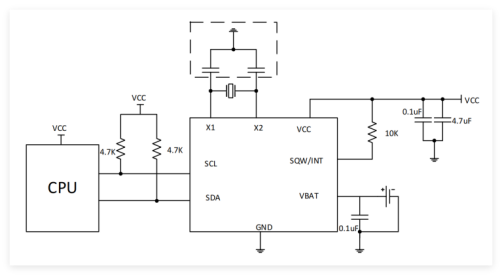
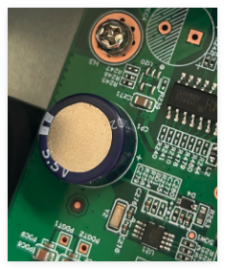
VBAT is a backup power interface, usually connect a super capacitor. The super capacitor is charged when the main power supply is active. and if you disassemble OLT, check PCBA, can find a capacitor like this, which means the device support the RTC function.
The main function of RTC is as follows:
Local accurate time record
When the equipment is switched off, it will still be able to go independently, unaffected by system restarts and network disconnections, and the local log and alarm record of the equipment will be stamped with accurate time. When network disconnect or the port is broken, the operation people can figure out the failure by the the accurate log.
Alarm & Event Tracing
Network failures, equipment Overheating Logs, and port fault ,ONU Up/Down Status Logs, all will be bound to the local time. Without an RTC module, the device resets its time to zero after power-up, resulting in disordered log sequences. The actual occurrence time of faults cannot be traced, which greatly increases the difficulty of troubleshooting.
Scheduled Task Scheduling
It supports automated O&M tasks including scheduled ONU upgrades, periodic device status inspections, scheduled bandwidth policy switching, and scheduled configuration backups. Tasks run on schedule relying on the local clock, independent of external NTP time servers.
Log Retention
Campus, factory security and industrial scenarios require chronological storage of operation logs and fault records. Devices equipped with RTC generate logs with complete time marks, convenient for future verification and fault analysis.
2. temperature monitoring function
A Mini OLT can be equipped with an on-board digital temperature sensor. The chip collects the PCB ambient temperature to monitor temperatures around the power supply area, chassis interior and optical modules, and the schematic diagram is as follows:
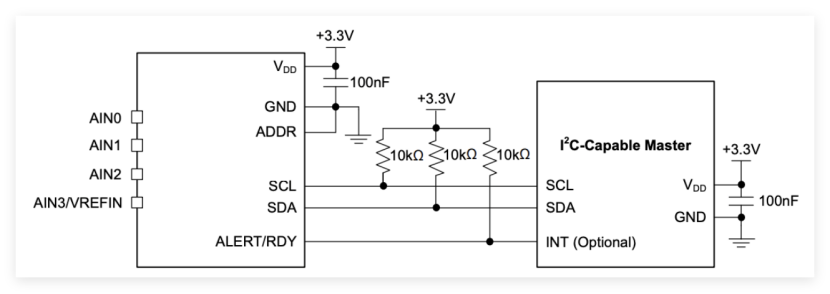
Main functions of temperature monitoring are as follows:
Real-time Overall Device Temperature Collection
It collects real-time temperature data from heat-concentrated areas on the PCBA and continuously monitors internal temperature rise of the device, which clealy reflects abnormalities in equipment load and heat dissipation.
Multi-stage High-temperature Protection Alarms
Set up two threshold, they are early warning and critical high temperature. The device will actively report alarms once the temperature hits the early warning threshold.
Judgment of Load and Heat Dissipation
Under long-term operation or high-temperature conditions in summer, temperature data can directly identify whether the device is operating overload. If the temperature rises excessively, the fan speed will be increased; if the temperature drops, the fan speed will be reduced.
Reliability Assurance
Temperature monitoring feeds back the real-time operating status of the device continuously. Users can remotely view temperature curves via the WEB management page to predict potential risks such as hardware aging and blocked heat dissipation channels, and reduce unexpected shutdowns.
3. Conclusion
The Mini OLT, including mini gpon olt 32 onu,mini gpon olt 1 port and mini olt vsol, is often installed in hotels, small and medium-sized enterprises, and other compact scenarios, RTC and temperature monitoring, which can significantly improve the reliability and efficiency of the equipment. The RTC real-time clock maintains independent and accurate timekeeping even when the device is powered off or disconnected from the network. And provides the accurate time stamp for the fault log and the port alarm, enables quick tracing to locate faults. The temperature monitoring can be tracked in real time. Through warning and protection mechanism, it can identify potential heat dissipation risks in advance, keep the network 7×24 hours stable. Rayin Technology’s Mini OLT always show true parameter labeling and never sacrifices product performance to cut costs.When purchasing industrial grade switches, do not merely compare unit hardware prices, nor make purchasing decisions based solely on paper specifications. Rayin Technology provides free technical assessment services to help you match the functions required by your project and avoid long term operation and maintenance risks caused by insufficient device performance.
If you need complete product solutions and technical white papers, please visit our official website: www.szrayin.com.