Throughout its development, OLT has always been a telecom-grade product, with strict requirements for its quality. However, with the decentralization and localized deployment in recent years, the construction of the "last mile" is no longer limited to large central data centers. Everyone only cares about price, making it seem that Mini OLTs have become consumer-grade products. Nevertheless, as the core terminal equipment for access networks, OLTs must meet the commitment to "always online" telecom-grade services.
Nowadays, large numbers of 4-port / 8-port GPON Mini OLTs, building FTTH dedicated Mini OLTs, and rural broadband networking Mini OLTs are emerging on the market. Many users focus on procurement costs while neglecting the operational standards of these networking devices. Even though these devices can be installed in scattered scenarios such as residential distribution box or campus edge cabinet due to their smaller size, they are still required to handle comprehensive services like broadband, voice, and video transmission, and must meet high-temperature resistance, anti-interference, and uninterrupted operation—all telecom-grade hard standards. This article will deeply analyze Mini OLTs, combining their performance requirements to help you avoid the low-price trap and make the best decision when selecting products.
1. Ultra-High Reliability
In terms of reliability, OLTs need to be distinguished from ordinary enterprise-level switches. As the "last mile" that directly faces thousands of households, even a single-port Mini OLT failure can affect at least over a hundred users, thus imposing very high reliability requirements on OLTs.
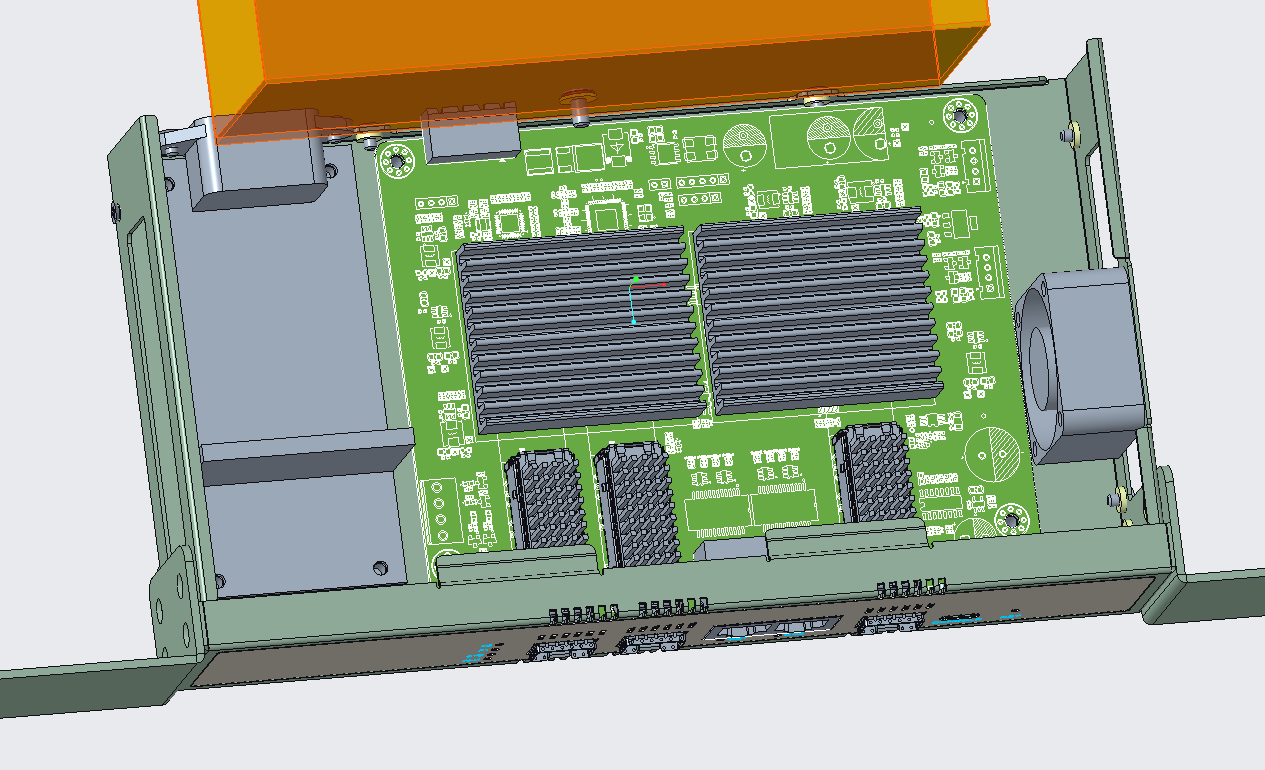
Generally speaking, OLTs should operate within a wide temperature range of -10℃ to +55℃. Since the PON chips in Mini OLTs are designed for low power consumption, the heat dissipation of these chips can be achieved by adding heat sinks. However, due to link need, most PON modules need to be configured with C++++ modules. But some Mini OLT manufacturers did not consider this situation during the initial design. This can lead to instability in OLT operation due to heat dissipation issues .
Quantifiable reliability indicators for OLTs, such as availability, should be ≥99.999%. This means that the device must operate normally for the vast majority of the time, any planned or unplanned downtime should be limited to an extremely short period. The average time between failures (MTBF) for OLTs should be ≥30 years, requiring that components used to make OLTs should be strictly selected.
Devices such as 8-port EPON Mini OLTs for hallways, rural networking GPON Mini OLTs, and community FTTH Mini OLTs are often installed in sealed low-voltage distribution box or simple outdoor cabinets, with poor ventilation. Many low-cost OLTs always use cmmercial-grade components, with poor ventilation and without thermally reinforced for long-distance C++++ optical modules, result in numerous issues like port packet loss and repeated device restarts after continuous operation. For operators and engineers, if these Mini OLTs encounter these problems, they have to spend lots of time and manpower to repair, significantly increasing their operational and maintenance costs while also directly affecting end-user experience.
2. ONU Online Stability
The typical application scenarios for Mini OLTs are concentrated in small apartment buildings, medium and small enterprises, hotels, and other edge access points, which generally do not have UPS (Uninterruptible Power Supply) backup, leading to frequent unexpected power cut.
After the power coming back ,all ONUs connected to the PON ports must complete the re-registration process to resume services. Normally end users can only accept service interruptions less than 5 minutes. Once this time threshold is exceeded, it directly leads to user complaints.. Therefore, the stability and fast bulk ONU registration has become one of the core competitive advantages of Mini OLT products in such scenarios.
Devices such as hotel-specific 4-port GPON Mini OLTs, EPON Mini OLTs for apartment building hallways, and small OLTs for small and medium enterprises are often connected to a large and scattered number of terminal devices. If the device's registration response is slow and the efficiency of bulk deployment is low, after powering on, certain ONUs may be unable to connect to the network for an extended period, resulting in intermittent network issues. Especially in crowded residential and office areas, network slowdown or failure to restore services in a short time will severely affect usage. So when selecting Mini OLTs, besides focusing on hardware reliability, it is crucial to practically test the bulk registration and rapid deployment capabilities.
3. Long Lifecycle Support
Driven by the rapid iteration of chip technology, new cost-reduction solutions for ONU terminals are launched every 2-3 years. Although there is a unified OMCI management protocol in the networking industry, the standard updating still lags behind market demand changes, many new service and distinctive functions can only be realized via proprietary OMCI extensions developed by manufacturers.
As the Mini OLT is considered network infrastructure, it is normally designed for a long service life of 5-10 years, which far exceeds the update cycle of ONUs. Therefore, the ability of manufacturers to provide more than 10 years of continuous technical support and firmware updates becomes a key factor. Thus, whether manufacturers can commit to over 10 years of technical support and firmware updates to ensure future compatibility with newly released ONU terminals is a core issue that customers must focus on.
Currently, the market offers a variety of 8-port GPON Mini OLTs, hallway FTTH small OLTs, and hotel-specific EPON Mini OLTs, many low-cost products can only adapt to the current mainstream ONUs, and manufacturers often stop offering firmware upgrades to save costs. Once new ONUs or multifunctional gateway terminals are replaced later, these Mini OLT devices are likely to face compatibility issues, and inability to deliver services. For users managing long-term residential broadband, campus networks, or commercial networking, Mini OLTs may become obsolete after only half of their service cycle. This also reminds us that when selecting devices, we must not only consider current compatibility but also include long-term iterative compatibility.
4. Capacity, Split Ratio, and Expandability
Traditional telecom-level OLTs follow strict technical specifications, requiring a single PON port to have a 1:128 access capacity to meet large-scale public user access demands. However, FTTR chips were designed from the outset for use in household and small business scenarios, employing a new design that limits the single PON port access capability to 16 ONUs by trimming unnecessary functions, thus achieving ultimate cost control. This also brings about a new problem, not all Mini OLTs can be assumed to follow the 1:128 split ratio.
This means that when purchasing building EPON Mini OLTs, shop network GPON Mini OLTs, or small campus Mini OLTs, it is essential to verify the device's claimed maximum split ratio and the number of ports in advance. If wiring terminal positions are done directly according to the traditional 1:128 standards while using entry-level Mini OLTs based on FTTR chips, it is easy to encounter issues such as bandwidth congestion, terminal registration failures, and network lags.
5. Conclusion
In the procurement of Mini OLTs, we should move beyond the low-level competition of "price comparison" and return to the essence of OLT as infrastructure. A stable, reliable Mini OLT that recovers quickly and offers long-term software support is far more valuable than a low-cost product. It not only significantly reduces future operational costs but also provides users with continuous and stable network services, avoiding user complaints and business losses caused by equipment issues. Rayin Technology's L101P/L102P Mini GPON OLT natively supports a standard splitting ratio of 1:128 per PON port, strictly adhering to telecom-grade design specifications. Beyond comprehensive functions, this OLT focuses on its core strengths: 7×24 stable operation, fast fault recovery, and sustained technical support & firmware updates. This model is highly suitable for mainstream edge scenarios such as community hallways, small to medium-sized enterprises, and hotel rooms. It is a good choice for project developers deploying commercial GPON Mini OLTs, high-capacity small OLTs, and FTTH access Mini OLTs. From hardware selection to thermal structure, everything has been professionally optimized to ensure stable operation even when placed in poorly ventilated low-voltage room or outdoor cabinets for extended periods.
If you require in-depth customization, you can visit www.szrayin.com for more technical services.