The correct place to put a network switch in a petrochemical plant is almost never inside the classified area — it is in the safe area, with a fibre or an intrinsically safe barrier crossing the boundary. Explosion proof equipment is expensive, heavy, and certified as a system rather than as a device. A switch placed in a Zone 1 area drags its power supply, its cable glands, its earthing and its maintenance procedure into that certification. A switch in the control room drags in none of it.
Rayin (Shenzhen Rayin Technology) is a manufacturer of GPON OLTs and industrial Ethernet switches. The company does not hold ATEX, IECEx or intrinsic safety certification for any product, and nothing in this article should be read as a claim that it does. What follows is how to draw the boundary, and what to ask the suppliers on each side of it.
Zone classification is a property of the space, not the equipment: Zone 0 is present continuously, Zone 1 occasionally in normal operation, Zone 2 only in a fault. Dust uses 20, 21 and 22 with the same logic.
Fibre is the cleanest boundary crossing. Optical power below the relevant threshold cannot ignite a flammable atmosphere, so a fibre link removes the galvanic path and most of the certification argument at the same time.
Every certified device carries its marking on the label: protection concept, gas group, temperature class and certificate number. If the label is absent, the certification does not exist, whatever the datasheet says.
Three ingredients have to coexist: a flammable substance, oxygen, and an ignition source. The classification describes how likely the first one is to be present.
| Zone (gas) | Definition | Typical plant location | Network consequence |
|---|---|---|---|
| Zone 0 | Flammable atmosphere present continuously or for long periods | Inside a tank, vapour space above a liquid | No powered network equipment. Sensors only, via certified barriers |
| Zone 1 | Likely to occur in normal operation | Around pump seals, sampling points, tank farm bunds | Certified equipment only; fibre strongly preferred |
| Zone 2 | Unlikely in normal operation, and only for a short time if it occurs | General process area outside the Zone 1 envelope | Certified equipment or a documented ignition-risk assessment |
| Zone 20 / 21 / 22 (dust) | Same logic for combustible dust | Milling, conveying, bagging | Sealing and surface temperature dominate; enclosures matter more than protocols |
The classification is produced by a hazardous location study under IEC 60079-10-1 for gas and IEC 60079-10-2 for dust, and it is the plant owner's document, not the equipment supplier's. That matters for the network design: you cannot decide where to put a cabinet until you have the zone drawing, and the zone drawing changes when the process changes.
Note: A "Zone 2 area" is not a low-risk area in the sense of "we can be casual here". It means the atmosphere is normally absent, which still requires equipment that has been assessed for the fault case in which it appears.
Because the economics are one-sided.
Take a process unit with forty field instruments, each needing an Ethernet connection for a modern digital protocol. Two designs are possible:
Switch inside the classified area. The switch needs a certified enclosure, certified cable glands, a certified power supply, a temperature class that matches the process, and an inspection regime that includes opening the enclosure. Every port added later re-opens the certification question.
Switch in the safe area, fibre to the field. The field side carries certified media converters or instrument-level interfaces supplied by companies whose business is certification. The switch stays a switch.
The second design also solves maintenance. A switch in a safe-area cabinet can be replaced in twenty minutes by an instrument technician. A certified enclosure in Zone 1 usually requires a permit, a gas test, and a documented procedure before anyone undoes a bolt.
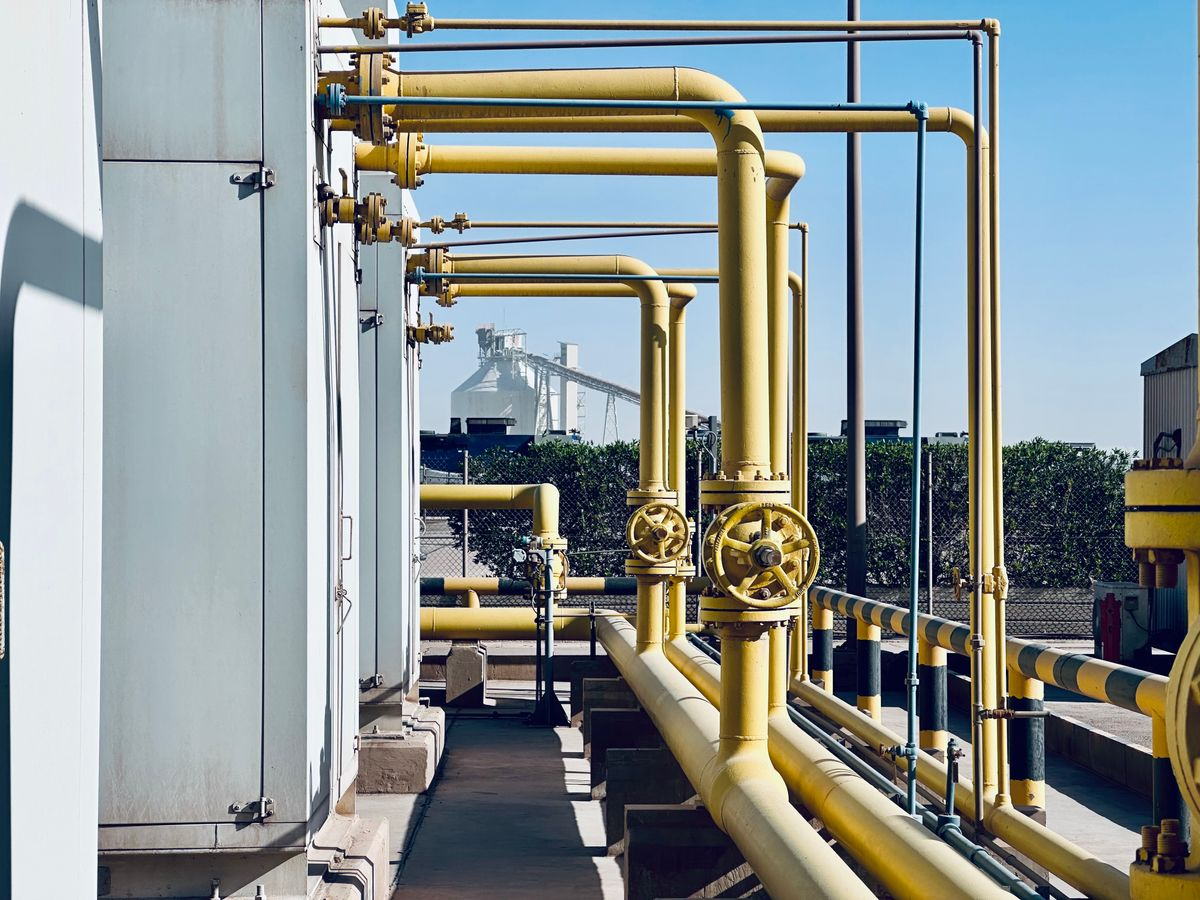
Fibre removes the galvanic path. That is its main contribution to a hazardous area design, and it is a bigger deal than the bandwidth.
A copper Ethernet link between a safe-area switch and a field device carries power for the PHY, a ground reference, and the possibility of a fault current flowing into the classified area from the safe side. Fibre carries light. It cannot deliver energy into a flammable atmosphere, it cannot carry a ground loop, and it cannot conduct a lightning surge from a cable tray into a field enclosure.
The qualification that still applies is optical. A fibre link carries optical power, and for very high-power optical sources there are limits in the relevant standards. For ordinary datacom transceivers the power is far below anything that could act as an ignition source, which is why fibre is the default boundary crossing in practically every modern plant network design.
| Crossing method | Energy into the classified area | Certification burden | Practical use |
|---|---|---|---|
| Fibre (multimode or single-mode) | Optical only | Optical power limits, no ignition assessment for normal transceivers | Default for links crossing into Zone 1 or 2 |
| Intrinsically safe copper (Ex i) | Limited by a barrier: voltage, current and power capped | Barrier, cable parameters and field device all certified together | Instruments with low power needs, fieldbus segments |
| Standard copper through a certified enclosure | Full Ethernet energy inside the enclosure | Enclosure, glands, earthing and internal wiring all certified | Where fibre is impractical and the device is certified |
| Wireless inside the area | RF energy, subject to power limits | Certified access point or a boundary design keeping the AP outside | Rotating equipment, mobile assets |
For the instrument side of that table, intrinsic safety is the concept that matters: an Ex i circuit limits the energy available in the hazardous area to a level below what can ignite the atmosphere, under both normal and fault conditions. The barrier sits on the safe side, and the field device is certified as part of the same system.
Not much, and that is the point. Once the boundary is at the cabinet wall, the safe-area network is an ordinary industrial network with three additions.
Segment by process unit, not only by building. A network failure in one unit should not take the control room down, and a storm in one unit should not reach another.
Keep the field-side links on a separate switch or a separate VLAN from the office and MES traffic. Field instruments have small TCP stacks and long polling intervals; bulk traffic on the same segment degrades them.
Document the boundary in the as-built. The most common audit finding in these plants is not a missing certificate — it is a network cable that was later run from the safe area into a classified area without anyone updating the drawing.
Where a plant has many field cabinets spread over a large site, a passive optical architecture is attractive precisely because it removes powered equipment from the field. A GPON OLT in the control room with ONUs at each safe-area cabinet gives one fibre per cabinet, no powered aggregation point in a process area, and a single management interface. For the safe-area cabinets themselves, Rayin's DIN-rail industrial switches are the access box: no fan, wide temperature range, redundant DC input, and a housing that suits a plant room rather than an office.
Six questions, and the answers should be documents rather than adjectives.
Which certificate number, and issued by which notified body? Cross-check it. Certificates are public and searchable.
What exactly is covered? An enclosure certified for Zone 2 does not certify the switch inside it, and a switch certified for use in Zone 2 does not certify the power supply feeding it.
Which protection concept? Ex d, Ex e, Ex i, Ex p and Ex n have different maintenance implications. Ex d enclosures cannot be opened live; Ex e allows some work under permit; Ex i allows work without gas-freeing in many cases.
Which gas group and temperature class? Group IIC and temperature class T4 is a very different product from group IIB and T3.
What are the ambient and surface temperature limits? A device rated for a 60 °C ambient may not be usable in a plant room that reaches 55 °C in summer with the cabinet closed.
What does the installation manual require for earthing and glands? Certification is voided by a non-compliant gland, and this is where installations most often fail an audit.
A supplier who answers these from memory is a risk. A supplier who sends the certificate and the installation drawing is a partner. This is also why the phrase atex certification appears in so many tender documents and so rarely with a certificate attached: the requirement is easy to write and hard to satisfy, and the honest suppliers say so early.
Four, all of them visible in as-built drawings.
Putting the switch in the classified area "because it is only Zone 2". Zone 2 still requires assessed equipment, and the maintenance burden does not shrink because the probability is lower.
Running copper through a certified gland into a non-certified enclosure. The gland is certified; the assembly is not.
Forgetting the power supply. A certified switch fed by an uncertified DIN-rail supply inside the same enclosure is an uncertified installation.
Assuming a fibre link removes all requirements. Fibre removes the galvanic path, but the field enclosure still needs a temperature rating, ingress protection, and a cable entry suitable for the environment.
Warning: No network design decision overrides the plant's hazardous area drawing. If the zone drawing and the network cabinet location disagree, the drawing wins and the cabinet moves.
Can a standard industrial switch be installed in a Zone 2 area?
Only if it has been assessed and certified for that environment, or installed inside a certified enclosure with certified glands and a certified supply. "Industrial grade" and "wide temperature" are not hazardous area qualifications. The marking on the label is the only evidence that counts.
What is the difference between a flameproof enclosure and intrinsic safety?
A flameproof enclosure contains an internal explosion and prevents it from propagating to the atmosphere, which implies heavy cast housings and specific installation rules. Intrinsic safety limits the energy in the circuit so that no ignition is possible, which allows lighter field devices and live maintenance in many cases.
Does fibre optic cable need hazardous area certification?
The cable itself is not an ignition source, so the certification question usually concerns the optical power and the enclosure it enters rather than the fibre. In practice fibre is the preferred boundary crossing because it removes the galvanic path; the transceiver at the field end still sits inside whatever enclosure protection the zone requires.
Who is responsible for the zone classification?
The plant owner, through a hazardous location assessment performed under IEC 60079-10-1 for gas and IEC 60079-10-2 for dust. Equipment suppliers can advise on suitability for a given zone, but they do not define the zone, and a supplier who offers to do so is overstepping.
What happens if a non-certified device is found in a classified area during an audit?
It is treated as a non-conformance and usually results in the device being de-energised and removed, with the circuit either isolated or replaced. In many jurisdictions the finding also triggers a review of the whole installation, which is far more expensive than the device.
Where Are Explosion Proof Switches Used? A Hardened Switch Guide
Best Industrial Ethernet Switch: How to Choose for Harsh Sites
About the author: Sara — Sara is a Customer Manager at Rayin with over 10 years of experience in the communications field. In her free time, she enjoys badminton and swimming.
About Rayin: Shenzhen Rayin Technology Co., Ltd. — Company Profile