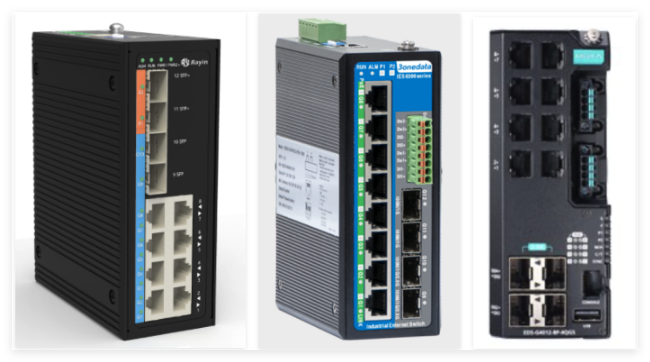
Since late 2025, the global memory chip market has entered an unprecedented price surge cycle. DRAM chip prices have climbed continuously with an increase of nearly 10 times, while NAND flash prices have risen by more than 8 times. Driven by explosive AI computing demand and lagging capacity expansion on the supply side, this price upsurge has spread from hyperscale data centers to the industrial sector. As the core infrastructure of industrial networking, industrial Ethernet switches are now confronted with mounting costs, tightening supply chains, and constrained product iteration, pushing the entire industry into a phase of profound adjustment.
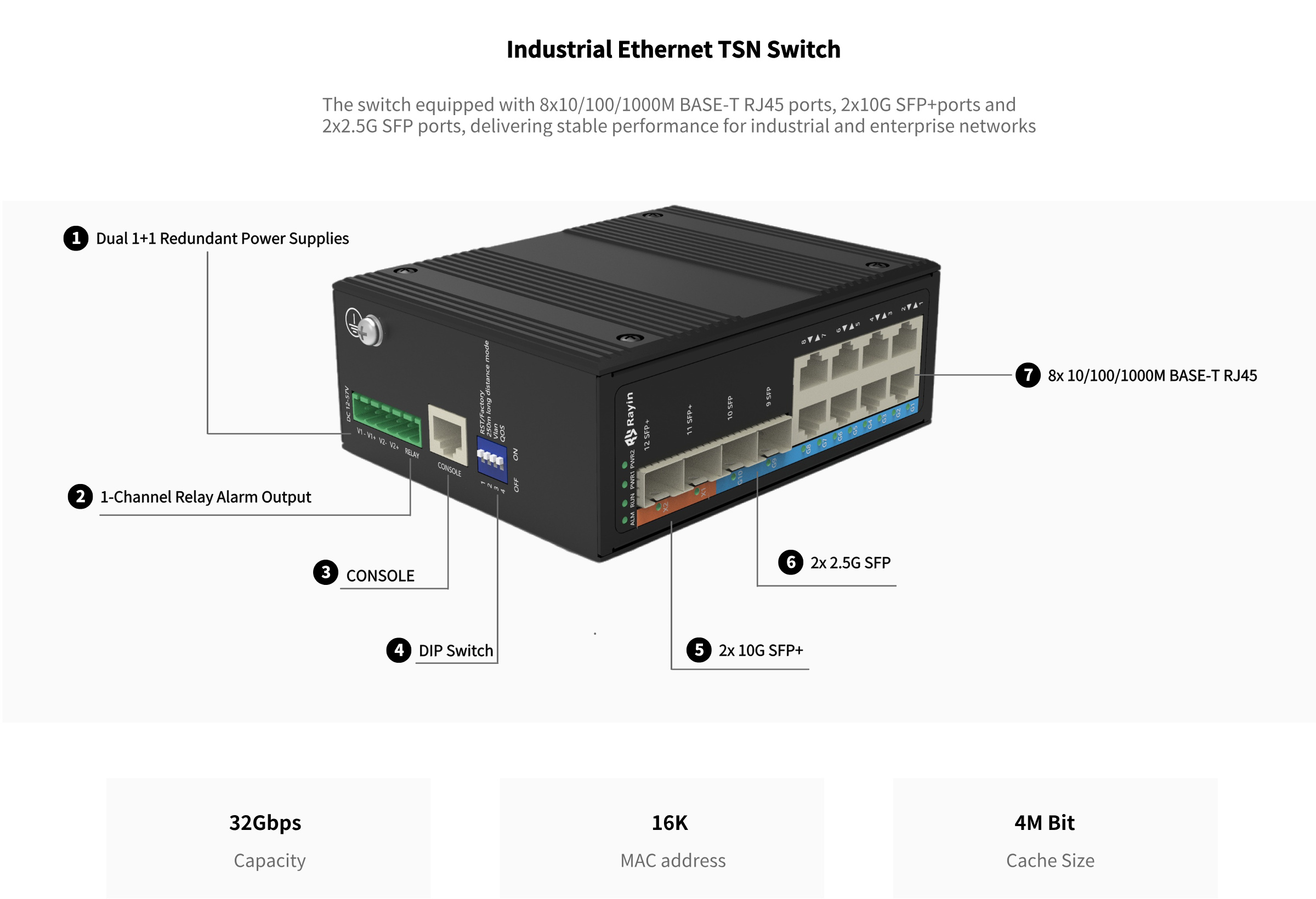
Unlike AI servers that require high-capacity memory configurations, industrial Ethernet switches still rely heavily on DRAM and Flash chips for system operation, configuration storage, and data buffering. Previously, memory components accounted for only 8%-10% of the total BOM cost of industrial switches; today, this proportion has surged to over 20%. Fanless and enclosed metal casing industrial switches, designed to withstand harsh conditions such as high temperatures and heavy dust, adopt high-reliability industrial-grade memory chips. These components have seen even steeper price increases, further exacerbating cost pressure.
The cost surge has led to two direct outcomes. First, manufacturers’ profit margins are severely compressed, with most mid-tier suppliers now operating close to the cost line. A notable decline in gross margins across the industry is widely expected in 2026. Second, end-market prices are trending upward. Some vendors have implemented direct price increases, while others have followed the practice of Ubiquiti by introducing a separate memory surcharge, which can reach up to a thousand US dollars for high-end industrial switch models.
Rising prices place cost-sensitive small and medium-sized enterprises in a dilemma: either postpone equipment renewal or downgrade hardware configurations, indirectly slowing the progress of industrial digital transformation.
A core driver behind the memory price rally is the structural imbalance in production capacity. More than 66% of global DRAM capacity is currently prioritized for AI server deployment. Major memory manufacturers allocate advanced process nodes primarily to high-margin products such as HBM and DDR5, continuously squeezing capacity for industrial-grade memory.
In addition, memory capacity expansion typically requires a 18–24 month cycle, with limited new production capacity coming online between 2026 and 2027. This leaves industrial switch manufacturers facing critical component shortages. Extended delivery lead times have become the new industry norm. Previously, industrial switches had a standard delivery cycle of 4–6 weeks; today, lead times have generally stretched to 8–12 weeks, with certain mainstream models facing prolonged stockouts.
For critical sectors including power utilities, rail transit, and smart manufacturing, delayed equipment delivery may result in project suspension and production capacity losses with substantial economic impact. Meanwhile, panic inventory stocking by both manufacturers and end customers further widens the supply-demand gap, creating a vicious cycle of price hike → inventory hoarding → supply shortage → further price hike.
Technological advancement of industrial switches is highly dependent on memory performance. With the rapid growth of connected field devices, rising demand for high-definition video transmission and real-time industrial control, switches require larger cache capacity and faster read/write speeds to handle burst traffic and reduce packet loss. Smart factory deployments, for example, demand industrial switches capable of high-volume data forwarding and complex network management functions, imposing higher requirements on DRAM capacity and Flash stability.
Short supply and inflated memory prices have forced manufacturers to adjust product roadmaps. On one hand, the pace of high-end product development has been hindered. New high-cache, high-performance switch models have been delayed due to prohibitive memory costs and insufficient component supply. Some products have even been downgraded to lower-spec memory chips to sustain mass production, weakening overall market competitiveness. On the other hand, investment in R&D innovation has been scaled back. Fanless design, wide-temperature compatibility, and high-reliability performance are core development directions for industrial networking hardware; however, ongoing cost pressure has compelled vendors to slow down related R&D layouts, dragging down the industry’s overall innovation momentum.
As industry insiders expect the memory uptrend to persist beyond 2027, industrial switch manufacturers must adopt a dual approach covering short-term optimization and long-term strategic layout.
In the short term, optimizing supply chain collaboration and hardware design is essential. Manufacturers should secure long-term supply agreements and establish stable partnerships with qualified memory suppliers to guarantee consistent industrial-grade component supply. It is also critical to streamline product portfolios, focus on mainstream high-demand models, and eliminate unnecessary over-spec configurations to balance performance and cost. Furthermore, hardware design can be optimized to rationalize memory capacity deployment while leveraging software algorithm enhancements to improve memory utilization, reducing reliance on high-end high-spec memory devices.
In the long run, diversified supply chain layout and technological innovation are the core drivers for industry breakthroughs. Expanding multi-sourcing supplier networks can effectively optimize cost structures and mitigate operational risks arising from over-reliance on a single supply chain. Meanwhile, manufacturers can further strengthen differentiated competitiveness by focusing on fanless architecture design, wide-temperature environmental adaptability, and high-reliability industrial-grade performance. Elevating product added value and market premium capability helps offset upward cost pressure from memory inflation.
The sustained surge in memory prices represents both a business challenge and an opportunity for industrial Ethernet switch industry restructuring and technological upgrading. Short-term margin pressure and prolonged delivery lead times are inevitable. Nevertheless, alongside the optimization of the global memory supply chain, the commercialization of new storage technologies, and continuous improvement of enterprise R&D capabilities, the industry will gradually navigate the current cost-driven market volatility.
Moving forward, only manufacturers that adhere to diversified supply chain deployment and sustain technology-driven innovation can consolidate their market position amid this industry stress test, delivering stable and reliable network infrastructure support for global industrial digitalization and smart manufacturing.