[Project Background] To alleviate urban traffic congestion, the static traffic management company of a provincial capital in northern China launched the "Citywide Smart Parking Network" upgrade project. The first phase of the project covers more than 40 large open-air parking lots and over 2,000 on-street parking spaces in the city center, with requirements for full-scenario "unattended operation, seamless payment, and ultra-fast barrier lifting."
B [Real-World Engineering Challenges] Since all installation sites are located along outdoor roads, the integrator encountered significant "adaptation issues" during the initial small-scale pilot phase:
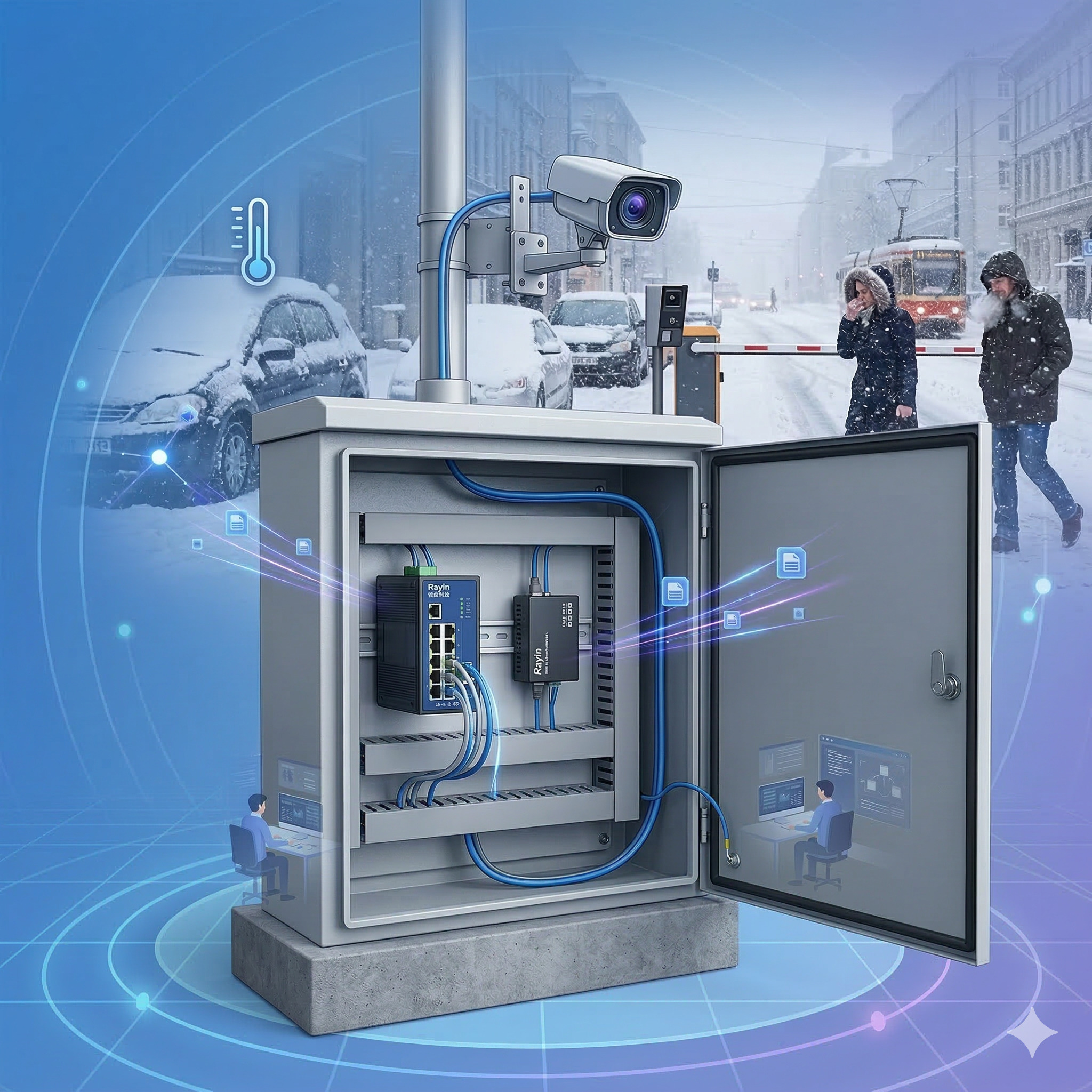
Extreme temperature fluctuations cause frequent equipment crashes (environmental challenge): In northern regions, surface temperatures soar in summer, with temperatures inside enclosed metal electrical cabinets reaching over 60°C; conversely, nighttime temperatures plummet to below -20°C in winter. Standard commercial-grade network equipment frequently experiences thermal shutdowns or fails to boot in this "extreme temperature" environment.
Frequent Municipal Construction Causes Network Outages and Barriers to Malfunction (Network Pain Points): With frequent road repairs in the city, main fiber-optic cables are often accidentally severed by construction crews. Once the network goes down, license plate recognition cameras cannot transmit data to the cloud, causing all on-site barriers to "shut down." This leads to severe congestion at parking lot entrances and exits, resulting not only in a surge in complaints from drivers but also significant revenue loss from unpaid parking fees.
Extremely dispersed locations result in high on-site troubleshooting costs (an O&M pain point): Thousands of parking spaces and dozens of parking lots are scattered across every corner of the city. In the past, whenever a front-end camera crashed, O&M personnel had to drive halfway across the city—even if it was just to go on-site and “power cycle” the device—resulting in extremely high time and labor costs.
[Rayin Solutions] After multiple rounds of rigorous high- and low-temperature testing and network outage simulations, the client ultimately selectedRayin's industrial-grade dual-link routers/switchesas the data hubs for the city's roadside and parking lot networks:
Fanless, wide-temperature design, built to withstand harsh environments: The device features a fully aluminum alloy, wave-shaped housing with passive cooling and has passed rigorous industrial-grade wide-temperature testing (-40°C to 75°C). It withstands the scorching summer heat and bitter winter cold of northern regions with ease, putting an end to system crashes caused by environmental factors.
Millisecond-Level Backup via Dual Wired+4G Links: The solution employs a redundant architecture that prioritizes gigabit fiber while using 4G wireless as a backup. During actual operation, there have been two incidents where the primary fiber-optic cable was accidentally severed. Ruiying Technology’s equipment automatically and seamlessly switched to the 4G wireless network within milliseconds, ensuring that on-site payment and barrier lifting operations were not affected in the slightest, truly achieving “uninterrupted service.”
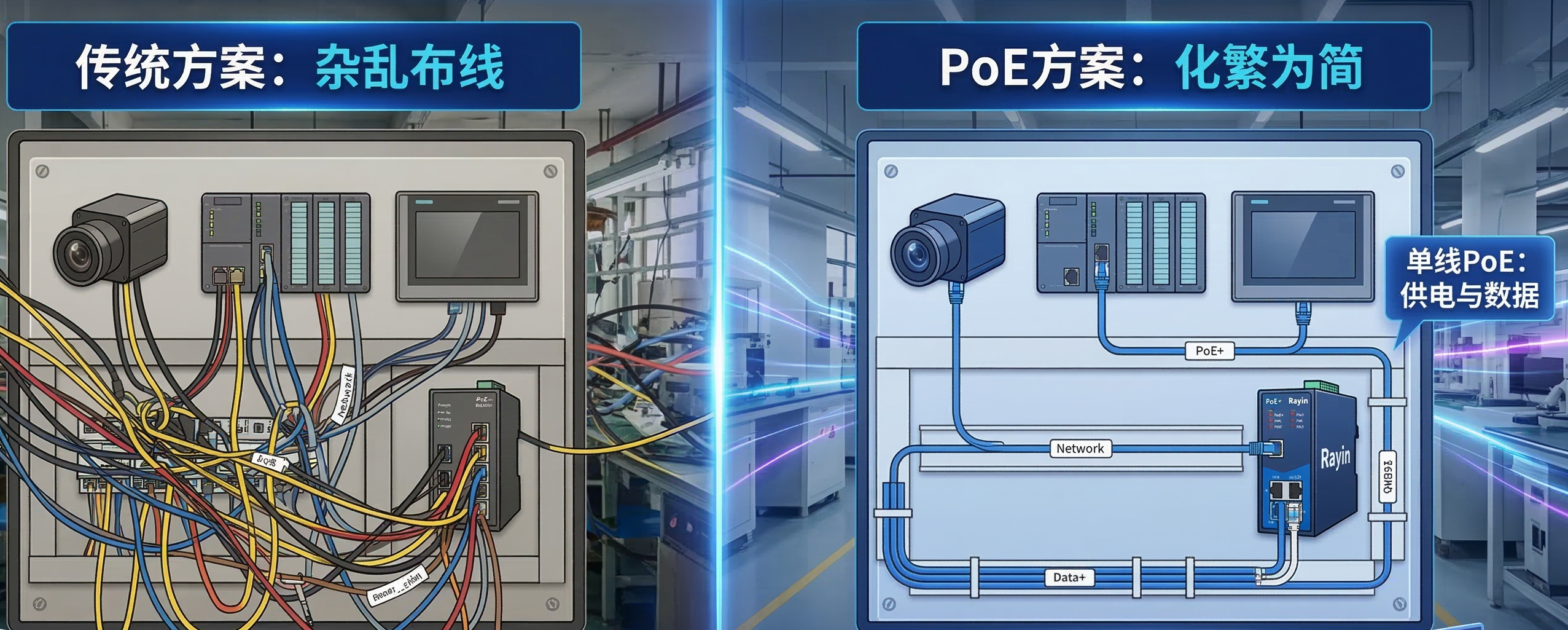
Extensive Ports and PoE Remote Control: The device not only provides ample Ethernet and serial ports (RS485/RS232) to integrate high-definition cameras, ground-mounted sensors, barrier gates, and directional signage, but also supports PoE remote power management.
[Actual Client Returns]
Zero revenue loss: The dual-path backup mechanism completely eliminates "barrier failure" and "unpaid passage" caused by network outages, safeguarding the core revenue of static traffic management companies.
Operations and maintenance trips reduced by 70%: Using Ruiying Technology’s cloud-based management platform, operations and maintenance engineers can monitor the network status of hundreds of low-voltage cabinets across the city in real time from the control center. When a camera freezes, they can issue commands directly from the cloud to remotely power cycle specific PoE ports. This feature has directly reduced on-site service calls by over 70%, significantly lowering O&M (Operations and Maintenance) costs in the later stages of the project.