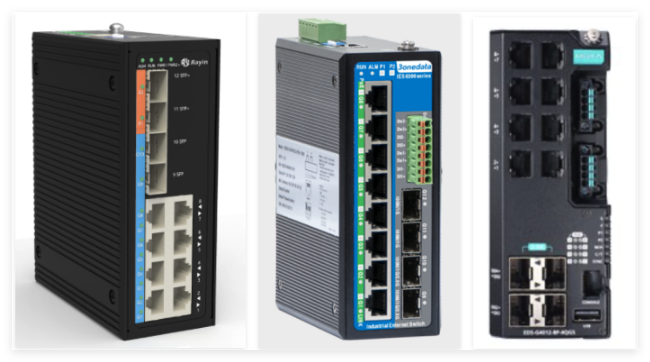
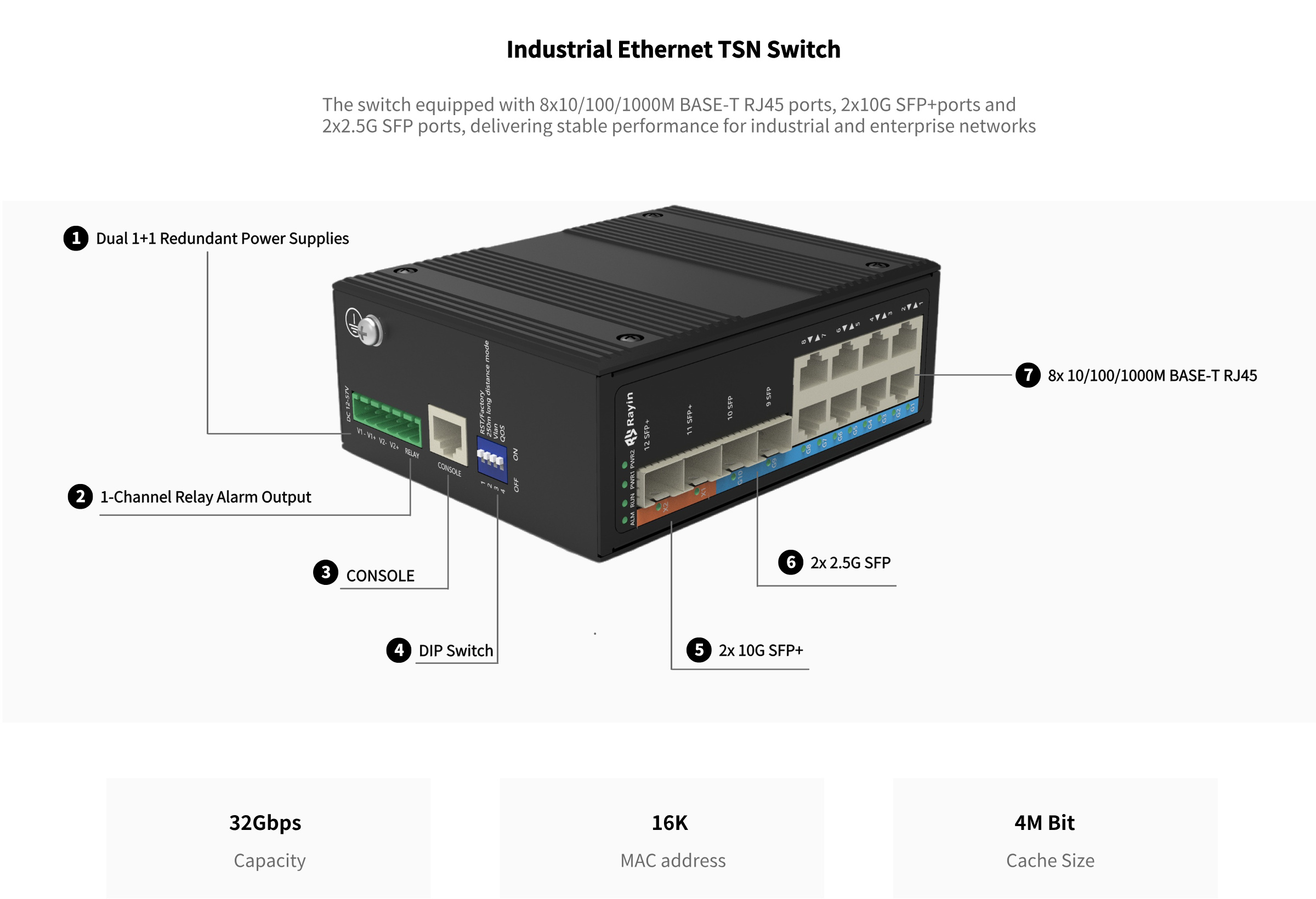
Industrial Network Global Market

The EU’s Cyber Resilience Act (CRA) and NIS2 Directive have entered full implementation in 2026, setting non-negotiable cybersecurity requirements for industrial network equipment. All industrial switches and PON devices sold in the EU must now include:
· End-to-end encryption and secure boot capabilities
· Full vulnerability disclosure and long-term firmware support
· Compliance with IEC 62443 industrial cybersecurity standards
· North America: FCC Part 15 Class A and UL 62368-1 remain mandatory for market entry, with tightened enforcement for PoE industrial switches in smart city projects.
· ITU-T Standards: 50G PON ITU-T G.9807.1 standard has become the baseline for new industrial PON deployments in North America and Europe, with Cisco and ADTRAN leading commercial rollouts.
· Emerging Markets: Southeast Asia (ASEAN) and the Middle East have adopted CE marking as the default compliance benchmark, simplifying regional market access for EU-certified products.
· 50G PON Commercialization Accelerates: Global carriers and industrial integrators have scaled 50G Combo PON deployments, which support coexistence with legacy GPON/10G PON systems on existing fiber infrastructure, delivering sub-millisecond latency for industrial automation and machine vision use cases.
· 100G PON R&D Progress: The global 100G PON market is projected to grow from $1.81 billion in 2025 to $6.47 billion by 2030 (CAGR 28.9%), with North America leading early trials for industrial campus and smart grid applications.
· Edge AI Integration Becomes Standard: Managed industrial switches with embedded edge AI inference capabilities are seeing 100% YoY shipment growth in 2026, with 58% of global manufacturers adopting these devices for real-time predictive maintenance and fault detection.
· Ruggedized High-Density Designs: Vendors have launched 20+ port industrial Gigabit PoE+ switches with wide temperature tolerance (-40°C to 75°C), IP30-rated enclosures, and redundant power inputs, tailored for harsh industrial and outdoor smart city deployments.
· Open-Source Platform Adoption: prplOS-based fiber broadband platforms have been commercialized, cutting product integration cycles from 18–24 months to 6–9 months, while ensuring full CRA compliance for EU market entry.
· The global industrial switches market is projected to reach USD 14 billion in 2026, with a CAGR of 8% through 2035.
· The global PON equipment market will grow from USD 38.71 billion in 2026 to USD 61.49 billion by 2031 (CAGR 9.70%), driven by industrial and enterprise fiber upgrades.
· Core Drivers: Smart manufacturing modernization, grid modernization projects, and 5G edge network deployments. 65% of smart factories in the region rely on industrial Ethernet and PON networks for automation, with demand for high-bandwidth, low-latency devices surging.
· Key Opportunity: XGS-PON upgrades among North American incumbents are accelerating, with 40% YoY growth in industrial PON port shipments.
· Core Drivers: EU Industry 4.0 mandates, sustainability targets, and CRA-driven network security upgrades. Germany leads the region with 34% of regional industrial network demand, followed by the UK (21%) and France (18%).
· Key Opportunity: 67% of European industrial companies are upgrading their OT/IT networks, with strong demand for TSN-integrated industrial switches and compliant PON systems.
· Southeast Asia, Middle East & Latin America: 40%+ YoY demand growth for industrial switches and PON devices, driven by smart city, smart grid, and industrial park projects. Governments in these regions are rolling out national fiber broadband and digital transformation initiatives, creating massive volume demand for cost-effective, certified industrial network equipment.
· India & Australia: The industrial IoT market in these markets is growing at a 9.5%+ CAGR, with mining and utilities sectors leading industrial PON deployments.
· Global fiber optic cable prices have surged over 400% YoY in April 2026, with European prices up 136% month-over-month, creating a significant competitive advantage for vendors with secured, end-to-end supply chains.
· High-end optical chip lead times have extended to 2027 due to US semiconductor export restrictions, while mid-range industrial PON and switch chips have stable, sufficient supply for volume deployments.
Industrial PON and Ethernet networks are the core infrastructure for global smart factory upgrades. Deployments in automotive, steel, and chemical industries have reduced unplanned downtime by 19.4% via real-time sensor data transmission and edge AI analytics, with Europe and North America leading adoption.
60% of global energy utilities are upgrading their grid networks with industrial switches and PON systems for remote monitoring and control. The EU’s renewable energy targets and US grid modernization bills are the primary demand drivers, with strict requirements for wide-temperature, surge-protected, and cyber-secure devices.
Global mining regulators have mandated intelligent working face coverage, with industrial PON becoming the default communication standard for underground mines. Demand for explosion-proof industrial PON devices and intrinsically safe switches is growing fastest in Australia, Latin America, and Africa.
Global smart city projects are the largest volume driver for industrial PoE switches and outdoor PON ONUs, accounting for over 60% of network equipment procurement in these tenders. The Middle East, Southeast Asia, and Latin America are the fastest-growing markets, with massive ongoing safe city and intelligent transportation projects.
1. IT/OT Convergence: Industrial PON integrated with TSN (Time-Sensitive Networking) has become the mainstream architecture for industrial IoT, unifying enterprise and operational networks.
2. Security-by-Design: Compliance with global cybersecurity regulations is no longer a differentiator, but a mandatory baseline for market entry.
3. Feature-Driven Competition: The market is shifting from price competition to solution-based competition, with edge AI, industry-specific protocol support, and long-term maintenance as key competitive advantages.
4. Emerging Market Expansion: ASEAN, Middle East, and Latin America will be the primary growth engines for the next 2–3 years, with high demand for certified, cost-effective industrial network solutions.
5. Regulatory Compliance Barriers: The EU CRA, US FCC, and emerging market certification updates are raising market entry barriers. Non-compliant products face full import bans and heavy fines.
6. Raw Material Price Volatility: Surging fiber and optical component prices are squeezing profit margins. Pre-locking supply contracts and pricing with upstream partners is critical to mitigate cost risks.
7. Technology Iteration Risk: 50G and 100G PON technologies are maturing rapidly. Vendors must invest in next-generation product R&D to avoid product obsolescence in fast-growing markets.