2026 marks the first year of large-scale rollout for the IATA Smart Airport Roadmap 2030. Airport networks are undergoing a full upgrade from basic communication coverage to the core digital foundation of smart airports, with in-depth restructuring centered on four critical pillars: business adaptability, full-domain collaboration, built-in security, and low-carbon sustainability.
Moving beyond single-technology coverage models, 2026 airport projects universally adopt dual-connectivity converged networking with 3GPP R18 5G-A (3CC carrier aggregation, ultra-low latency) and IEEE 802.11be Wi-Fi 7. This delivers gap-free coverage across terminals, aprons, runways, cargo zones, and shuttle buses, with <10ms end-to-end latency and 99.999% network reliability. It enables high-demand smart airport use cases including autonomous ground support vehicles (GSV), AR remote aircraft maintenance, 4K/8K security video backhaul, and remote tower operations, eliminating core pain points of legacy networks: uneven coverage, latency fluctuations, and siloed business services.
Breaking down the siloed legacy architecture of separate production, office, passenger, security, and cargo networks, this upgrade leverages SRv6 + SD-WAN technology to build a single physical network with multiple isolated logical hard slices. Hard slicing ensures security isolation and priority guarantee for different services: core operation services (flight scheduling, dispatch, tower control) get dedicated slice bandwidth, while passenger networks support elastic scaling. This architecture drastically cuts network construction and O&M costs, while enabling full-network visibility, management, and control.
Compute nodes are shifted from central data rooms to edge access layers across terminals, aircraft stands, security checkpoints, and cargo zones, realizing the "compute follows network" model for smart airports. This enables local real-time processing for AI-powered passenger flow prediction, anomaly behavior alerts, end-to-end baggage tracking, and intelligent stand allocation, eliminating the need for backhaul to central data rooms and drastically reducing service response latency. This is the core differentiator of 2026 smart airport network upgrades.
This integrated architecture combines terrestrial 5G-A + Wi-Fi 7 with LEO satellite communications, eliminating network blind spots in runway ends, obstacle clearance areas, remote aircraft stands, and plateau/border airports. It also enables seamless air-ground data transmission for transoceanic flights, synchronizing passenger, baggage, and fuel data to ground systems 30 minutes before landing, drastically improving flight turnaround efficiency.
Moving away from legacy perimeter-based protection, 2026 network upgrades natively integrate a zero-trust security framework based on the "never trust, always verify, least privilege" principle. It delivers full-lifecycle identity management and access control for massive airport IoT devices, cameras, automated equipment, and third-party access systems. This architecture meets strict compliance requirements, becoming a mandatory access standard for 2026 airport retrofit projects.
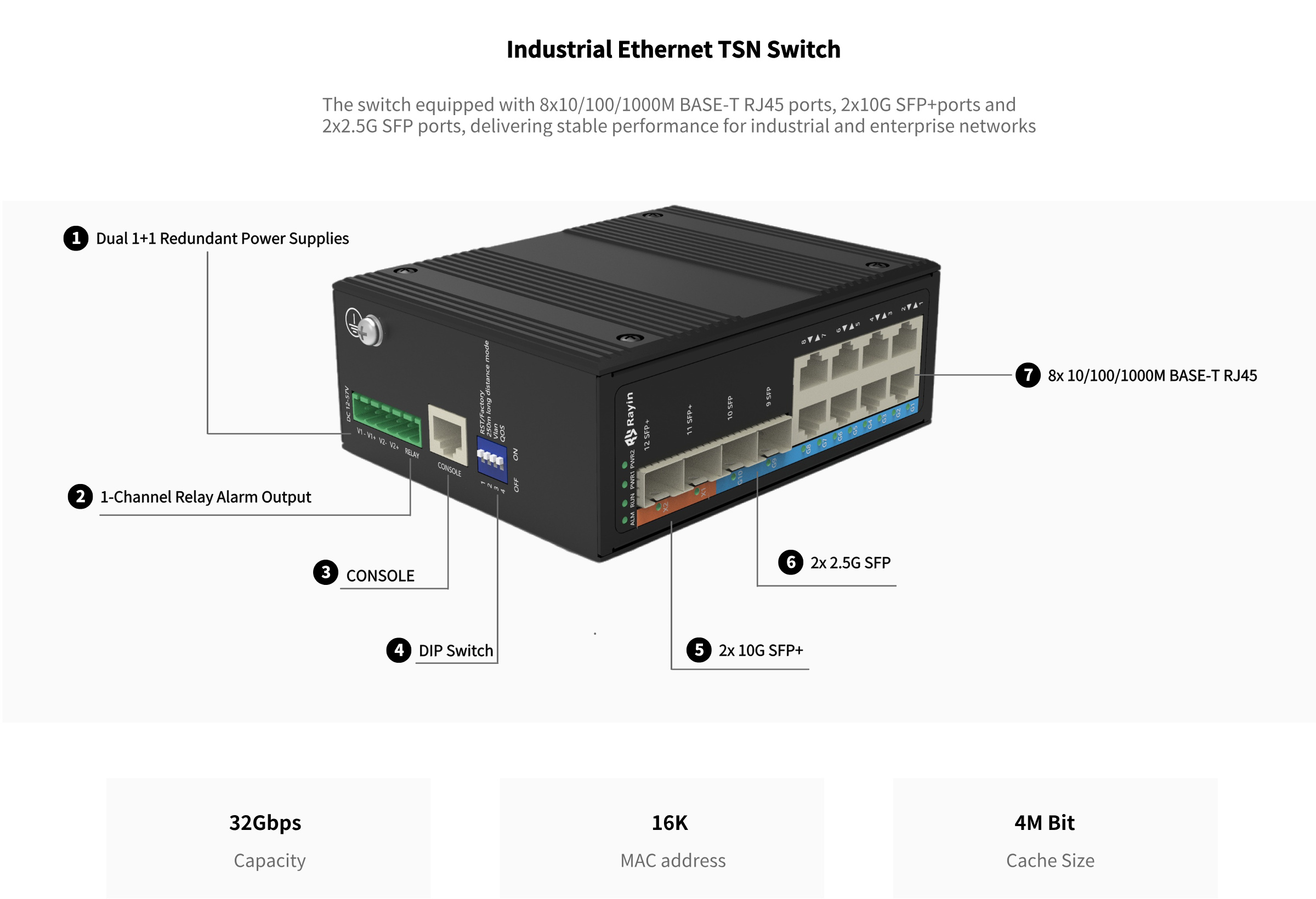
Upgraded networks fully adopt green network equipment including POE++ intelligent power supply, liquid-cooled switches, and energy-saving chips with sleep mode, paired with an intelligent power management system that automatically shuts down redundant equipment during off-peak hours. This reduces overall network energy consumption by over 30%, aligning with global civil aviation carbon peaking requirements and becoming a core assessment indicator for new and retrofit airport projects.
· Launch Date: January 2026
· Core Network Highlights: The world's first ultra-large terminal with full Wi-Fi 7 + 5G-A converged networking, featuring an air-ground-space integrated architecture with <5ms end-to-end latency for deterministic slicing. It enables fully automated baggage sorting, autonomous GSV, AR passenger navigation, and remote tower operations, with the world's first airport built-in security network architecture fully compliant with the IATA ONE ID standard. Core network foundation construction will be completed in 2026.
· Commissioning Date: January 2026
· Core Network Highlights: Full Wi-Fi 7 coverage and 5G-A in-building distribution upgrade for Terminal 2, with SD-WAN optimized WAN bandwidth delivering a 10x increase in peak passenger network bandwidth. Edge compute nodes are deployed to support AI passenger flow management and end-to-end baggage tracking. Fully energy-efficient network equipment reduces overall energy consumption by 35%, making it the benchmark smart airport network upgrade project in Europe.
· Launch Date: February 2026, scheduled completion 2027
· Core Network Highlights: 10G all-optical network foundation for the world's largest cargo aviation hub, with 5G-A + LEO satellite converged networking delivering gap-free coverage across cargo and flight areas. Dedicated deterministic slicing for fully automated unmanned cargo operations, with <5ms latency and 99.999% reliability. Full Wi-Fi 7 coverage for passenger terminals is also upgraded, supporting a 120 million annual passenger capacity target by 2030.
· Launch Date: March 2026, scheduled completion December 2026
· Core Network Highlights: Targeted at the world's busiest airport's passenger peak demand, full Wi-Fi 7 coverage and 5G-A in-building distribution upgrade for domestic terminals, with SD-WAN optimized WAN bandwidth delivering a 10x peak bandwidth increase for passenger networks. Upgraded zero-trust security architecture meets US CISA critical infrastructure security requirements, with dedicated isolated slices for core flight scheduling services.
· Launch Date: February 2026, scheduled completion September 2026
· Core Network Highlights: Full Wi-Fi 7 coverage and 5G-A deterministic network upgrade for the international terminal, enabling IATA ONE ID contactless clearance and facial recognition boarding. A seamless roaming network for China-Japan-Korea cross-border passengers is built, with upgraded edge compute nodes for real-time AI passenger flow prediction to ease congestion during international flight peaks.
· Commissioning Date: March 2026
· Core Network Highlights: Full Wi-Fi 7 coverage and 5G-A + satellite air-ground-space integrated network upgrade for the expanded terminal. Dedicated low-latency slices for autonomous shuttle buses and fully automated baggage sorting. Industrial-grade high-reliability network equipment built for the Middle East's high-temperature environment, delivering 99.99% network availability under extreme heat, supporting over 60 million annual passenger throughput.